Meserani Snake Park
Beyond its collection of reptiles, this park extends an unexpected kindness to the local Maasai community.
Full story unlocks in the tour
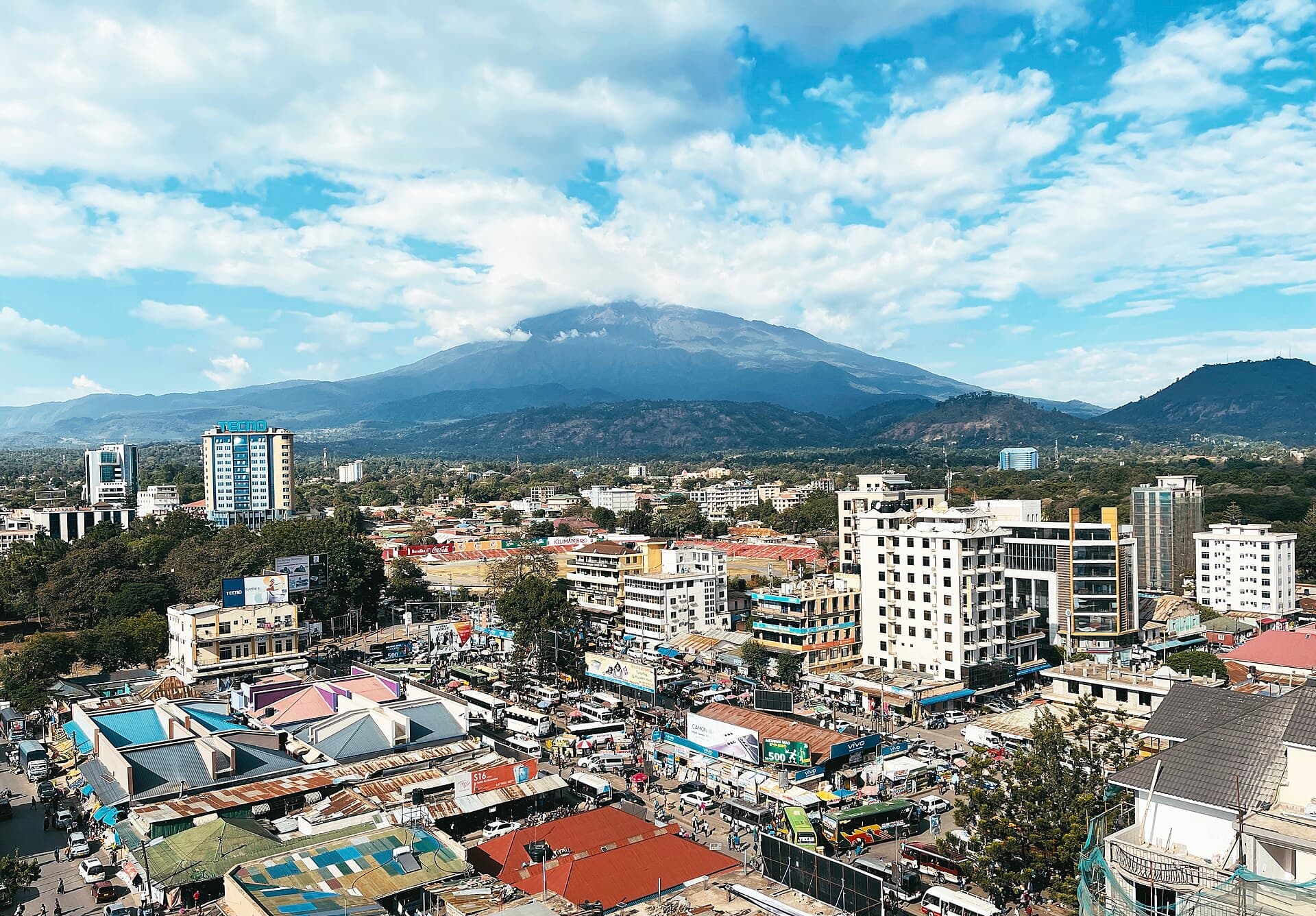 Halidtz / CC BY-SA 4.0, via Wikimedia Commons
“Arusha: Where the wild heart of Africa beats alongside the pulse of diplomacy.”
Not the postcards. The stories even locals don't know — whispered in your ear, right where they happened.
Beyond its collection of reptiles, this park extends an unexpected kindness to the local Maasai community.
While often a prelude to Kilimanjaro, Mount Meru holds a singular, ancient observance by the local Waarusha people.
This familiar landmark marks a precise and rather grand geographical position.
Discover every secret of Arusha
Every address, every reveal in full — in your ear, right where it happened.
You pick your stops. You walk. The voice reveals what the others miss.
No tours available yet. Check back soon — we're preparing them.
Arusha, frequently called Tanzania's "Safari Capital," serves as the primary entrance to the nation's celebrated Northern Safari Circuit, encompassing the Serengeti, Ngorongoro Crater, and Tarangire National Park. Resting at the base of Mount Meru, Tanzania's second-tallest peak, the city enjoys a temperate climate due to its elevation of approximately 1,400 meters above sea level. Beyond its function as a safari center, Arusha is a dynamic, diverse city, home to various communities and a significant international diplomatic center, housing the headquarters of the East African Community.
The city's energy is tangible, a fusion of indigenous African, Arab-Tanzanian, and Indian-Tanzanian influences, alongside a smaller European and North American presence. This cultural blend contributes to Arusha's inviting atmosphere and varied offerings, from lively markets to tranquil coffee plantations. Whether you are embarking on an expansive wildlife journey or seeking to immerse yourself in local culture, Arusha offers a compelling starting point.
The story of Arusha traces a path from ancient settlements to a contemporary international city. The region first saw inhabitants in the 1830s with the agro-pastoral Arusha Maasai, who traded with neighboring communities, exchanging grains, honey, and tobacco for livestock and animal products. The demand for Arusha's foodstuffs grew considerably in the 1860s with the expansion of the Pangani Valley trade route through the area.
German colonial authorities established a permanent presence in Arusha in 1900, constructing a military fort, known as the "Boma," which became the administrative core of the settlement. This period brought substantial change, including the forced relocation of Africans and the encouragement of European farmers to develop agriculture. After World War I, British forces gained control of Arusha in 1916, leading to the deportation of German settlers and missionaries. Civilian administration was put in place in the 1920s, and the town experienced further expansion with the arrival of American missionaries and the reoccupation of farms by British and Greek settlers. The extension of the railroad from Moshi to Arusha in 1928-29 greatly boosted commerce.
Arusha played a pivotal role in modern Tanzanian history. The official documents granting independence to Tanganyika were signed in Arusha by the United Kingdom in 1961. In 1967, President Julius Nyerere issued the influential Arusha Declaration, outlining Tanzania's vision of African socialism, known as "Ujamaa," solidifying the city's position as an important political center. The city also became the headquarters for the East African Community, initially from 1967 to 1977, and again after its resurgence in 2000. Additionally, Arusha has been a location for significant peace agreements, including the Arusha Accords for the Rwandan civil war in 1993 and the Arusha Peace and Reconciliation Agreement for Burundi in 2000.
Arusha presents a variety of attractions that extend beyond its role as a safari starting point. A visit to the Arusha Cultural Heritage Centre offers an immersive journey into East African art, displaying a vast array of traditional and contemporary African art, sculptures, textiles, and minerals like tanzanite. You can explore a distinguished art gallery, a jewelry workshop, and a market featuring authentic African crafts.
For a glimpse into local history and natural science, the Arusha Natural History Museum, housed in the historic German Boma (fort), provides exhibits on human evolution and a collection of preserved wildlife. Those who enjoy the outdoors can explore Arusha National Park, a compact park offering game drives, walking safaris with armed rangers, and canoe safaris on the Momella Lakes, where you might observe giraffes, zebras, buffalo, and various bird species, including flamingos. On clear days, both Mount Meru and Mount Kilimanjaro are visible from within the park.
Another distinctive experience is the Meserani Snake Park, located just outside the city. Here, you can learn about various snake species, feed crocodiles, and even hold a live snake. The park also features a Maasai Cultural Museum, providing insights into Maasai traditions.
For a more leisurely pace, consider a coffee plantation tour to learn about the local coffee industry and sample fresh brews, or take a walk around Lake Duluti, a small crater lake offering tranquil views and canoeing opportunities.
Arusha experiences a mild, temperate climate throughout the year due to its elevation. The ideal time to visit for safaris and mountain trekking is during the dry seasons: June to October and January to February. During these months, rainfall is minimal, skies are clear, and wildlife is easier to observe as animals gather around water sources. The long dry season (June-October) is particularly sought after for the Great Migration in the Serengeti. While March to May brings long rains and lush green landscapes, some roads can become muddy, and observing game might be less frequent. The short rains occur in November and December. Temperatures remain comfortable throughout the year, with daytime highs ranging from 25°C to 29°C.
Kilimanjaro International Airport (JRO) is the primary entry point for international travelers, situated about 1.5 hours from Arusha. Arranging a transfer from the airport to Arusha in advance is highly advisable. Within Arusha, local transport options include dala-dalas (minibuses), bajajis (tuk-tuks), and piki-pikis (motorbike taxis). Dala-dalas are the most economical but can be crowded. Taxis are readily available and a more secure choice, especially at night. Driving occurs on the left side of the road.
When exploring Arusha, it is prudent to keep an eye on your belongings, particularly in busy areas, and refrain from walking alone at night. Tap water is generally not safe for consumption; use filtered or bottled water. It is also recommended to check for necessary vaccinations and anti-malarial medication before your journey. Currency exchange offices and ATMs are available in the city center, especially around the Clock Tower.