Arrow River
The Arrow River, where gold was first discovered, holds a secret about its very name.
Full story unlocks in the tour
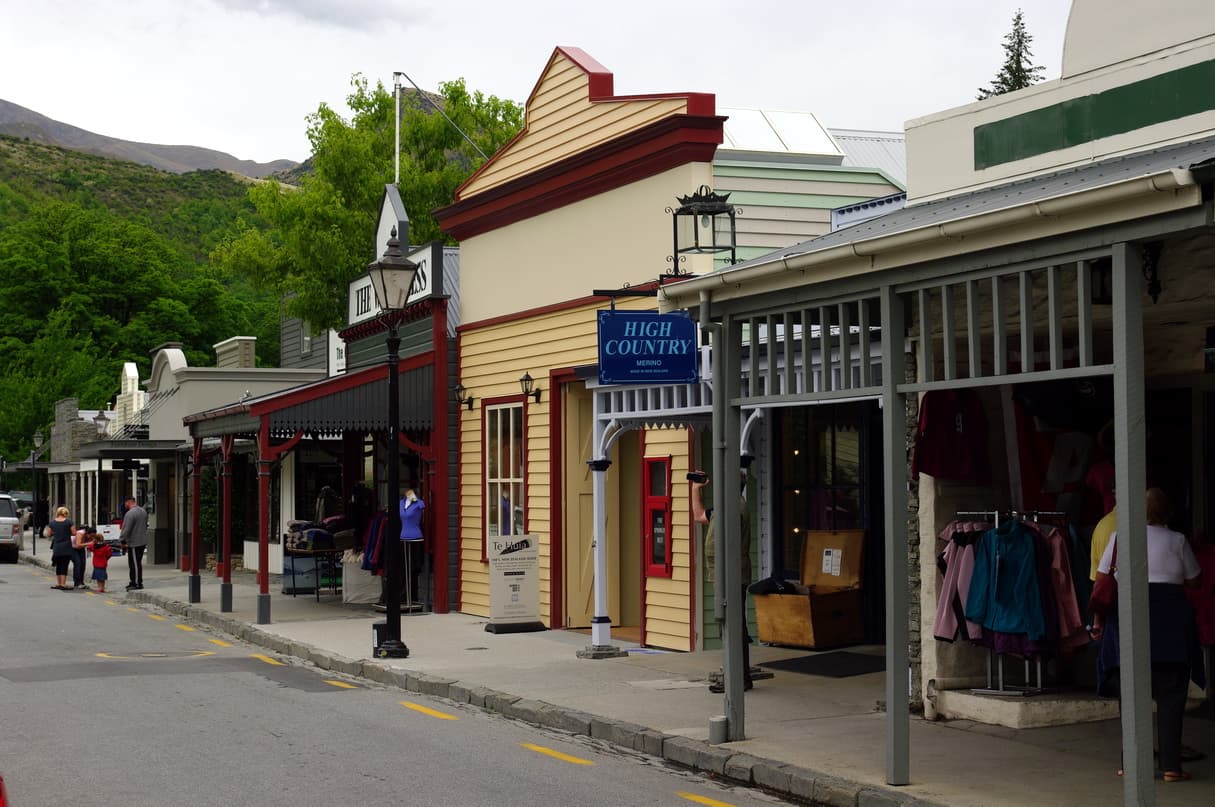 Bgabel / CC BY-SA 3.0, via Wikimedia Commons
“Where echoes of gold rush fortunes linger in vivid autumn hues.”
Not the postcards. The stories even locals don't know — whispered in your ear, right where they happened.
The Arrow River, where gold was first discovered, holds a secret about its very name.
The Chinese miners, vital to Arrowtown's economy, lived in a community with a surprising social hub.
Arrowtown's main street, Buckingham Street, has a unique retail philosophy that sets it apart.
Discover every secret of Arrowtown
Every address, every reveal in full — in your ear, right where it happened.
You pick your stops. You walk. The voice reveals what the others miss.
No tours available yet. Check back soon — we're preparing them.
Arrowtown, or Kā-muriwai in Māori, is a historic gold mining town on New Zealand's South Island, approximately 19.5 kilometers east of Queenstown. Along the Arrow River, the town stands as a preserved legacy of the 1860s Otago gold rush, recognized as a Tohu Whenua—a landmark that tells New Zealand's stories. Its elevation is 390 meters (1,280 feet) above sea level.
Today, Arrowtown is a settlement that maintains its 1860s architecture, offering a glimpse into its past. The town is celebrated for its distinct four seasons, particularly its spectacular autumn colors, which draw crowds to its historic streets and restored cottages. With a population estimated at 2,860 as of June 2025, Arrowtown has grown while adhering to strict appearance covenants to preserve its character.
Beyond its historical appeal, Arrowtown is a center for outdoor enthusiasts, offering a variety of hiking, biking, and running trails, as well as nearby golf courses and ski fields. It serves as a tranquil escape with a village atmosphere, making it a popular destination for both history buffs and those seeking active recreation.
Arrowtown's story began in August 1862 when Jack Tewa, also known as Māori Jack, discovered gold in the Arrow River. This discovery quickly transformed the area, with a township of 800 miners emerging rapidly. Initially, the settlement was called Fox's, named after William Fox, who claimed to have been the first to find gold there, but it was soon renamed Arrowtown. By the end of 1862, around 1,500 miners had flocked to the Arrow River, and in early 1863, a remarkable 340 kilograms (12,000 ounces) of gold were transported out by the first gold escort.
The gold rush led to rapid development, with cottages, shops, and hotels quickly established to accommodate the burgeoning population. However, lawlessness was an issue in the early days, with only a dozen policemen managing thousands of miners, until a police camp and warden's office brought more order to the town. After a few years, the gold became harder to extract, and many European miners left Arrowtown for new goldfields on the West Coast, which opened in 1865. This exodus significantly impacted the local economy.
To revitalize the economy, the Otago Provincial Government invited Chinese miners to Arrowtown starting in 1874. These mostly Cantonese migrants, almost entirely male, were set up in a separate village along Bush Creek, often living in harsher conditions than their European counterparts. By 1885, the Arrowtown Chinese Settlement comprised about ten huts, a large social hall, and at least two stores, with an extensive garden area. The settlement highlights the significant contribution of Chinese goldminers to the region's history. Many of these miners had come to make money and return home, but by the turn of the century, economic circumstances forced many to live out their lives in New Zealand. The Chinese settlement remained active until 1928.
After the gold rush era, Arrowtown transitioned into providing services for local farms. In the 1950s, the town gained renewed attention as a summer holiday destination, with new settlers recognizing the importance of preserving its original buildings. This commitment to heritage led to strict appearance covenants by the local authority, ensuring that new construction respects the town's historic styles. In 2020, Arrowtown was named "the most beautiful small town" in New Zealand.
Arrowtown offers a blend of historical sites and natural beauty. Begin your exploration on Buckingham Street, the main thoroughfare, where you'll find well-preserved historic buildings, local shops, cafes, and restaurants. Don't miss the opportunity for a fun photo at the old post office with a New Zealand stamp cutout.
A visit to the Lakes District Museum & Art Gallery is essential for understanding the region's past, from early Māori life to the gold mining era. The museum also serves as an information center and offers gold pan rentals for those wanting to try their luck in the Arrow River.
Just a short walk from the main street, the Arrowtown Chinese Settlement provides a poignant glimpse into the lives of Chinese gold miners. Many of their huts have been restored, offering a tangible connection to their modest living conditions and significant contributions to the region.
For outdoor enthusiasts, Arrowtown is a gateway to numerous walking and biking trails. The Arrow River Trail is an easy, picturesque loop, while more challenging options like the Sawpit Gully Track offer rewarding views. The Queenstown Trail also winds through Arrowtown, offering extensive cycling opportunities. Golfers can enjoy world-class courses nearby, including the Arrowtown Golf Club, The Hills Golf Club, and Millbrook Resort & Country Club.
Arrowtown experiences four distinct seasons, each offering a unique charm. The best time to visit for warm-weather activities is from mid-January to mid-February, when temperatures average 17°C (63°F) and days are long and sunny. Summer (December to February) generally brings warm temperatures between 20-29°C, making it ideal for outdoor pursuits.
Autumn (March to May) is particularly celebrated in Arrowtown, with landscapes ablaze in red, gold, and orange hues. The Arrowtown Autumn Festival is a highlight during this period. While autumn weather can be unpredictable with temperatures varying between -3°C and 20°C, it offers a beautiful and often less crowded experience. Winter (June to August) transforms Arrowtown into a snowy wonderland, with temperatures dropping to an average low of -4°C and a high of 2°C in July, perfect for those seeking a cozy, alpine atmosphere or nearby ski fields. Spring (September to November) sees the town reawaken with blooming flowers and thawing hills, offering changeable weather and temperatures ranging from 8-17°C.
Arrowtown is located approximately 19.5 kilometers east of Queenstown, with road access from State Highway 6 at Arrow Junction, or via Arthurs Point or Lake Hayes from Queenstown. The town's estimated population as of June 2025 is 2,860. The local currency is the New Zealand Dollar (NZD).
For information and assistance during your stay, the Lakes District Museum & Art Gallery on Buckingham Street also functions as an information center, providing maps for walks and bike tours. While Arrowtown maintains a historic appearance, strict covenants ensure new developments are sympathetic to the existing architecture. It's advisable to pack layers, as New Zealand's temperate climate can lead to quick weather changes. If you plan to spend time near the river or lakes, insect repellent is recommended to deter sandflies.