Arrecife Gran Hotel
Lanzarote's tallest structure stands as a testament to a local artist's fierce dedication to preserving the island's unique aesthetic.
Full story unlocks in the tour
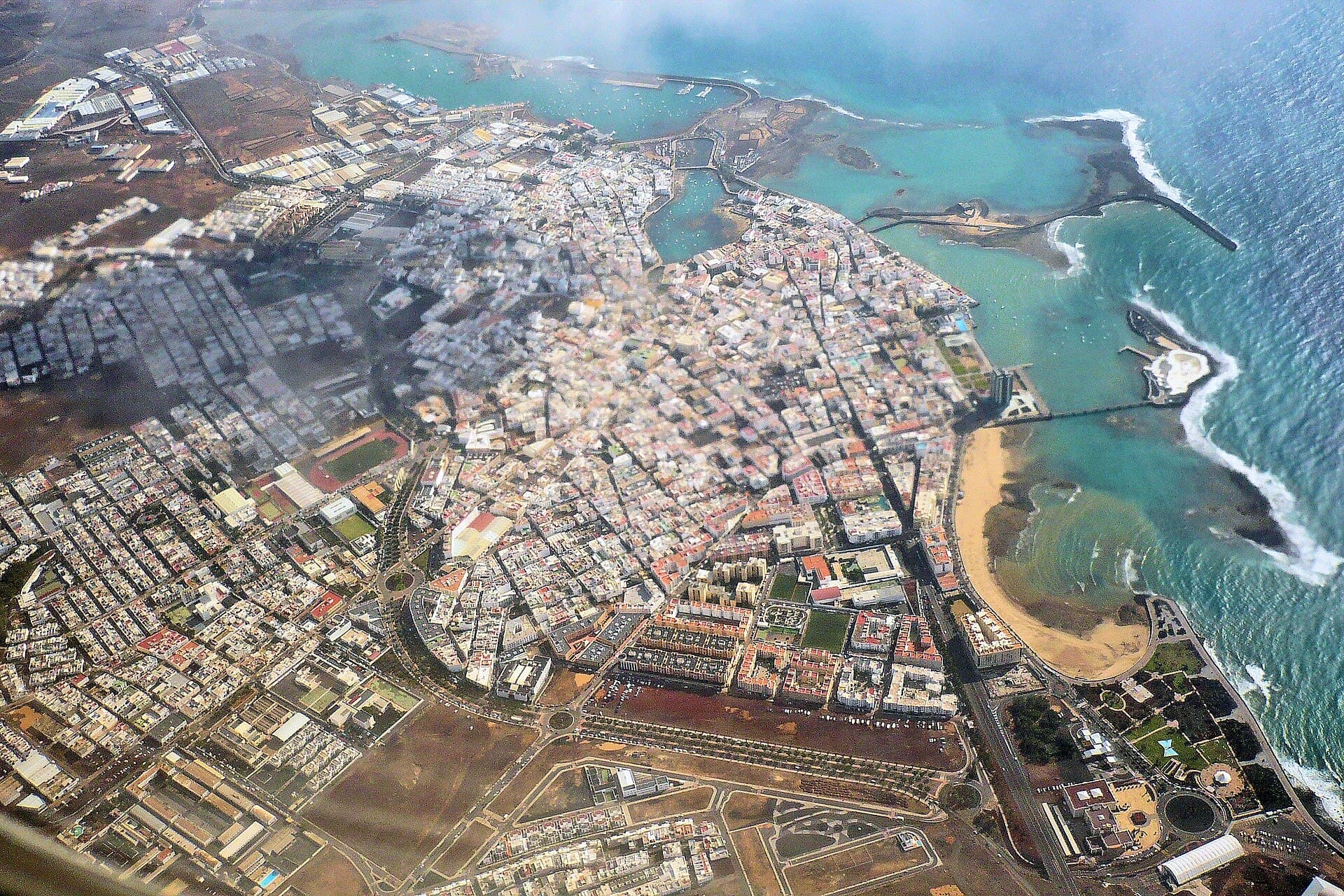 Wiki05 / CC0, via Wikimedia Commons
“Where volcanic reefs meet a working port, a city shaped by the sea and the earth.”
Not the postcards. The stories even locals don't know — whispered in your ear, right where they happened.
Lanzarote's tallest structure stands as a testament to a local artist's fierce dedication to preserving the island's unique aesthetic.
This fortress, a symbol of Arrecife, carries a name that belies a fiery past.
During Arrecife's Carnival, men parade through the streets playfully striking people with unusual objects.
Discover every secret of Arrecife
Every address, every reveal in full — in your ear, right where it happened.
You pick your stops. You walk. The voice reveals what the others miss.
No tours available yet. Check back soon — we're preparing them.
Arrecife, Lanzarote's capital, is a compact city where the daily rhythm of island life unfolds against a backdrop of volcanic geology. Its name, meaning 'reef' in Spanish, refers to the natural black volcanic ridges that shield its harbor, creating a calm bay. Unlike many cities with a defined founding date, Arrecife emerged organically in the 15th century as a small fishing settlement, serving as a crucial port for the former inland capital, Teguise.
Today, Arrecife functions as the administrative and commercial heart of Lanzarote, yet it maintains a distinct, unhurried island energy. The city offers a blend of practical port infrastructure, quiet cultural corners, and accessible seaside leisure. From active markets to narrow lanes lined with whitewashed houses, Arrecife provides an authentic glimpse into Canarian life.
## From Fishing Village to Island Capital Arrecife's origins trace back to the 15th century as a modest fishing settlement. Its natural harbor, protected by volcanic reefs, made it a strategic anchoring point for ships traversing routes to the Americas and Africa. This geographic advantage, coupled with its role as a port for Teguise, fostered its gradual growth. However, increased prosperity also made it a target for pirate attacks; in 1571, a pirate named Dogan almost entirely destroyed the nascent port town.
To defend against such incursions, fortresses like the Castillo de San Gabriel and Castillo de San José were constructed in the 16th and 18th centuries, respectively. The Castillo de San Gabriel, connected to the mainland by the Puente de las Bolas (Bridge of the Balls), was built in 1573 following an attack by the Berber pirate Dogalí. By the 18th century, Arrecife's maritime activity propelled it to become the island's primary port, surpassing Teguise in importance. This economic growth led to its official designation as the capital of Lanzarote in 1852.
## Modern Development and Cultural Preservation The 20th century brought significant advancements to Arrecife. In 1964, Europe's first seawater desalination plant was launched in the city, providing a stable source of fresh water that was crucial for the island's development and the burgeoning tourism industry. The 1970s saw a cultural revitalization influenced by the artist César Manrique, a native of Arrecife. His philosophy of harmonizing human creations with nature helped shape Lanzarote's urban planning, preserving its traditional white architectural style and preventing widespread high-rise construction. The International Museum of Contemporary Art (MIAC) was inaugurated in 1976 within the restored Castillo de San José, reflecting this new artistic direction. Today, Arrecife continues to evolve, blending its historical roots with modern infrastructure, visible in its promenades and the modernization of its port, which now serves as a significant hub for cruise liners.
Arrecife offers a range of sights that reflect its maritime history and cultural life. The Charco de San Ginés is a natural saltwater lagoon, often considered the heart of the old town. It's a picturesque spot where small fishing boats bob on the water, surrounded by traditional white houses and a selection of tapas bars.
Two historic fortresses stand guard over the city. The Castillo de San Gabriel, accessible via the stone Puente de las Bolas (Bridge of the Balls), houses the Museum of the History of Arrecife, offering expansive views of the city and the Atlantic. The Castillo de San José, overlooking the port, is home to the International Museum of Contemporary Art (MIAC), featuring works by Canarian and international artists, along with a restaurant offering harbor views.
For a relaxing break, Playa del Reducto is Arrecife's main urban beach, known for its golden sand and calm waters, sheltered by a reef. It's lined with a promenade and nearby bars and restaurants. Shoppers can explore Calle León y Castillo, a pedestrianized street with boutiques and cafes, or visit the La Recova municipal market for fresh food and artisan crafts.
Arrecife experiences a tropical hot desert climate, making it a year-round destination. The warmest water temperatures occur from August to November, averaging above 71°F (21°C), with September being the warmest at 73°F (23°C). For hot-weather activities, the period from late June to late September is ideal, with average daily temperatures ranging from 72-75°F (22-24°C). The clearest skies are typically in July. Overall, April, May, June, July, and August are considered excellent for warm and sunny weather. Even in cooler months like January, temperatures average around 59°F (15°C) at their lowest, with a mix of sunshine and occasional showers from November to January.
Lanzarote Airport (ACE), also known as Arrecife Airport, is located approximately 7 kilometers (4.3 miles) southwest of the city center. Taxis offer the quickest transfer, taking about 10-20 minutes to reach downtown hotels, with fares around €15 during the day. Public buses are a more economical option. Line 22 operates on weekdays, connecting the airport to Arrecife in about 10-15 minutes, with departures every 30-50 minutes. On weekends and public holidays, Line 23 runs every 60 minutes, with a journey time of 15-40 minutes. A single bus ticket costs approximately €1.40. For those planning extensive use of public transport, a rechargeable 'Bono General' card is available for €2.00, offering a 10% discount on single journeys. While Arrecife is walkable, hiring a bike is a good option for exploring the seafront promenade and other corners of the capital.