The Boves
Beneath the bustling Place des Héros, a silent, subterranean world holds a secret that saved thousands.
Full story unlocks in the tour
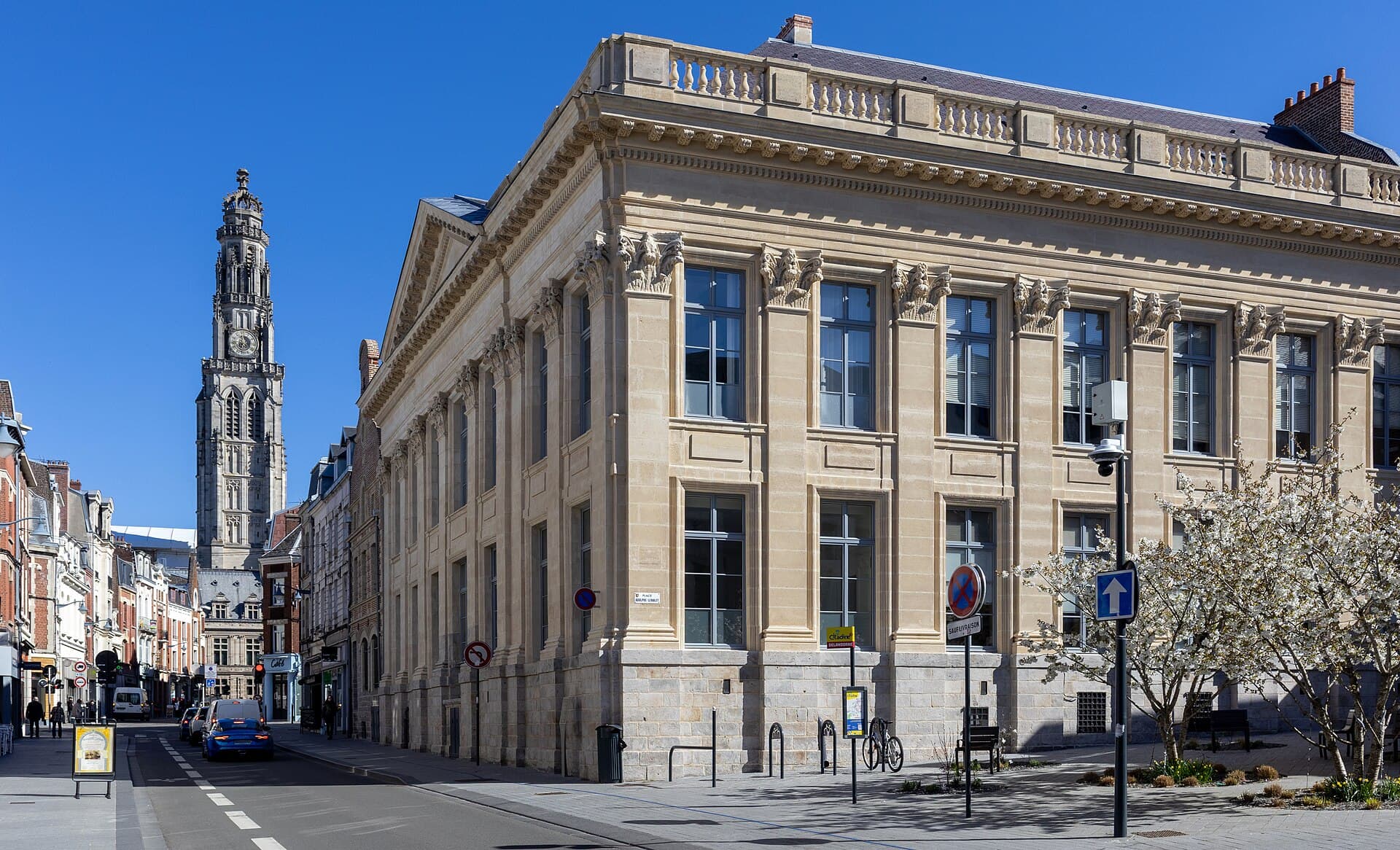 JackyM59 / CC BY-SA 4.0, via Wikimedia Commons
“Beneath Flemish gables and cobbled squares, Arras holds centuries of unexpected stories.”
Not the postcards. The stories even locals don't know — whispered in your ear, right where they happened.
Beneath the bustling Place des Héros, a silent, subterranean world holds a secret that saved thousands.
The distinctive Flemish Baroque architecture of Arras's main squares narrates a story of resilience and meticulous recreation.
Despite its imposing fortifications and UNESCO status, this 17th-century military masterpiece earned an ironic nickname.
Discover every secret of Arras
Every address, every reveal in full — in your ear, right where it happened.
You pick your stops. You walk. The voice reveals what the others miss.
No tours available yet. Check back soon — we're preparing them.
Arras, the capital of the Pas-de-Calais department in the Hauts-de-France region, unfolds a captivating blend of architectural grandeur and profound history. Situated on the Scarpe River, southwest of Lille, this northern French city is recognized for its distinctive Flemish Baroque squares, the Grand'Place and Place des Héros, which are lined with 155 historic houses. Beyond its striking facades, Arras offers a layered experience, from its UNESCO-listed belfry providing expansive city views to a subterranean network of tunnels that speak of medieval quarrying and wartime strategy.
Small enough to explore on foot, Arras invites visitors to wander its stone pathways, discover local specialties, and delve into its multifaceted past. The city's strategic location and enduring heritage make it an excellent base for exploring the wider region, including significant World War I remembrance sites. Arras, with a population of approximately 42,000 residents, maintains the character of a human-scale town while providing the amenities of a contemporary city.
## From Roman Settlement to Renaissance Hub Arras, originally known as Nemetacum or Nemetocenna, traces its origins to a Gallo-Roman settlement and was the chief town of the Atrebates, one of the last Gallic peoples to surrender to Julius Caesar. The city's wool industry, established as early as the 4th century, thrived throughout the Middle Ages, making Arras an internationally important center for banking and trade. During this period, Arras became so celebrated for its high-quality tapestries that its name became the English word for such hangings.
## Shifting Allegiances and French Annexation The fortunes of Arras were closely tied to the troubled region of Artois, leading it to pass through many hands over the centuries. A peace treaty was signed here in 1435 between Philip III of Burgundy and Charles VII of France. The Peace of Arras in 1482 helped define the northern frontiers of modern France. From the 14th to the 15th centuries, the city was under Burgundian rule, before being integrated into the Spanish Netherlands. Arras was besieged and conquered by Louis XIII in 1640 and was definitively annexed to the Kingdom of France in 1659 by the Treaty of the Pyrenees.
## Revolution, Wars, and Rebirth Arras was the birthplace of Maximilien de Robespierre, a key figure in the French Revolution. During the Reign of Terror, from September 1793 to July 1794, the city was overseen by Joseph Lebon, who implemented food restrictions, ordered 400 executions, and destroyed several religious monuments, including the Arras Cathedral and the Abbey of St. Vaast. The 19th century saw a period of relative stagnation for the city until the arrival of the train in 1846 and the dismantling of its fortifications in the 1890s brought modernization.
Arras suffered extensive damage during both World Wars, with over 80% of the city destroyed during World War I. However, the city was meticulously rebuilt, with iconic structures like the Hôtel de Ville and its belfry reconstructed 'identically' between 1919 and 1932, showcasing a blend of faithful restoration and Art Deco influences in private constructions. Today, Arras stands as a testament to its resilience, blending a profound historical heritage with a contemporary energy.
At the heart of Arras are the Grand'Place and Place des Héros, two magnificent squares recognized for their consistent Flemish Baroque architecture and arcaded facades. Ascend the UNESCO-listed Belfry of Arras, a Gothic clock tower reaching 75 meters, for sweeping views of the city and its surroundings. The Hôtel de Ville (Town Hall), with its flamboyant Gothic facade, stands on the Place des Héros, and offers tours of its chambers.
Descend into the city's subterranean world by exploring Les Boves, a network of medieval chalk quarries beneath the city center that served as cellars, storage, and wartime shelters. A short walk from the city center, the Carrière Wellington Museum provides an immersive experience 20 meters underground, detailing the critical role of New Zealand tunnellers in World War I. Other notable sites include the Arras Cathedral and the Musée des Beaux-Arts, housed within the former Saint-Vaast Abbey. The UNESCO-listed Citadel of Arras, a 17th-century fortress designed by Vauban, offers walks amidst its bastions and natural environment.
The best time to visit Arras for warm-weather activities and pleasant sightseeing is from late June to early September. During these months, average daily high temperatures are above 67°F (19°C), with July being the warmest month, averaging 72°F (22°C). Rainfall is generally low during summer, making it ideal for outdoor exploration. Spring (March-May) and autumn (September-November) also offer comfortable touring conditions, especially for visiting battlefields, with mild temperatures and low rainfall.
Arras is easily accessible, located 182 kilometers (113 miles) north of Paris, reachable in about 50 minutes by TGV train or two hours by car. It's also just 30 minutes from Lille and less than two hours from London and Brussels. The city center is walkable, with many popular attractions within easy reach. For exploring the historic stone squares and underground tunnels, comfortable walking shoes are highly recommended. The Tourist Office is located in the Hôtel de Ville on the Place des Héros. For accommodation, the Historic Center around the Grand'Place and Place des Héros is popular, offering hotels within the iconic Baroque row houses. The area near the Arras Railway Station is also convenient, a 10-minute walk from the city center, with modern hotels and easy access to high-speed connections.