The Arena (Amphithéâtre)
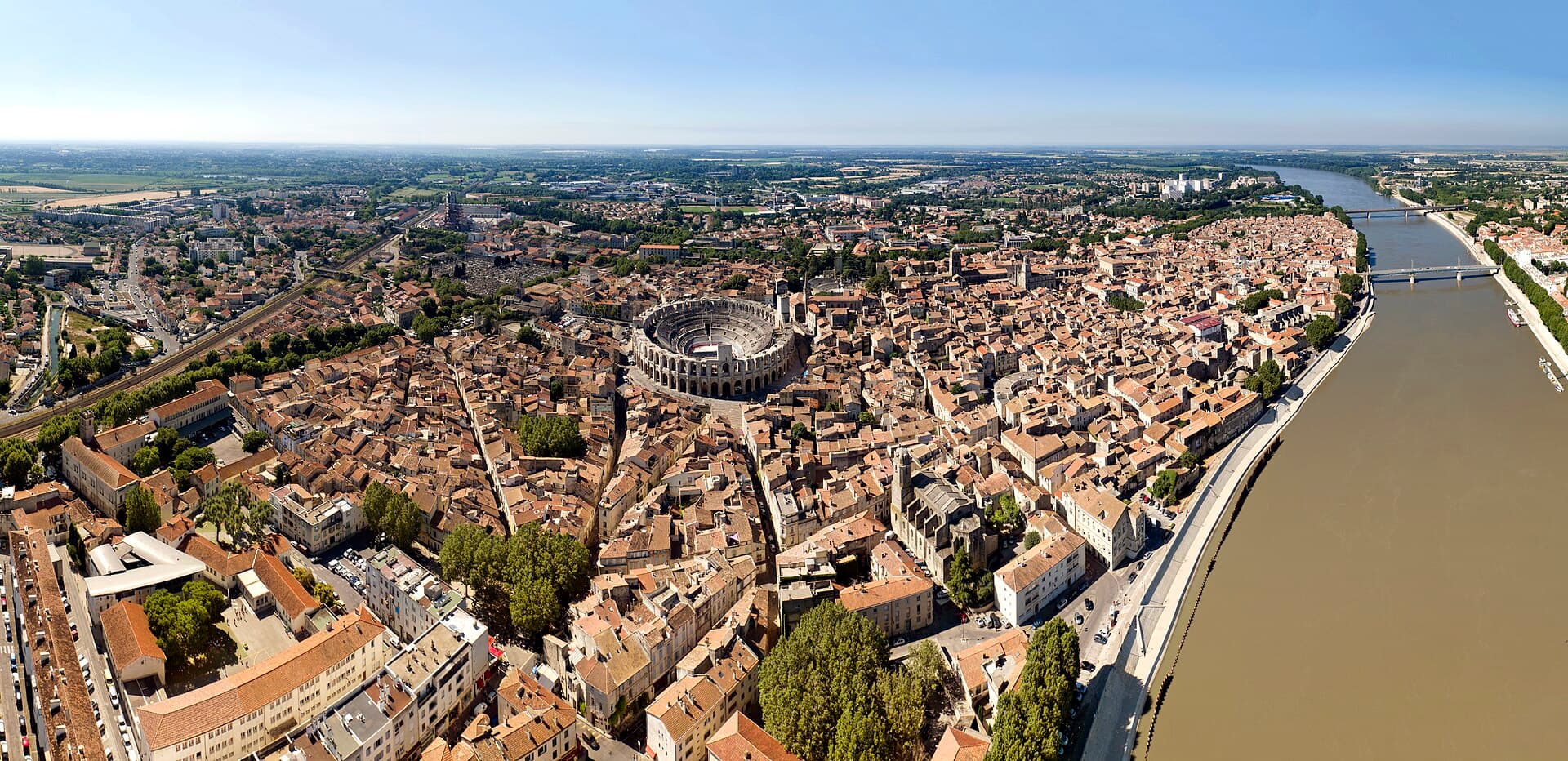
Look up at the three stone towers crowning the arena. They are not Roman. Once you know why they are there, you will see a whole town that used to live inside.
Full story unlocks in the tour
 Chensiyuan / CC BY-SA 4.0, via Wikimedia Commons
“A Roman city that became a town inside its own arena, then a painting Van Gogh never stopped sending home.”
Not the postcards. The stories even locals don't know — whispered in your ear, right where they happened.
Look up at the three stone towers crowning the arena. They are not Roman. Once you know why they are there, you will see a whole town that used to live inside.
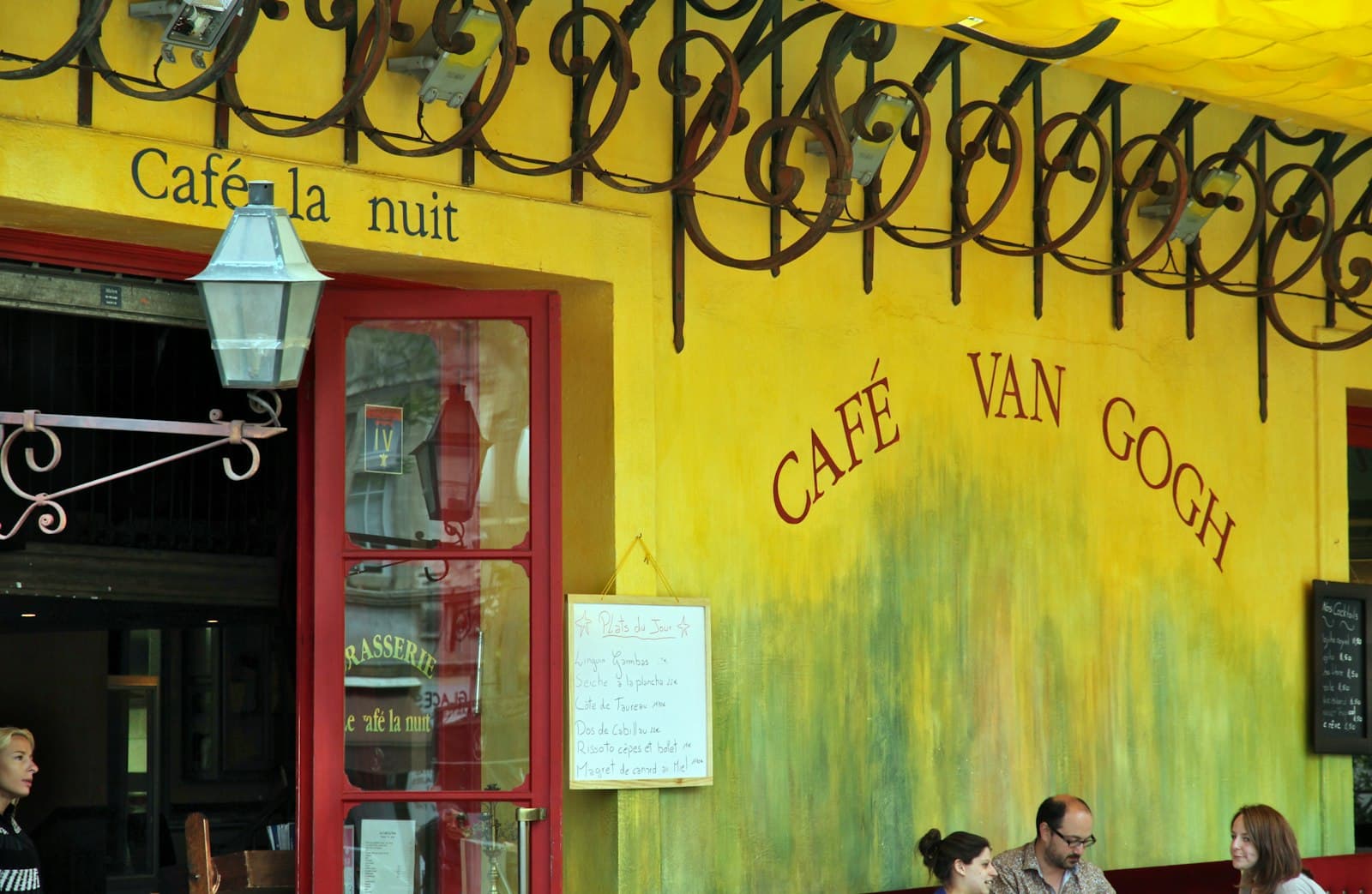
The café on this square is yellow because of a paint trick. Van Gogh swore he used a colour that isn't in the picture at all.
The most famous address in Arles has nothing standing on it. To find the house Van Gogh actually lived in, you have to look at a signboard where the building should be.
Discover every secret of Arles
Every address, every reveal in full — in your ear, right where it happened.
You pick your stops. You walk. The voice reveals what the others miss.
No tours available yet. Check back soon — we're preparing them.
Arles sits where the Rhône splits before it reaches the sea, and it has spent two thousand years being more than its size. A Roman provincial capital, a medieval pilgrimage stop, the town Van Gogh painted more than two hundred times in fifteen months, and now the home of a Frank Gehry tower wrapped in eleven thousand steel bricks — all of it inside a centre you can cross on foot in twenty minutes.
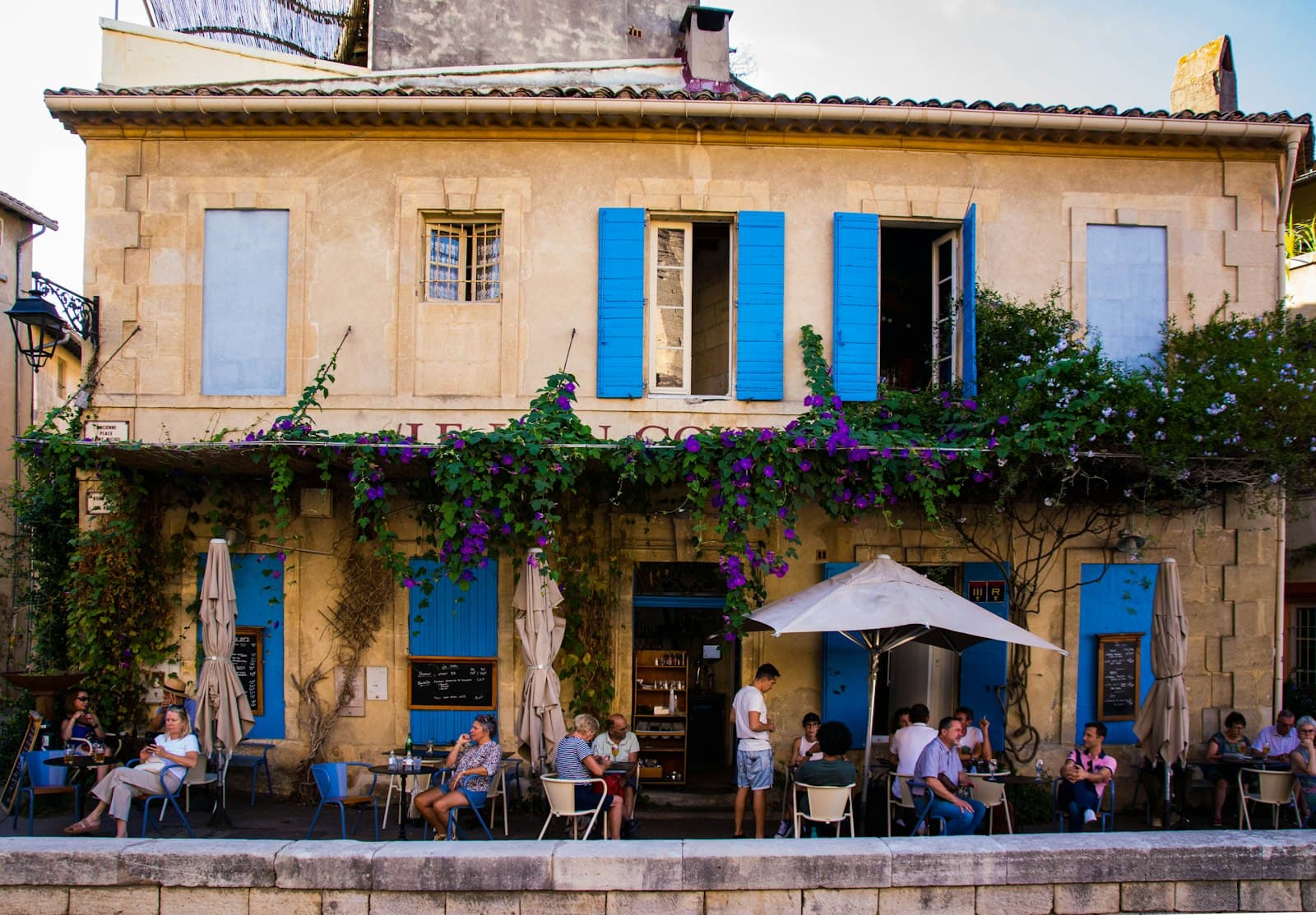
The trick to Arles is that its monuments are not behind glass. The Roman arena still fills with people for bull events. The old hospital is a public library and exhibition hall. The underground galleries that held up the forum run beneath a café terrace where people are drinking rosé right now. This is a walking city, and almost everything worth seeing is layered on top of something older.
Arles — Roman Arelate — backed Julius Caesar in his civil war against Pompey, and Caesar rewarded it. From the late 1st century BC the town was rebuilt with a forum, a circus, an amphitheatre and a network of underground galleries, the cryptoporticus, dug around 25–10 BC under Augustus to level the sloping ground.
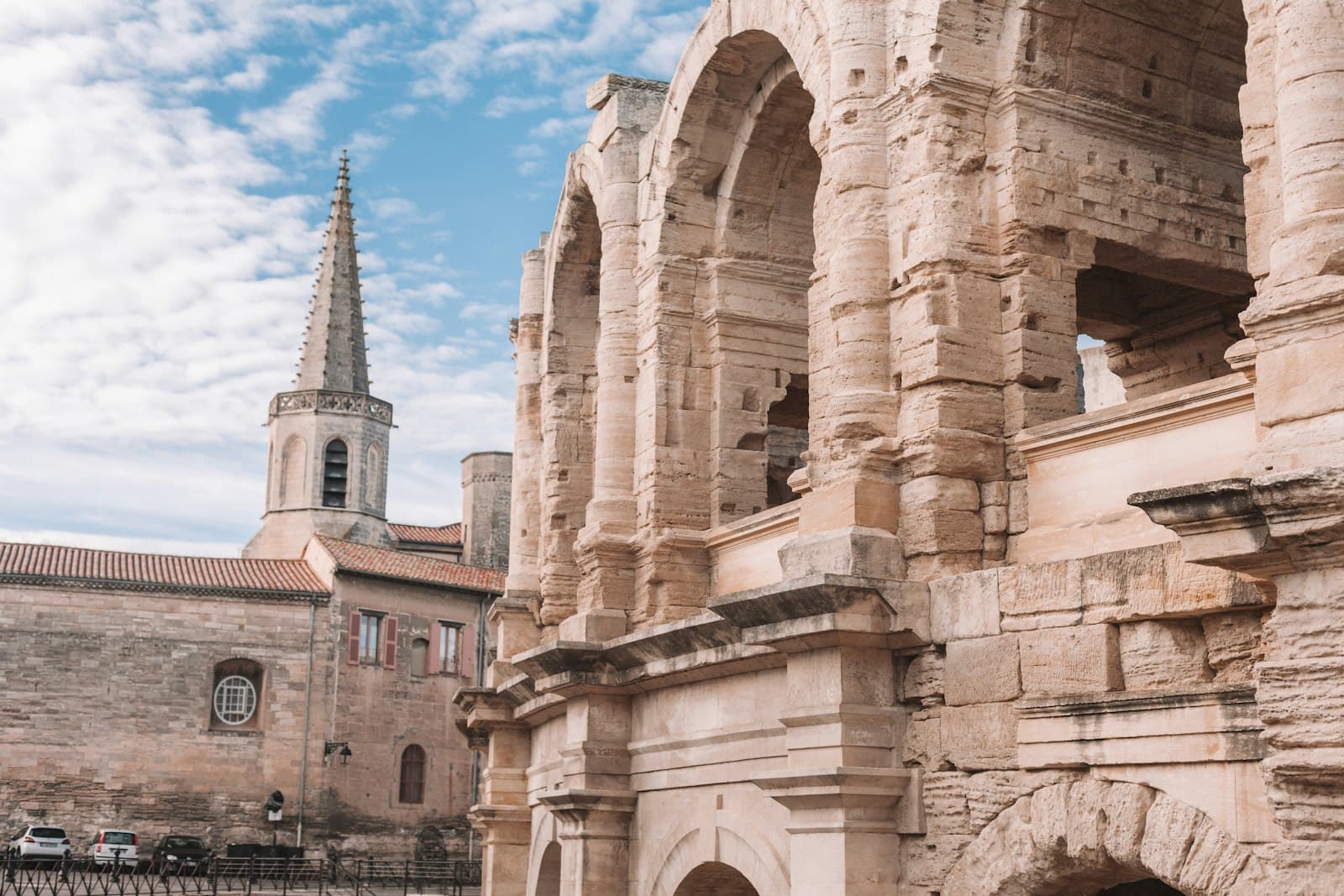
The amphitheatre, built around 90 AD for over 20,000 spectators, had the strangest afterlife of all. When the Western Empire collapsed, people walled up its arches and moved in. By the Middle Ages it sheltered more than 200 houses, two chapels and a public square — a fortified town with towers, inside the Roman oval. The houses were only cleared from 1826, and the first bull race was held in the emptied arena in 1830.
In the 12th century Arles built the Church of St-Trophime, whose west portal — Christ in majesty over a Last Judgement, the saved on one side and the damned on the other — is one of the masterpieces of Romanesque sculpture. The cloister beside it mixes 12th-century Romanesque and 14th-century Gothic galleries.
Then, in February 1888, Vincent van Gogh arrived from Paris. In roughly fifteen months he made some 300 works here, invited Gauguin to join him, fell apart, cut his ear, and was treated — twice voluntarily, once after a neighbours' petition — in the town hospital. Eighty years after he left, Arles reinvented itself again around the image: the Rencontres d'Arles photography festival since 1970, and the LUMA arts campus since 2021.
The Arena (Amphithéâtre) — Climb to the top tier for the view, and look at the three medieval towers; they are the last trace of the town that lived inside.
The Roman Theatre — Next door, older than the arena and quarried for stone over the centuries, down to two lonely standing columns nicknamed les deux veuves (the two widows).
The Cryptoporticus — Enter through the town hall to descend into the Augustan galleries beneath the Place du Forum. Cool in any heat.
Church and Cloister of St-Trophime — Stand under the carved portal before you go in; the cloister is a separate, quieter ticket.
Les Alyscamps — A long avenue of Roman tombs and sarcophagi outside the old walls, where Van Gogh and Gauguin painted together.
Espace Van Gogh — The former hospital courtyard he painted, its garden replanted from his letters. Free to walk into.
Place du Forum — The café from Café Terrace at Night, and the cryptoporticus directly below your feet.
Musée départemental Arles antique — Just outside the centre: the Rhône Caesar bust, a complete raised Roman barge, and rooms of mosaics.
LUMA Arles — Gehry's twisting tower and the converted railway workshops of the Parc des Ateliers, free to enter the grounds.
Spring and early autumn are kindest. April brings the Feria de Pâques (Easter Feria), which opens the regional bull season and draws huge crowds into the arena; September has a second feria, the feria du riz. If festival energy is what you want, aim for these; if you want the monuments quiet, avoid the exact feria weekends.
July is the Rencontres d'Arles photography festival — over sixty exhibitions spread through the arena, the cloister, the cryptoporticus and the old workshops. It transforms the whole town into a gallery, but it is also the hottest, busiest month.
Summer in Provence is genuinely hot and the mistral wind can blow hard and cold even under blue sky. Winter is quiet and many sites keep shorter hours, but you'll have the Roman stones almost to yourself.
Getting there — Arles is on the Paris–Marseille rail line; TGV connections run via Nîmes, Avignon or Marseille, then a short regional train. The centre is a 10-minute walk from the station.
Getting around — The historic core is small and best on foot; streets are narrow and partly cobbled, so wear flat shoes. Most major sites are within a 15-minute walk of the arena.
Tickets — Arles sells a combined Pass Liberté / Pass Avantage covering several monuments and museums, usually cheaper than separate entries if you plan to see three or more. The Espace Van Gogh courtyard and the LUMA grounds are free.
Language — French; English is widely understood in tourist sites and the photo festival is international.
A note on bull events — The arena hosts both the bloodless course camarguaise (snatching a rosette from the bull's horns) and Spanish-style corrida. Check which is which before booking if it matters to you.