Tyholmen district
Arendal was once called the 'Venice of the North,' but you won't see many canals today.
Full story unlocks in the tour
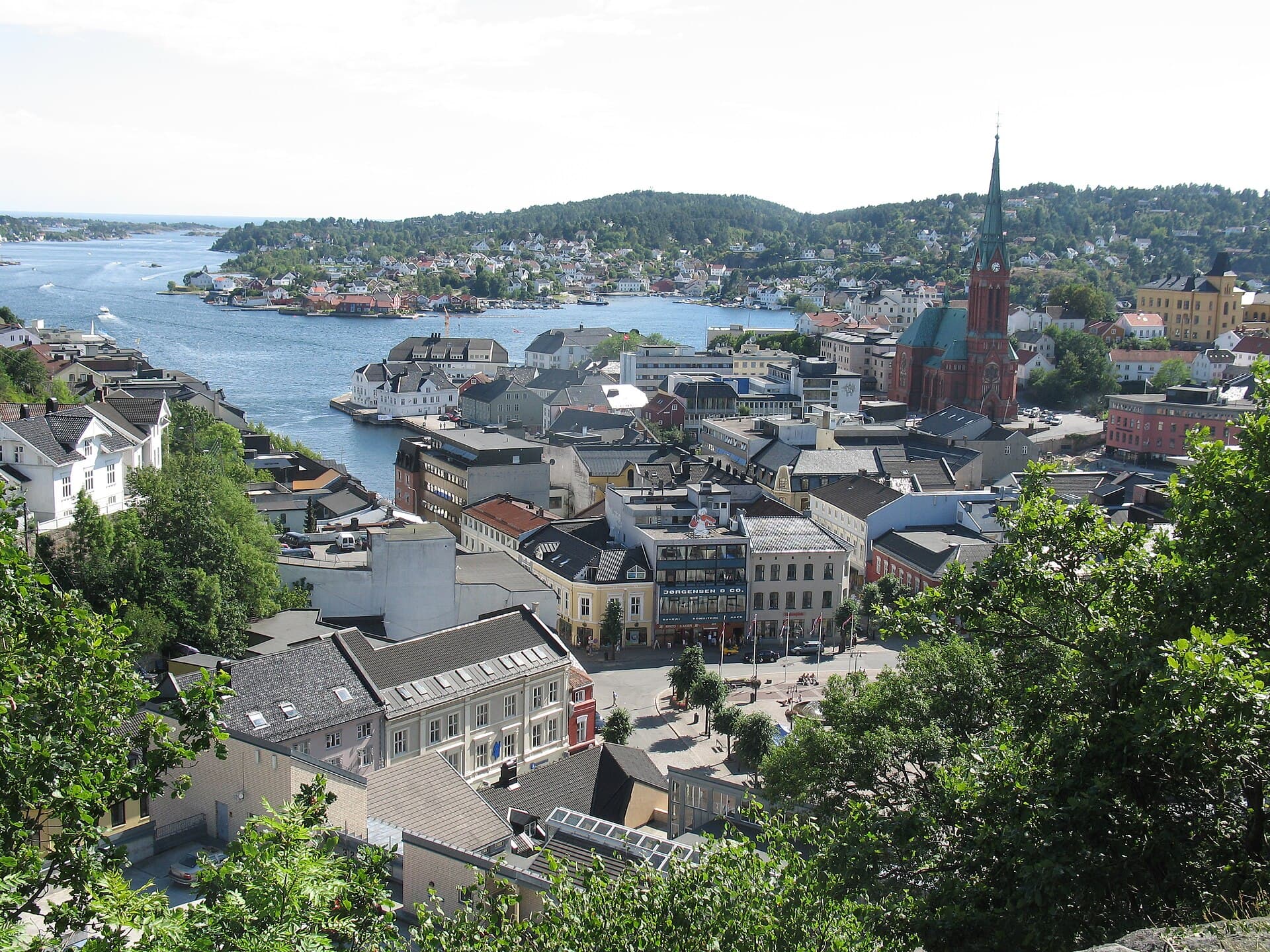 Karl Ragnar Gjertsen / User:krg This photo was taken by Karl Ragnar Gjertsen. Please credit this photo Karl Ragnar Gjertsen in the immediate vicinity of the image. / CC BY 2.5, via Wikimedia Commons
“Where the sea's memory shapes a quiet coast.”
Not the postcards. The stories even locals don't know — whispered in your ear, right where they happened.
Arendal was once called the 'Venice of the North,' but you won't see many canals today.
The city's prosperity once led to a dramatic and unexpected downfall.
A recent addition to Arendal's cityscape was initially met with some skepticism.
Discover every secret of Arendal
Every address, every reveal in full — in your ear, right where it happened.
You pick your stops. You walk. The voice reveals what the others miss.
No tours available yet. Check back soon — we're preparing them.
Arendal, a coastal city in Southern Norway, offers a blend of historical character, natural splendor, and modern urban rhythms. The city sits at the mouth of the Nidelva River, surrounded by an archipelago of islands. Its compact center invites exploration on foot, revealing historic wooden houses, slender passages, and a bustling port.
The city's maritime legacy is evident everywhere, from its old town to the active Pollen harbor, where cafes, shops, and restaurants invite visitors. Beyond the city center, Arendal's surrounding islands and coastal areas provide opportunities for outdoor pursuits, from island excursions to exploring national parks. Arendal is a destination that harmoniously blends Scandinavian antiquity with contemporary infrastructure, offering a peaceful yet engaging experience.
Arendal's origins trace back to the mid-16th century as a timber loading place. Initially without formal town status, it faced challenges when Kristiansand was founded in 1641, as King Christian IV granted Kristiansand a monopoly on trade in the region. Despite this, Arendal received royal permission in 1622 to continue as a timber loading port and eventually gained full market town status in 1723.
The 18th and 19th centuries marked Arendal's most prosperous period, driven by shipping, shipbuilding, and timber exports. It became one of the largest seafaring towns in the Nordic region, with its deep-water harbor protected by the islands of Hisøy and Tromøy. Iron mining and ironworks also contributed significantly to its economy. By 1880, Arendal was Norway's largest port in terms of tonnage handled.
This era of prosperity was dramatically interrupted by the 'Arendal Crash' in 1886. This banking crisis, triggered by a substantial bank fraud, led to widespread bankruptcies and high unemployment, profoundly impacting the region. In the wake of this crisis, a local labor movement, the Samhold movement, emerged, laying the groundwork for the founding of the Norwegian Labour Party in Arendal in 1887. The city also undertook emergency work projects, such as the construction of Songeveien (now Kystveien), to provide employment.
Significant changes to the city's physical landscape occurred after devastating fires in the 1860s, which led to the filling in of many canals that once crisscrossed the city center. In the 20th century, Arendal continued to evolve, with industries like small boat manufacturing, electronics, and silicon carbide refining becoming important. A major administrative reform in 1992 merged Arendal with several neighboring municipalities, significantly expanding its geographical boundaries and population.
Begin your exploration in the Tyholmen district, Arendal's oldest and best-preserved area, featuring wooden houses from the 17th to 19th centuries and narrow paths. The Arendal Old Town Hall, a four-story wooden building, stands as one of Norway's largest wooden structures. Stroll along Pollen, the inner harbor, which is an active center with restaurants, pubs, and a fish market.
For expansive views of the city and archipelago, take the glass elevator up Fløyheia hill. Immerse yourself in local history at KUBEN – Aust-Agder Museum & Archive, which houses extensive collections on seafaring, folk art, and local life. Another historical site is Kløckers Hus, the Arendal Town Museum. For a natural escape, take a ferry to Merdø island, a car-free destination with old wooden houses, sandy beaches, and walking paths.
The Store and Lille Torungen Lighthouses, built in the mid-1800s, are accessible by boat trip and continue to guide ships into the harbor. Raet National Park, encompassing the entire Arendal coastline, offers opportunities for coastal walks, hiking, and exploring the archipelago.
The best time to visit Arendal for pleasant weather and outdoor activities is from June to August. During these summer months, average daytime temperatures range from 16°C to 22°C (61°F to 72°F), with long daylight hours. This period is ideal for island excursions, boating, hiking, and enjoying the active harbor scene and cultural festivals like Canal Street. Spring and early autumn offer cooler temperatures and fewer crowds, with average temperatures in September ranging from 9°C to 15°C (48°F to 59°F). While precipitation occurs throughout the year, October and November tend to be the wettest months.
The local currency in Arendal, and Norway as a whole, is the Norwegian Krone (NOK). Credit and debit cards are widely accepted, and ATMs are readily available. The official language is Norwegian. Arendal's city center is compact and walkable. For longer distances, local buses are available, and information on routes and schedules can be found online or at bus stops. Taxis are an option but can be expensive. If you plan to explore the surrounding areas extensively, car rental might be beneficial, though parking in the city center can be challenging. Kristiansand Airport (KRS) is the nearest airport, approximately 45 minutes away by car, with frequent bus services to Arendal. Trains connect Arendal to the Sørlandet Line at Nelaug station, offering connections to cities like Oslo and Stavanger.