The Museum Hotel Antakya
A luxurious hotel constructed upon an archaeological site sounds intriguing, but what if the site itself presented an unprecedented challenge to its very foundation?
Full story unlocks in the tour
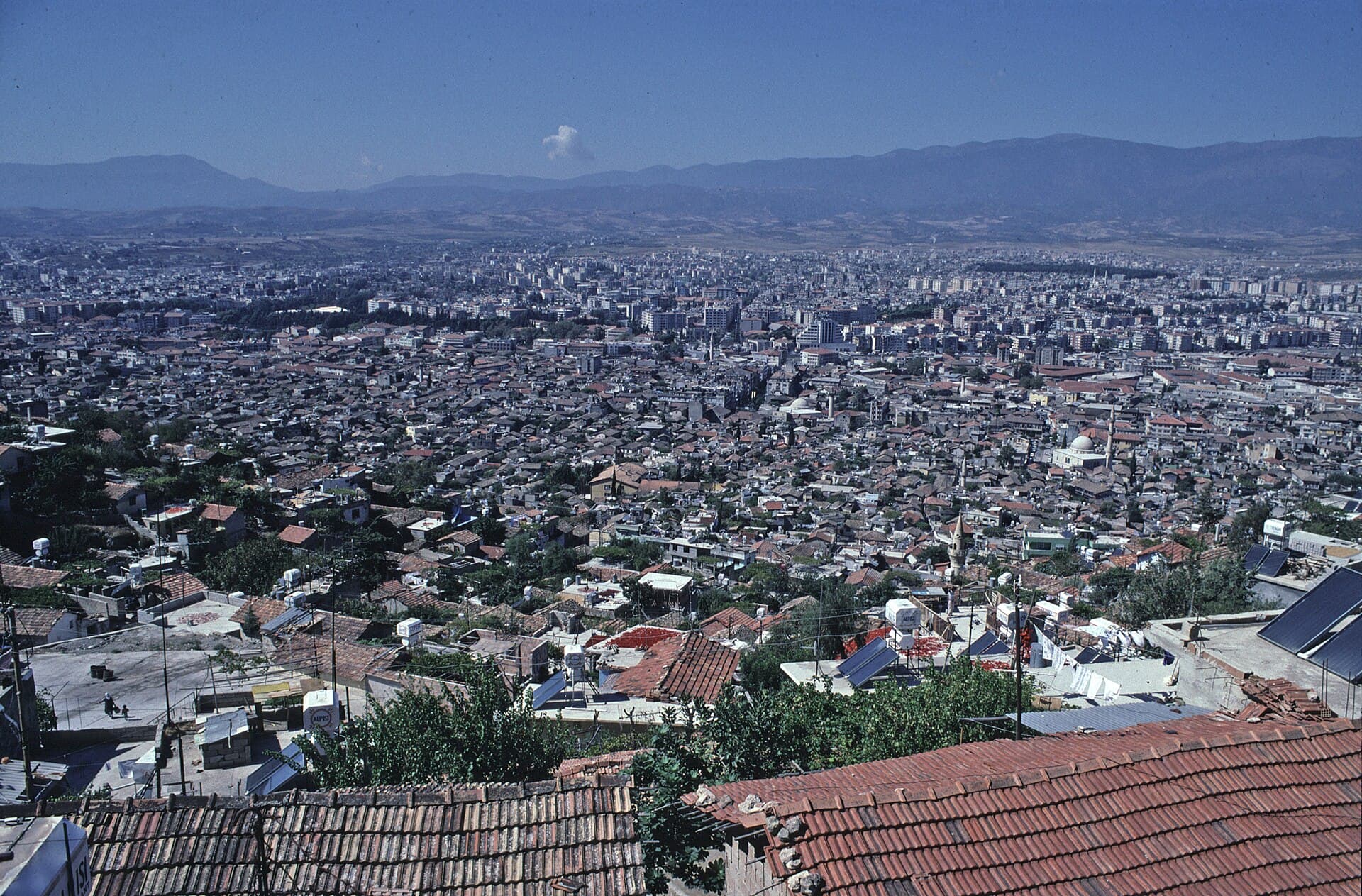 Dosseman / CC BY-SA 4.0, via Wikimedia Commons
“Where ancient echoes meet profound flavors.”
Not the postcards. The stories even locals don't know — whispered in your ear, right where they happened.
A luxurious hotel constructed upon an archaeological site sounds intriguing, but what if the site itself presented an unprecedented challenge to its very foundation?
Imagine a lively ancient city street, long after the sun has set, still alive with activity. How was this possible millennia ago?
This ancient cave church is a significant site for Christianity, yet it also holds a secret from its earliest days, conceived for the safety of its congregation.
Discover every secret of Antakya
Every address, every reveal in full — in your ear, right where it happened.
You pick your stops. You walk. The voice reveals what the others miss.
No tours available yet. Check back soon — we're preparing them.
Antakya, historically known as Antioch, is a city in Turkey's Hatay Province, situated along the Orontes River. This ancient city has served as a crossroads of civilizations for millennia, bearing the imprints of numerous empires including the Seleucid, Roman, Byzantine, and Ottoman. Its strategic location has fostered a singular blend of cultures, faiths, and traditions, making it a compelling destination for those interested in profound history and diverse heritage.
Antakya's past is a testament to its endurance, having withstood numerous conflicts and natural calamities, including significant earthquakes throughout its long story. Despite these trials, the city has continuously renewed itself, preserving its enduring legacy while embracing a lively present. Today, Antakya is recognized for its exceptional archaeological treasures, its pivotal role in early Christianity, and a culinary scene that has earned it a UNESCO City of Gastronomy title.
Travelers to Antakya can explore ancient remnants, marvel at world-class mosaics, and immerse themselves in a culture where diverse faiths have coexisted for centuries. The city offers a journey for the senses, from the aromatic spices of its historic bazaar to the distinctive tastes of its Levantine-influenced cuisine.
## From Ancient Metropolis to Modern Crossroads Antakya's story begins around 300 BCE, when it was established as Antioch on the Orontes by Seleucus I Nicator, a general of Alexander the Great. It swiftly ascended to prominence as the capital of the Seleucid Empire and, by 64 BCE, became a major metropolis and the capital of the Roman province of Syria. During the Roman period, Antioch stood among the largest cities in the world, rivaling Rome, Alexandria, and Ephesus, and functioned as a crucial center for commerce, culture, and intellectual exchange.
The city played a profoundly significant role in the early narrative of Christianity. It was here, around 42 CE, that followers of Jesus were first called "Christians." Apostles like Peter and Paul preached in Antakya, founding one of the earliest Christian communities. The Church of St. Peter, a cave carved into the mountainside, is considered one of the very first places of Christian worship.
Throughout the centuries, Antakya experienced a succession of rulers, including the Byzantines, Arabs, Seljuks, Crusaders, and Mamluks, each leaving their imprint on the city's architecture and culture. In 1516, it became part of the Ottoman Empire, remaining a provincial town for the next four centuries. Following the dissolution of the Ottoman Empire, the region was under French mandate before the independent Hatay State was formed in 1938, with Antakya as its capital. In 1939, following a referendum, Hatay joined Turkey.
Antakya has a long history of seismic activity, with major earthquakes recorded in 526, 528, 1822, 1872, and most recently, in February 2023. The 2023 earthquakes caused widespread devastation and loss of life, severely impacting many historic sites and leaving a significant portion of the city in ruins. The city is currently undergoing extensive recovery and rebuilding efforts.
## A Rich Weave of Civilizations Antakya's historical narrative is woven with threads from at least 13 civilizations, including the Akkadians, Hittites, Assyrians, Persians, Seleucids, Romans, Byzantines, Mamluks, Seljuks, and Ottomans. This deep layering of cultures has contributed to the city's singular identity and its reputation as a "cradle of civilizations."
Antakya offers a compelling journey through its layered past, even as it rebuilds. The Hatay Archaeology Museum is a primary attraction, housing one of the world's largest collections of Roman and Byzantine mosaics. These intricate artworks, many uncovered from ancient Antioch and its wealthy suburb Daphne, display mythological scenes and daily life.
The Church of St. Peter (St. Pierre Church) is a rock-carved cave believed to be one of the earliest Christian churches. This significant pilgrimage site features a facade added by Crusaders and offers sweeping views of Antakya.
Explore the Antakya Long Bazaar (Uzun Çarşı), a historic market district where the scents of spices blend with the vivid colors of textiles and local crafts. Here, you can discover traditional products such as olive oil, pomegranate molasses, and unique spice blends like zahter. Nearby, the Habib-i Neccar Mosque stands as one of Anatolia's first mosques, originally a pagan temple and then a church before its conversion.
Further afield, the Titus Tunnel near Samandağ is an impressive Roman engineering accomplishment, a 1.4-kilometer channel cut through rock to divert a river. The area also features Çevlik Beach for a tranquil escape and the ancient Moses' Tree (Musa Ağacı) in Hıdırbey village, a massive plane tree with local lore.
Antakya experiences a Mediterranean climate, characterized by warm, dry summers and mild, rainy winters. The most opportune times to visit for pleasant weather and outdoor activities are during the spring (April to May) and autumn (September to October). During these months, temperatures are moderate, ideal for exploring archaeological sites and walking through the city.
Summers (June to August) are very warm, with average daily temperatures reaching 27-32°C and minimal rainfall, making it suitable for those who enjoy intense heat and sun. Winters (December to February) are mild but wet, with more frequent rain. July is typically the clearest and driest month.
Antakya is the capital of Hatay Province, located in southern Turkey. The local currency is the Turkish Lira (TRY). While many larger establishments accept credit cards, it is advisable to carry some cash for smaller shops in the bazaar or local eateries. Due to the city's religious diversity, modest dress is recommended, particularly when visiting mosques and churches; carrying a scarf or shawl can be useful.
The city was severely impacted by the 2023 earthquakes, and while recovery efforts are ongoing, some historical sites may still be undergoing repairs or be temporarily inaccessible. It is prudent to verify the current status of specific attractions before your visit. Public transportation within Antakya is available, and taxis are also an option. For exploring sites beyond the city center, consider renting a car or arranging tours. Antakya is celebrated for its cuisine, so be sure to savor local specialties like künefe (a sweet cheese pastry) and various kebabs.