Château d'Angers
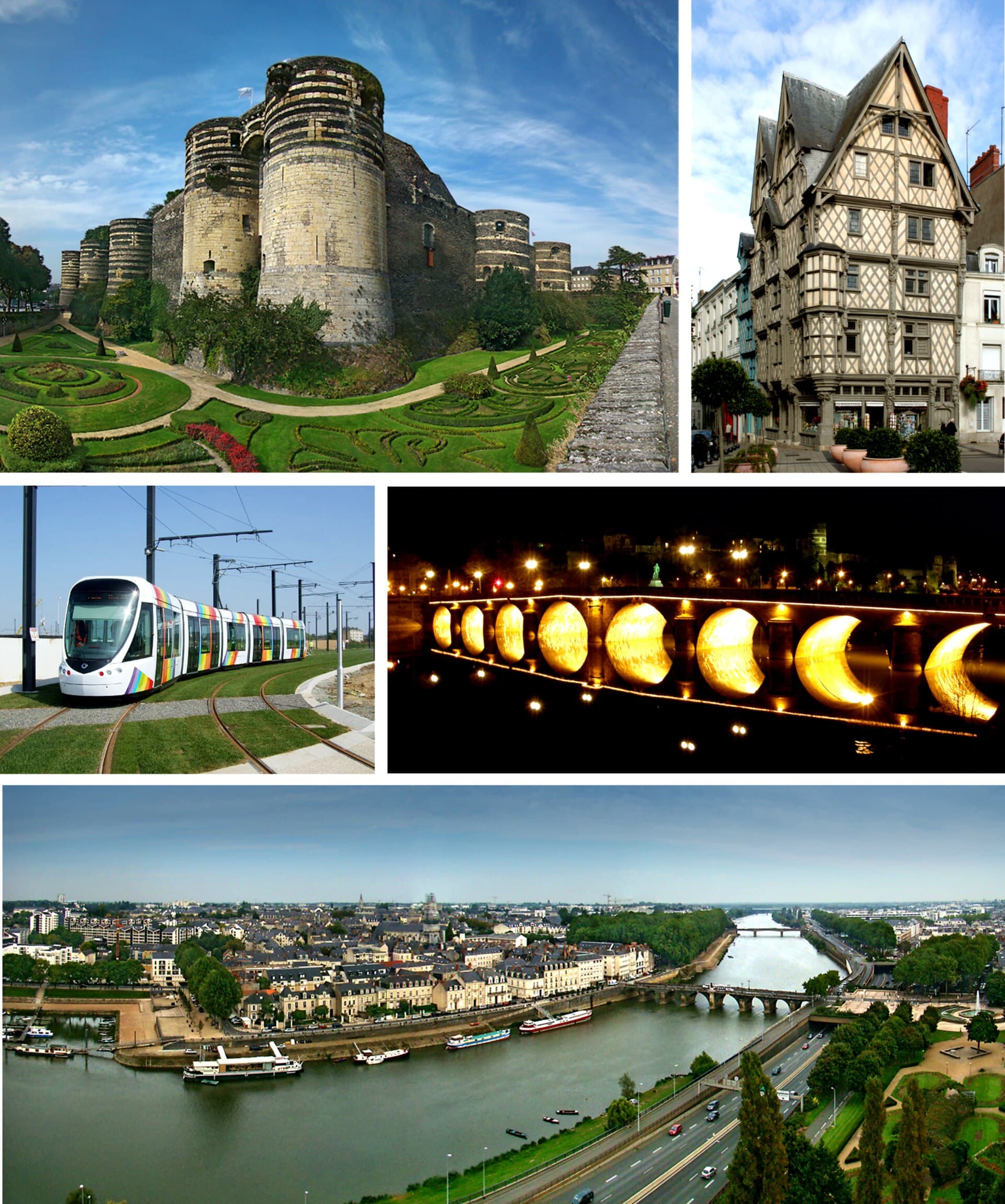
The formidable Château d'Angers, with its seventeen imposing towers, conceals a secret both ancient and immense.
Full story unlocks in the tour
 User:Tango7174, etc. (see above) / CC BY-SA 3.0, via Wikimedia Commons
“Where ancient fortifications meet forward-thinking green design.”
Not the postcards. The stories even locals don't know — whispered in your ear, right where they happened.
The formidable Château d'Angers, with its seventeen imposing towers, conceals a secret both ancient and immense.
The distinctive blue-grey roofs of Angers speak of local geology, yet the city also offers a sweet echo of this architectural signature.
The world-renowned orange liqueur, Cointreau, is a staple in cocktails globally, yet its origins are firmly rooted in this unassuming French city.
Discover every secret of Angers
Every address, every reveal in full — in your ear, right where it happened.
You pick your stops. You walk. The voice reveals what the others miss.
No tours available yet. Check back soon — we're preparing them.
Angers, the historic capital of Anjou, presents a compelling fusion of medieval heritage, verdant green spaces, and a forward-thinking spirit. Positioned at the confluence of three rivers—the Mayenne, Sarthe, and Loir, which converge to form the Maine before it flows into the Loire—the city's advantageous geography has shaped its development for centuries. Known as the 'Black City' due to its widespread use of dark slate in traditional architecture, Angers also proudly holds the title of France's greenest city, cultivating extensive parks, gardens, and a commitment to sustainability.
This dynamic urban center, with a population exceeding 157,000, serves as a significant economic and cultural nexus in western France. Its rich cultural life is supported by universities and museums, contributing to a youthful energy. Whether exploring ancient fortifications, strolling through botanical wonders, or savoring local delicacies, Angers provides a distinctive and engaging experience for visitors.
The story of Angers begins in deep antiquity, with evidence of human presence dating back to around 400,000 BC. Originally inhabited by the Gallic tribe of the Andes, the fortified settlement became Juliomagus, or 'Market of Julius,' following the Roman conquest in the 1st century AD. The city's modern name evolved from the Andes tribe. Strategic geography, situated on the Maine River just kilometers from its junction with the Loire, ensured control over vital waterways and fostered trade.
By the 9th century, Angers faced threats from Viking incursions, leading King Charles the Bald to establish a count on the prominent rocky promontory where the Château d'Angers now stands. This marked the birth of the castle and the consolidation of power for the Counts of Anjou. These counts gradually gained independence, founding powerful dynasties, most notably the Plantagenets. In the 12th century, through strategic matrimonial alliances, the Plantagenets became Kings of England, ruling a vast Angevin Empire stretching from the Pyrenees to Ireland, with Angers as a significant seat of their court.
The Angevin Empire's dominance ended in 1204–1205 when King Philip II of France seized Normandy and Anjou, making Angers part of the French crown. The city then became known as the 'Key to the Kingdom,' facing the still-independent Brittany. To protect this new border, Queen Blanche of Castile ordered the construction of a colossal fortress in the 1230s, which is the foundation of the Château d'Angers seen today. This massive, moated château, with its 17 towers, was among the most powerful castles in Europe in the 13th century.
During the 14th and 15th centuries, powerful princes of the French royal family, the Dukes of Anjou, inhabited the castle, commissioning magnificent flamboyant Gothic buildings and fostering a flourishing court life. It was during this period that the monumental Apocalypse Tapestry was commissioned by Louis I of Anjou. The reign of René of Anjou in the 15th century brought a 'Golden Age,' fostering Renaissance culture and establishing traditions of landscape design. The founding of the University of Angers in the 14th century further cemented its role as an intellectual hub.
Under Napoleon I, Angers was recognized as one of the 'Bonnes villes' and received a new coat of arms, replacing the royal fleurs de lys with Napoleonic bees. The 19th century saw industrialization and urban reform, with the city expanding beyond its medieval walls. Today, Angers stands out for its specialization in the plant sector, with Végépolys being Europe's leading horticultural competitiveness cluster. This focus, alongside its numerous parks and gardens, has earned Angers the distinction of being France's greenest city.
Begin your exploration at the Château d'Angers, an imposing fortress with 17 massive towers, dating back to the 13th century. Inside, contemplate the Apocalypse Tapestry, the largest and oldest medieval tapestry in the world. From the castle's ramparts, enjoy expansive views of Angers and the Maine River.
Walk through the Doutre district, recognized for its magnificent townhouses and medieval half-timbered houses, including the notable Maison d'Adam. Cross the Maine River to explore the historic center, with its inviting alleyways like rue de l'Oisellerie and rue Saint-Laud, displaying white stone architecture. The Cathédrale Saint-Maurice d'Angers, with its Angevin Gothic architecture and striking stained glass, is also worth a visit.
For a singular experience, visit Terra Botanica, the world's first plant-focused amusement park, offering interactive exhibits, diverse plant collections, and even a hot air balloon ride. The Carré Cointreau distillery offers tours and tastings, revealing the history and production of the celebrated orange liqueur. Do not miss the Musée des Beaux-Arts d'Angers for its diverse collection of paintings, sculptures, and decorative arts.
Angers enjoys a temperate oceanic climate, characterized by mild winters and warm, agreeable summers. The most opportune time to visit for warm-weather activities is from mid-June to mid-September, when average temperatures range from 18.8°C to 20.9°C (66-70°F), and precipitation is lower. Spring (March to May) offers mild weather, awakening gardens, and manageable crowds, especially on weekdays. Autumn (September to November) is also pleasant, with cooler temperatures and thinning crowds, ideal for enjoying the changing foliage along the river. Winters (December to February) are mild but quieter, with shorter daylight hours.
Angers is well-connected and easy to navigate. The main train terminal, Gare d'Angers - Saint Laud SNCF, is centrally located and served by direct TGV trains from Paris (1.75 to 2.25 hours). Regional TER trains connect Angers to other Loire Valley cities. Angers Loire Aéroport (ANE) offers direct flights to some European cities.
Within the city, walking is an excellent way to explore the compact center and its attractions. Angers also cultivates an extensive network of well-signposted cycling routes, with free bike rentals available to residents for a year. The public transport system, Irigo, includes buses and a tramway with three main lines, providing convenient access throughout the city and its suburbs. Taxis and ride-sharing services are also available.
Angers is considered a very safe city with a low crime rate, even at night, particularly in tourist areas. However, general precautions are always advisable. The cost of living is manageable, with median rents around 600€ per month.