Holy Rosary Parish Church
The grand twin bell towers of this church hold a secret from a time of revolution.
Full story unlocks in the tour
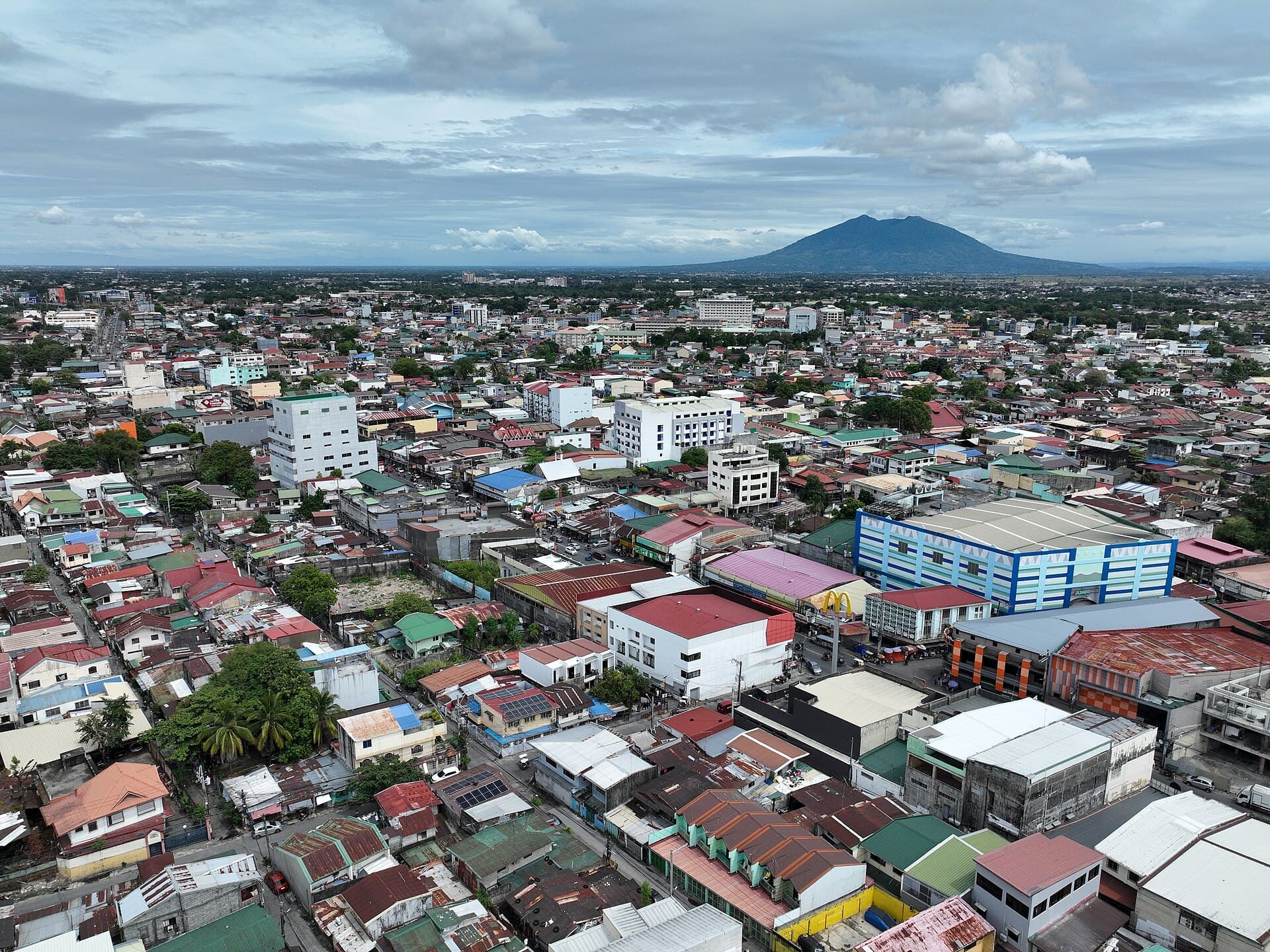 Patrickroque01 / CC BY-SA 4.0, via Wikimedia Commons
“Where history's echoes meet a modern pulse.”
Not the postcards. The stories even locals don't know — whispered in your ear, right where they happened.
The grand twin bell towers of this church hold a secret from a time of revolution.
This museum, once the city hall, offers a taste of local history, but also a literal taste of something unexpected.
A 19th-century granary in Angeles City has been repurposed, but its original function was far more substantial than just storing rice.
Discover every secret of Angeles
Every address, every reveal in full — in your ear, right where it happened.
You pick your stops. You walk. The voice reveals what the others miss.
No tours available yet. Check back soon — we're preparing them.
Angeles City, a highly urbanized center within the province of Pampanga, Philippines, offers a compelling blend of historical depth and contemporary energy. Situated in Central Luzon, approximately 80 kilometers north of Manila, it functions as a commercial and financial hub for Pampanga. Once a small settlement known as 'Culiat,' named after a woody vine, the city has grown into a dynamic core recognized for its culinary landscape, historical markers, and proximity to the Clark Freeport Zone.
The city's identity is woven from its Kapampangan heritage, Spanish colonial past, and the significant American military presence that once defined the area. Beyond its reputation for lively entertainment, Angeles City invites exploration of its well-preserved architecture, bustling markets, and a food culture that has earned it the title of the 'Culinary Capital of the Philippines.' From the historic Santo Rosario District to the modern attractions of the Clark Freeport Zone, Angeles City presents a diverse experience for every visitor.
Angeles City is a place of contrasts – busy yet structured, modern yet deeply local. It offers opportunity, accessibility, and variety, while still maintaining strong community roots. The city's resilience is evident in its recovery and continued growth, even after the devastating eruption of Mount Pinatubo in 1991.
## From Culiat to City of Angels Angeles City began as a small settlement in 1796, founded by Don Angel Pantaleon de Miranda, then the Captain Mayor of San Fernando. Initially named 'Culiat' after the woody vines abundant in the area, it was officially separated from San Fernando on December 8, 1829. The town was then renamed 'El Pueblo de los Ángeles' (The Town of the Angels) in honor of its patron saints, the Holy Guardian Angels, and its founder.
## American Influence and World War II In the early 20th century, Angeles' trajectory changed significantly with the establishment of Fort Stotsenburg by the American military in 1903, which later became the massive Clark Air Base. This transformed Angeles into a hub for services and entertainment, fueling its rapid growth and economy. During World War II, Angeles City was a major base for the American military and subsequently fell under Japanese occupation from 1942 to 1945. The city witnessed destructive air raids, particularly on Clark Field in December 1941, which crippled American air power in the Far East.
## Post-War Development and Pinatubo's Impact After the war, Angeles City continued to grow, officially becoming a chartered city on January 1, 1964. The presence of Clark Air Base continued to be a significant economic driver. However, the city faced a major challenge with the cataclysmic eruption of Mount Pinatubo in June 1991, which led to the evacuation of tens of thousands and covered the region in ash. The U.S. government's subsequent decision to abandon Clark Air Base was a serious blow to the city's economy. Despite this, Angeles City demonstrated remarkable resilience, and the former air base was converted into the Clark International Airport, a free port, and an economic zone, which have since become significant economic boons for the region.
The Angeles City Heritage District is a fine starting point for exploring the city's past. Here, you'll find the Holy Rosary Parish Church, a majestic Central European Romanesque-designed church completed in 1896, notable for its 35-meter-high twin bell towers. Nearby, the Pamintuan Mansion, constructed around 1890, now serves as the Museum of Philippine Social History, offering nine galleries that delve into various aspects of Filipino life. The Museo Ning Angeles, housed in the former city hall built in 1922, provides exhibitions on the city's past and culture, including a dedicated section on Kapampangan cuisine.
Beyond the heritage district, the Clark Freeport Zone offers a different kind of experience. The Clark Museum and 4D Theater provides a fascinating look into the history of Metro Clark, including Fort Stotsenberg and Clark Air Base, through artifacts, replicas, dioramas, and interactive displays. For a broader cultural immersion, Nayong Pilipino Clark is a cultural theme park with replicas of historical sites and traditional villages from across the Philippines. For those who enjoy local markets, Nepo Mart is a daily general market offering fresh produce, clothing, and household items, while the Friday Flea Market at Marquee Mall is a trove for second-hand goods and antiques.
Angeles City experiences a tropical climate with two distinct seasons: dry and wet. The dry season, from November through April, is generally considered the best time to visit, with clear skies and easing heat. Temperatures during this period are pleasant, ranging from 29-30°C in January and February. The cooler months from October to February are also recommended. The wet season runs from May to October, bringing afternoon rains and overcast skies. While outdoor activities are best during the dry season, the city's indoor attractions, food scene, and nightlife operate year-round regardless of the weather.
Getting to Angeles City from Manila is convenient, with buses taking approximately 1.5 to 2.5 hours via the North Luzon Expressway. Major bus lines like Victory Liner and Philtranco offer frequent services. Within Angeles City, public transportation is diverse, primarily consisting of colorful jeepneys and tricycles for short distances. Ride-hailing apps like Grab are also available and recommended for reliable, fixed-fare rides, especially at night. Taxis are also available for more private and comfortable travel.
While Angeles City is generally considered safe for visitors, common sense precautions are always advisable. Petty theft, such as phone or wallet snatching, can occur, particularly in busy areas and around nightlife spots. It's wise to secure belongings, avoid displaying valuables, and be aware of your surroundings. When enjoying the nightlife, use reputable transportation, know your drink limits, and be cautious of overly friendly strangers. The local currency is the Philippine Peso (PHP).