The Devil's Bridge in Schöllenen Gorge
The local legend of how this bridge came to be built involves a rather infernal agreement.
Full story unlocks in the tour
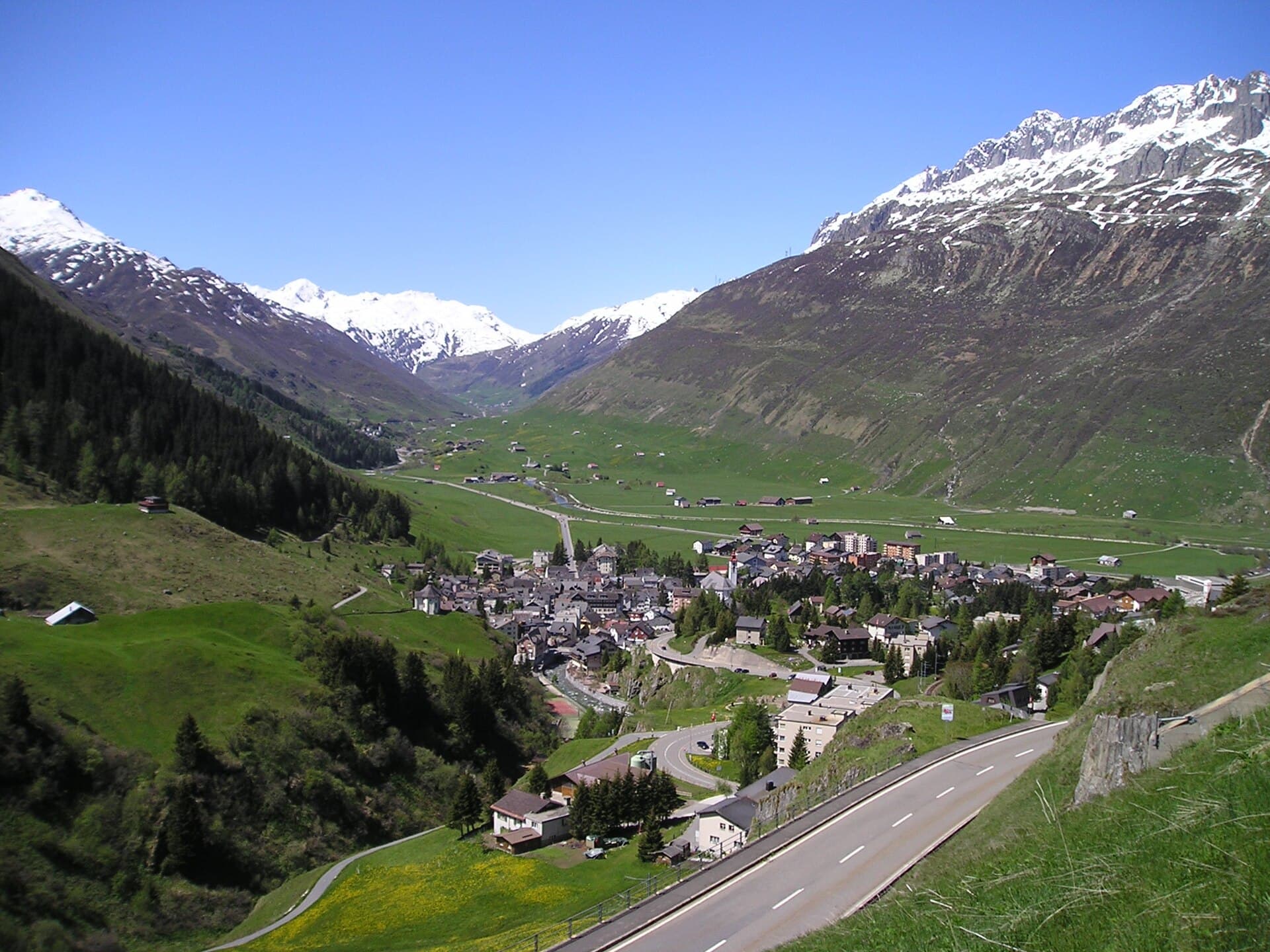 Lutz Fischer-Lamprecht / CC BY-SA 4.0, via Wikimedia Commons
“Where ancient passes meet modern peaks, Andermatt is a crossroads of history and high-alpine adventure.”
Not the postcards. The stories even locals don't know — whispered in your ear, right where they happened.
The local legend of how this bridge came to be built involves a rather infernal agreement.
This seemingly peaceful valley once faced a dramatic threat to its very existence.
For decades, this picturesque village held a significant, and rather secretive, strategic role for Switzerland.
Discover every secret of Andermatt
Every address, every reveal in full — in your ear, right where it happened.
You pick your stops. You walk. The voice reveals what the others miss.
No tours available yet. Check back soon — we're preparing them.
Andermatt, a mountain village in the canton of Uri, Switzerland, sits at an elevation of 1,437 meters (4,715 ft) above sea level, at the heart of the Saint-Gotthard Massif. It is a place where north-south and east-west traverses of Switzerland historically converge, making it a significant crossroads for travelers, culture, and commerce for centuries. Encircled by an impressive high-altitude valley and majestic mountains, Andermatt offers a captivating blend of natural beauty, a storied past, and modern amenities.
Once a strategic military base and later a quiet, almost forgotten village, Andermatt has undergone a revitalization, transforming into a year-round luxury destination. Despite new developments, the village maintains its traditional character with century-old houses and narrow streets, while also offering contemporary infrastructure, including luxury hotels, apartments, and an 18-hole golf course. Whether seeking winter sports, summer hiking, or a tranquil alpine escape, Andermatt provides a diverse range of experiences.
## From Neolithic Settlements to Alpine Crossroads Andermatt's history stretches back to the Neolithic period, with archaeological finds indicating human presence in the Urseren Valley as early as 4000 BC. Later, during Roman times, Helvetic Celtic tribes likely inhabited this Alpine valley. The origins of the modern town can be traced to Alemannic tribes, the Walsers, who established settlements in the area where Andermatt stands today, with the parish of Andermatt first mentioned in 1203.
## The Gotthard Pass and a Flourishing Spa Town The opening of the Schöllenen route around 1200 positioned Andermatt strategically on the Gotthard route, facilitating crucial Alpine trading. Between 1818 and 1831, the Gotthard Pass became accessible for horse-drawn carriages, leading to an influx of tourism and trade. Andermatt flourished economically, becoming a popular spa town and a vital intersection connecting various parts of Switzerland.
## Military Base and Economic Decline The village's fortunes shifted dramatically with the opening of the St. Gotthard railway tunnel in 1881, which bypassed Andermatt, running beneath it. This led to a decline in tourism and trade. From 1885, Andermatt transformed into a significant garrison town for the Swiss Federal Army, a role it maintained for over a century, until the base disbanded in the 1990s. This period saw a decrease in population as families and young people moved away, leaving the area largely abandoned.
## Modern Revitalization The early 21st century marked a new chapter for Andermatt. In 2005, an Egyptian investor initiated a substantial development project, investing significantly to transform the village into a year-round luxury destination. This revitalization included the construction of hotels, apartment houses, and a golf course, with developments designed to blend with the traditional architectural style. The opening of The Chedi Andermatt in 2013, a five-star hotel, further propelled the village into the international spotlight, attracting a new wave of visitors and residents.
Andermatt offers a blend of historic charm and modern alpine experiences. Walk through the Old Town, with its century-old houses and narrow streets, reflecting its enduring past. The Ursern Valley Museum, housed in a patrician house built in 1786, provides insights into local culture, history, and the region's military and alpine economy.
For outdoor enthusiasts, the Schöllenen Gorge and the Devil's Bridge are essential stops. The bridge, spanning the dramatic gorge, offers a glimpse into a historic trading route and is surrounded by local myths. Take a cable car up Gemsstock Mountain for expansive views across the Ursern Valley and over 100 mountain peaks. The Sasso San Gottardo Fortress, a former top-secret military installation built during World War II, offers a unique historical excursion into the heart of the Gotthard Massif. Consider a ride on the Glacier Express, a scenic train journey that passes through dramatic ravines, tunnels, and mountain passes, with Andermatt approximately midway between St. Moritz and Zermatt.
Andermatt is a year-round destination, each season offering distinct experiences. For winter sports, the peak season runs from mid-December to March, with excellent snow conditions often extending from mid-November to late April. January typically sees the most snowfall. Summer, particularly July and August, is popular for hiking, mountain biking, and enjoying the green mountain scenery. Spring and autumn offer fewer crowds, reduced rates, and opportunities for hiking and cycling as wildflowers emerge and autumn colors transform the landscape.
Andermatt is conveniently located about 90 minutes by car from Zurich and just over two hours from Milan. The village is compact and walkable, making a car unnecessary for getting around once you've arrived. The Matterhorn Gotthard Bahn (MGB) provides railway connections to Brig, Visp, and Disentis/Mustér, with a branch line connecting Andermatt to Göschenen. For those staying in the newer part of the village, the Radisson Blu Hotel Reussen offers apartments close to the train station and the Gütsch Express gondola. Many hotels provide free city transport cards. The currency used is the Swiss Franc (CHF).