Łańcut Castle's Coach House
Beyond the opulent staterooms, the castle grounds hold a collection that speaks to a different kind of horsepower.
Full story unlocks in the tour
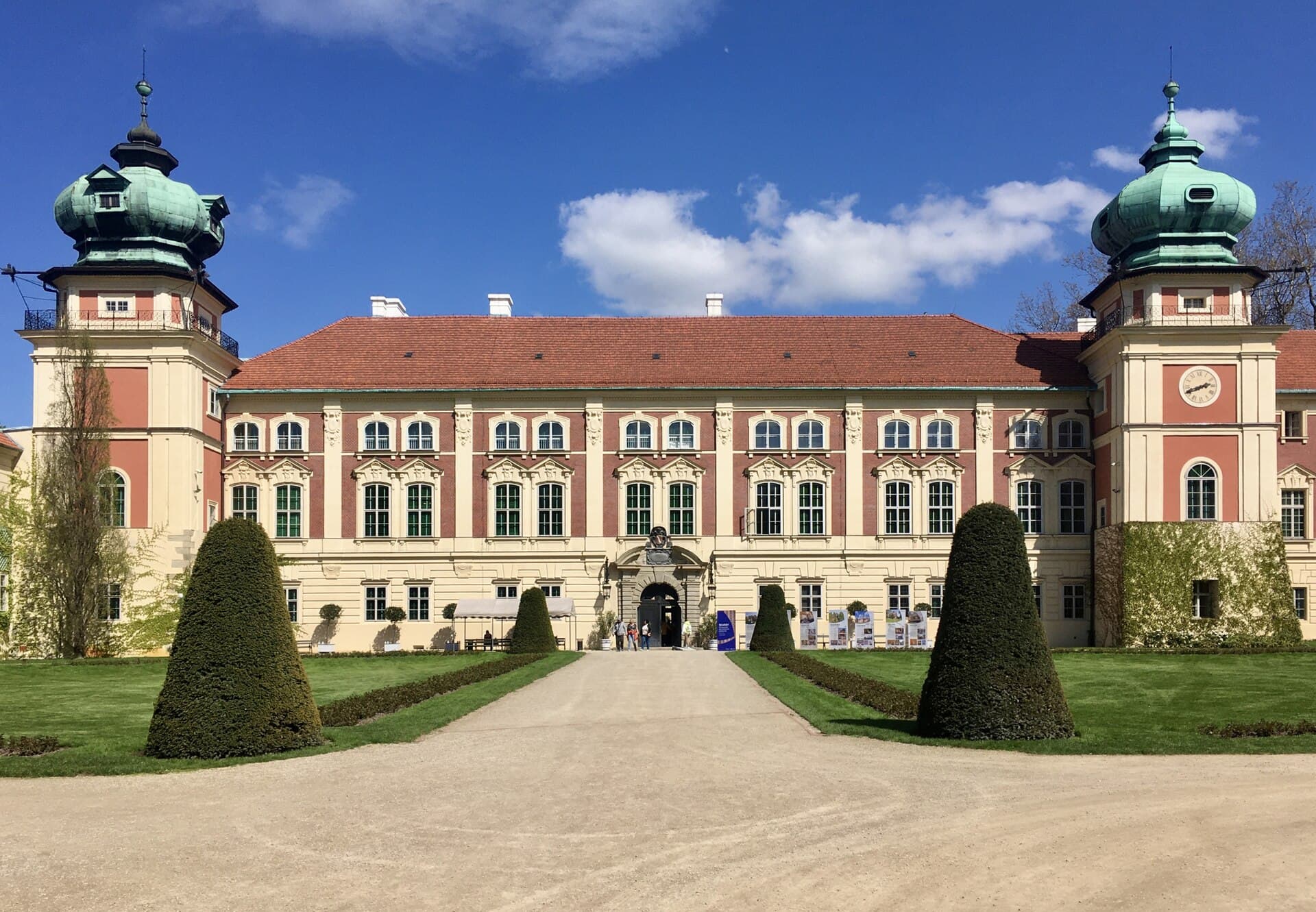 This photo was taken by Janusz Pruchnik. Autorem zdjęcia jest Janusz Pruchnik. Wykorzystując zdjęcie poza projektem Wikipedii, proszę podać jako autora: Janusz Pruchnik / Wikimedia Commons / CC BY-SA 4.0, via Wikimedia Commons
“Where the past isn't just preserved, it's still unfolding.”
Not the postcards. The stories even locals don't know — whispered in your ear, right where they happened.
Beyond the opulent staterooms, the castle grounds hold a collection that speaks to a different kind of horsepower.
Imagine a performance where the audience wasn't just entertained, but also quite literally part of the show's grand illusion.
Before modern heating, maintaining a tropical paradise in a Polish winter required more than just a green thumb.
Discover every secret of Łańcut
Every address, every reveal in full — in your ear, right where it happened.
You pick your stops. You walk. The voice reveals what the others miss.
No tours available yet. Check back soon — we're preparing them.
Łańcut, a town in southeastern Poland, is perhaps best known for its magnificent castle, a former residence of the noble Lubomirski and Potocki families. More than just a grand estate, Łańcut Castle is a sprawling complex that offers a window into aristocratic life across centuries. The town itself, while smaller, complements the castle's grandeur with a quiet charm, inviting exploration beyond the main attraction.
Walking through Łańcut feels like stepping into a meticulously preserved past, where every architectural detail tells a story. The castle, with its well-maintained interiors and extensive parklands, is the focal point, drawing visitors into a world of elaborate balls, political intrigue, and artistic patronage. Yet, the true essence of Łańcut lies in the subtle interplay between the castle's monumental presence and the town's more intimate, local character.
## From Medieval Stronghold to Aristocratic Residence Łańcut's origins stretch back to the 14th century, when it was established as a defensive stronghold by King Casimir the Great. The initial wooden structure evolved over time, becoming a brick castle under the ownership of the Stadnicki family. However, it was under the Lubomirski family, beginning in the late 16th century, that Łańcut truly began its transformation into a palatial residence. Stanisław Lubomirski, a prominent magnate, rebuilt the castle in the early 17th century into a formidable Baroque fortress, complete with bastions and moats, designed by the Italian architect Maciej Trapola.
## The Golden Age of the Potocki Family The castle's golden age arrived with Izabela Lubomirska, who inherited the estate in the late 18th century. A woman of immense wealth and refined taste, she embarked on a comprehensive redesign of the castle and its surrounding park. She transformed the fortress into a more elegant, classical palace, removing many of the defensive features and adding new wings and decorative elements. Her vision laid the groundwork for the castle's present appearance. Upon her death, Łańcut passed to her grandson, Alfred I Potocki, thus beginning the era of the Potocki family's ownership, which lasted until World War II.
## A Legacy Preserved The Potocki family continued to enrich the castle, expanding its art collections, library, and developing the extensive park and gardens. They also added the famous Coach House and the private theatre. The castle remained in their possession until 1944, when the last owner, Alfred Antoni Potocki, left Poland just before the arrival of the Soviet army. Remarkably, the castle survived both World Wars largely intact, and its interiors and collections were preserved. After the war, it was nationalized and transformed into a museum, making its historical and artistic treasures accessible to the public.
The main attraction in Łańcut is undoubtedly the Łańcut Castle Museum. Explore the opulent residential interiors, including the Grand Salon, the Ballroom, and the private apartments, all furnished with period furniture, artworks, and decorative arts. Do not overlook the private theatre, a meticulously preserved example of an 18th-century court stage. The Coach House and Stables house one of Europe's largest collections of horse-drawn carriages, offering a fascinating glimpse into aristocratic travel. Wander through the expansive castle park, featuring an Orangery, a romantic garden, and various follies. The Synagogue, located near the castle, is another significant historical site, notable for its well-preserved interior decorations. For a moment of quiet reflection, visit the Parish Church of St. Stanislaus Bishop and Martyr, with its Baroque architecture and historical significance.
The best time to visit Łańcut is during the spring (April to June) or early autumn (September to October). During these months, the weather is generally pleasant for exploring the castle grounds and park, and the crowds are typically smaller than in the peak summer season. The castle and its various attractions are open year-round, but some outdoor features of the park might be less lively in winter.
Łańcut is easily accessible by train or bus from major Polish cities like Rzeszów, which has an international airport. The castle complex is centrally located and walkable from the town's train and bus stations. Tickets for the castle museum can be purchased online in advance or at the ticket office; it's advisable to check the official website for current opening hours and any special exhibitions. Guided tours are available and often recommended for a deeper understanding of the castle's history and collections. Comfortable walking shoes are a necessity, especially if you plan to explore the extensive park. Dining options in Łańcut range from traditional Polish cuisine to cafes, many within walking distance of the castle.