Anchorage's streetlights
Observe the streetlights in Anchorage, and a curious design detail might catch your eye.
Full story unlocks in the tour
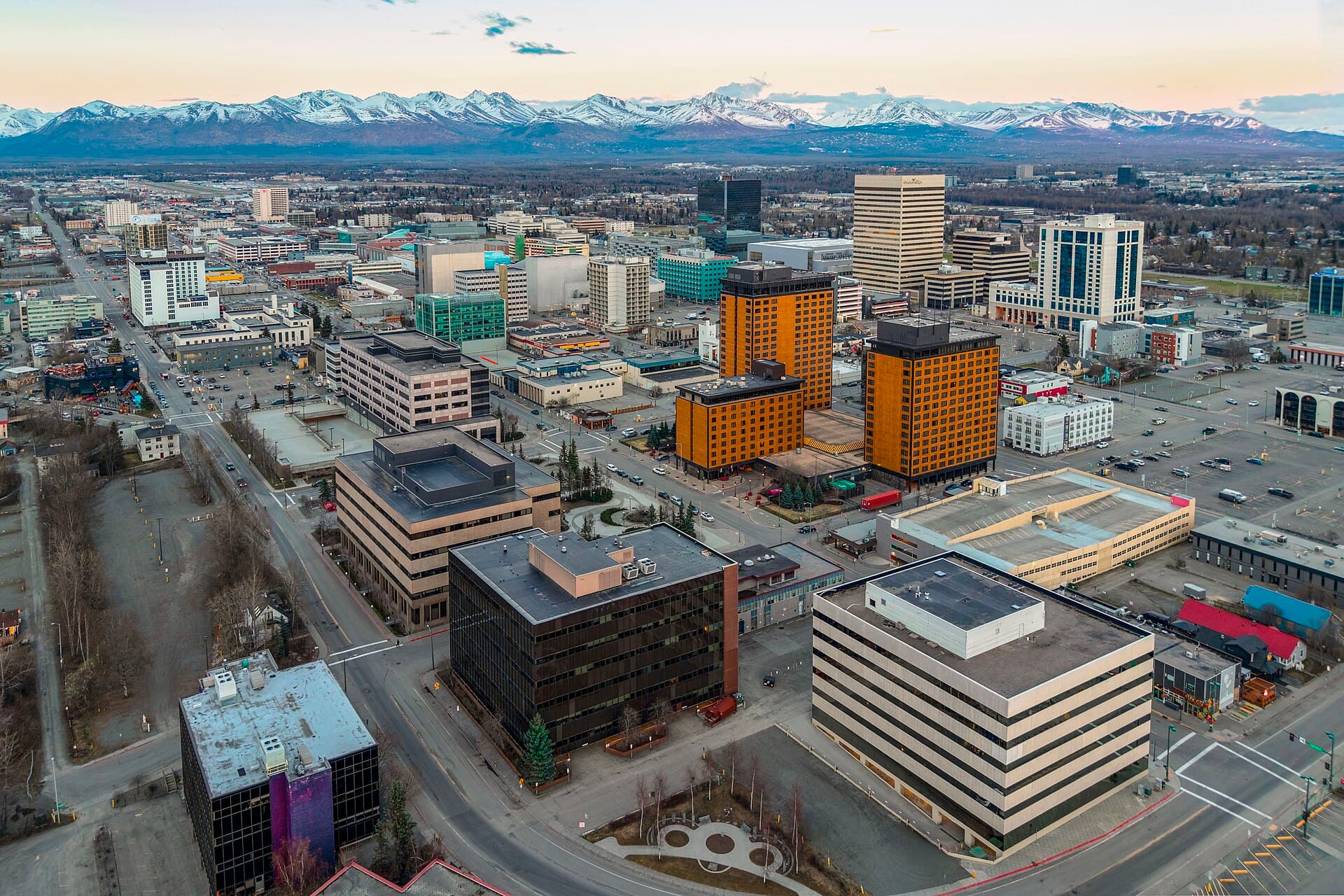 Quintin Soloviev / CC BY 4.0, via Wikimedia Commons
“Where the wild edge of a continent meets city lights.”
Not the postcards. The stories even locals don't know — whispered in your ear, right where they happened.
Observe the streetlights in Anchorage, and a curious design detail might catch your eye.
Within the very heart of Anchorage, a remarkable natural event draws observers each summer.
Beyond its significant collections, the Anchorage Museum holds a subtle homage to the region's geological past.
Discover every secret of Anchorage
Every address, every reveal in full — in your ear, right where it happened.
You pick your stops. You walk. The voice reveals what the others miss.
No tours available yet. Check back soon — we're preparing them.
Anchorage, Alaska's most populous city, often feels like a threshold to the immense wilderness that defines the state. Situated on the Cook Inlet, with the Chugach Mountains rising grandly to the east, it is a place where urban existence and untamed nature reside in close proximity. Moose frequently wander through residential areas, and the cries of eagles can be heard above the city's hum. This singular blend offers a distinct experience, where outdoor adventure is always just a brief drive or even a walk away, and the city itself provides a comfortable foundation for exploration.
More than simply a transit point, Anchorage possesses its own character, forged by its frontier spirit and its role as a central point for Alaskan life. It is a city of contrasts, where contemporary infrastructure meets a profound reverence for the natural world. The extended summer days bring a flurry of activity, from fishing in urban streams to traversing mountain paths, while the winter months present chances for aurora viewing and snow sports. It is a place that invites you to look beyond the ordinary and uncover the unexpected at the very edge of the wild.
## From Tent City to Metropolis Anchorage's beginnings are relatively recent, commencing in 1915 as a temporary settlement for workers constructing the Alaska Railroad. The location was chosen for its ice-free port on Cook Inlet and its strategic position for reaching interior Alaska. The railroad was a monumental undertaking, conceived to link the port of Seward to Fairbanks, accessing the region's mineral and timber resources. The initial community, known as Ship Creek, rapidly expanded as more people arrived seeking employment and prospect.
## The Gold Rush and Beyond While not directly a gold rush town in the same vein as Nome or Fairbanks, Anchorage benefited from the economic activity spurred by resource extraction across Alaska. The city served as a vital supply and transportation center. Its population steadily increased, and by the 1920s, it had established itself as a permanent settlement with developing infrastructure. The city's grid-like street plan, laid out by the Alaska Engineering Commission, reflects this period of organized growth.
## World War II and the Cold War The strategic importance of Alaska, particularly during World War II, further accelerated Anchorage's development. The construction of military bases like Elmendorf Field and Fort Richardson brought a significant influx of personnel and investment, transforming Anchorage into a critical defense hub. This growth continued through the Cold War era, solidifying Anchorage's role as a key military outpost and a major population center in Alaska.
## The Great Alaska Earthquake of 1964 A defining moment in Anchorage's history was the Great Alaska Earthquake on March 27, 1964. The most powerful earthquake ever recorded in North America, it caused widespread destruction across southcentral Alaska, including Anchorage. The city experienced severe damage to buildings, roads, and infrastructure due to ground liquefaction and landslides. The resilience of its residents in rebuilding after this catastrophic event is a testament to the Alaskan spirit.
## The Trans-Alaska Pipeline and Modern Growth The discovery of oil in Prudhoe Bay in 1968 and the subsequent construction of the Trans-Alaska Pipeline in the 1970s ushered in a new era of prosperity and rapid growth for Anchorage. The city became the administrative and logistical center for the oil industry, leading to a boom in population and construction. This period cemented Anchorage's status as Alaska's economic powerhouse and a modern urban center, continually balancing its development with its unique natural surroundings.
Begin your exploration at the Anchorage Museum, an expansive institution that delves into Alaskan art, history, and science, offering a profound understanding of the state's varied cultures and natural environment. For a taste of urban wilderness, wander or cycle along the Tony Knowles Coastal Trail, a paved path presenting expansive views of Cook Inlet, the Chugach Mountains, and often, wildlife like moose and eagles. Do not overlook Ship Creek, where you can observe salmon fishing right in the city center during summer months. For a distinct perspective on local wildlife, visit the Alaska Wildlife Conservation Center, a sanctuary south of the city that provides care for injured and orphaned animals and allows visitors to see Alaska's iconic species up close. If time permits, a scenic drive up to Flattop Mountain offers expansive views of Anchorage and the surrounding peaks, with accessible walking paths for various skill levels.
The optimal time to visit Anchorage largely depends on your desired activities. Summer, from June to August, offers extended daylight hours, mild temperatures, and prime conditions for walking, fishing, and wildlife observation. Winter, from November to March, transforms the landscape into a snow-covered expanse, ideal for skiing, snowboarding, and potentially witnessing the aurora borealis. Shoulder seasons (April-May, September-October) offer fewer crowds and distinct transitional beauty.
Anchorage is served by Ted Stevens Anchorage International Airport (ANC), a significant hub with direct flights from many U.S. cities and some international destinations. Navigating the city is convenient with a rental car, especially if you plan to explore beyond the downtown area. Public transportation, including the People Mover bus system, serves key locations. Taxis and ride-sharing services are also available. Dress in layers, as Alaskan weather can change quickly, regardless of the season. Even in summer, evenings can be cool. Bear safety is important when venturing into natural areas; carry bear spray and know how to use it.