Amman Citadel
The colossal hand at the Citadel isn't just a fragment; it hints at a deity of immense power.
Full story unlocks in the tour
 Ramzik1999 / CC BY-SA 4.0, via Wikimedia Commons
“Where ancient echoes meet modern life in a symphony of stone and stories.”
Not the postcards. The stories even locals don't know — whispered in your ear, right where they happened.
The colossal hand at the Citadel isn't just a fragment; it hints at a deity of immense power.
This ancient Roman theater has a clever design secret for its spectators.
Rainbow Street's cheerful name has a surprising origin, unrelated to its colorful decorations.
Discover every secret of Amman
Every address, every reveal in full — in your ear, right where it happened.
You pick your stops. You walk. The voice reveals what the others miss.
No tours available yet. Check back soon — we're preparing them.
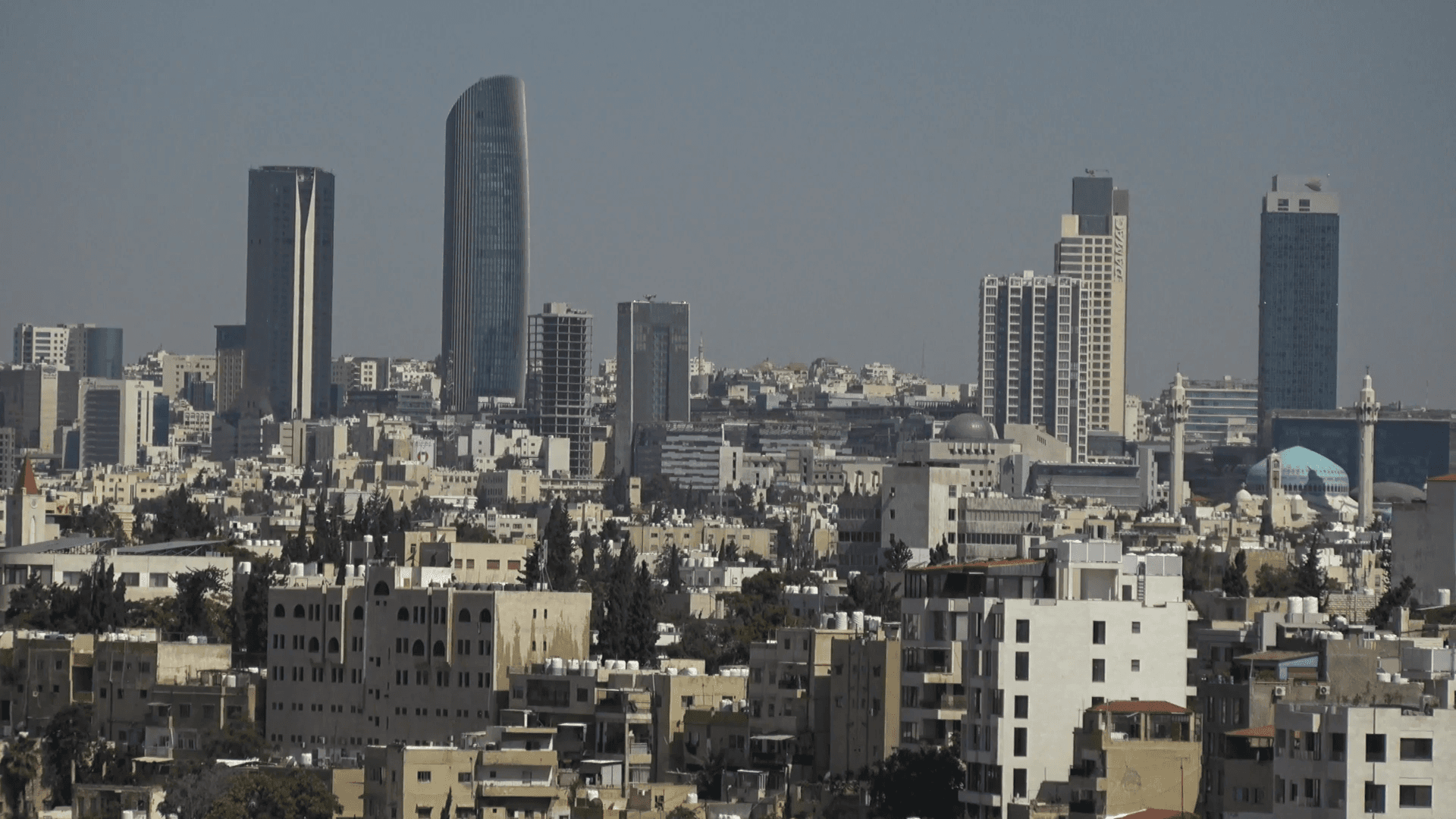
Amman, the capital of Jordan, unfolds across rolling hills, a place where layers of history are visibly stacked. It's a metropolis that seamlessly blends the ancient with the contemporary, offering a dynamic experience for those who wander its streets. From the commanding heights of the Citadel, ancient ruins look out upon a bustling modern cityscape, where the call to prayer harmonizes with the lively sounds of urban life.
This animated city, home to millions, serves as Jordan's political, cultural, and economic heart. It's a destination where you can explore millennia-old archaeological sites in the morning and dine in contemporary cafes in the evening. Amman's unique character lies in its contrasts: Roman amphitheaters stand near neon-lit streets, and centuries-old ruins are just steps away from crowded shawarma stands. The generosity of Jordanian hospitality is intrinsic to the way of life here, rooted in Bedouin culture, making for genuine cultural exchanges.
While Amman can be bustling, particularly with traffic during commuting hours, many of its focal points are within walking distance of each other. The city's hilly terrain means endless stairs and steep roads, but these also offer expansive views and opportunities to discover quiet corners and expressive street art. Whether you're drawn to its deep past or its modern pulse, Amman is a city that rewards exploration.
Amman's story stretches back thousands of years, making it one of the world's oldest continuously inhabited cities. Traces of Stone Age homes from around 7000 BCE have been found, with evidence of human settlement dating back to the Neolithic period. The city truly began to take shape during the Iron Age, around the 13th century BCE, when it became the capital of the Ammonite Kingdom, known as Rabbath Ammon. This ancient kingdom is even mentioned in the Old Testament.
In the 3rd century BCE, the Egyptian ruler Ptolemy II Philadelphus conquered and rebuilt the city, renaming it Philadelphia after himself. Under Roman rule, Philadelphia blossomed as part of the Decapolis, a league of ten Hellenistic cities. The Roman presence is still evident today in structures like the Roman Theater, built between 138-161 CE during the reign of Emperor Antoninus Pius. The city was taken by the Arab general Yazid ibn Abi Sufyan in 635 CE, and with the spread of Islam, its original name, Amman, was restored.
Amman experienced a period of decline after the Abbasids moved the center of the Islamic world to Baghdad in the mid-8th century, and by the 15th century, it was largely abandoned. Its resurgence began in 1878 when the Ottoman Turks resettled Circassian refugees in the area. The construction of the Hejaz Railway in 1908, which passed through Amman, literally placed the city back on the map, drawing people and significantly increasing its population. In 1921, Amman was proclaimed the capital of the newly formed Emirate of Transjordan under Emir Abdullah I, and in 1946, it became the capital of the independent Hashemite Kingdom of Jordan. Since then, Amman has undergone significant modernization and expansion, transforming into the cosmopolitan city it is today.
Begin your exploration at the Amman Citadel, situated on Jabal al-Qala'a, one of the city's highest hills. This archaeological site reveals layers of history, from Bronze Age settlements to Byzantine churches and Umayyad palaces. Here, you'll find the impressive remnants of the Temple of Hercules and the Umayyad Palace, offering expansive views of the city below. Adjacent to the Citadel is the Roman Theater, a remarkably well-preserved amphitheater from the 2nd century CE that once seated 6,000 spectators and is still used for performances today.
For a different pace, wander through Downtown Amman (Al-Balad), the bustling core of the city, with its narrow market streets where you can find everything from spices to handmade crafts. Just a short walk from downtown is Rainbow Street, a lively pedestrian promenade in the historic Jabal Amman district. Known for its cafes, restaurants, shops, and cultural landmarks, it's a fine place to observe local life and absorb the atmosphere. Do not miss Souk Jara, a seasonal artisan market on Rainbow Street that displays local crafts and street food. Other notable sites include the Duke's Diwan, Amman's oldest public building, which has served as a post office, ministry, and hotel, and the Old Signs of Amman Museum (Armat Museum), preserving vintage shop signs.
The most pleasant times to visit Amman are during the spring (March to May) and autumn (September to November). During these seasons, the weather is agreeably warm, with daytime temperatures ranging from the mid-60s to mid-80s Fahrenheit (18°C to 28°C), making it ideal for sightseeing and exploring. Spring offers blooming wildflowers and green landscapes, while autumn provides cooler days after the summer heat. While summer (June to August) can be intensely hot, and winter (December to February) brings cooler temperatures and occasional rain or snow, these shoulder seasons offer fewer crowds.
The local currency is the Jordanian Dinar (JOD), and ATMs are readily available. Major hotels and restaurants accept Mastercard and Visa. Arabic is the most widely spoken language, but many people in Amman have a basic knowledge of English.
For getting around, Amman is a hilly city, and while walking is a wonderful way to explore many areas, ride-hailing apps like Uber and Careem are easily accessible and convenient, offering cash payment options. Yellow taxis are also common and use meters, while white 'service' taxis operate on fixed routes. Public buses are available and generally the most economical option, with a network of routes.
Jordan is a moderate Islamic country, and modest dress is appreciated, especially in public places, smaller towns, and religious sites. For both men and women, covering shoulders and knees is a good rule of thumb. Loose, light, and breathable fabrics are recommended. While Amman is more liberal than some other areas, avoiding overly revealing clothing is respectful.