Alta River
The Alta River is celebrated globally for its salmon, drawing anglers from every corner of the earth. Yet, securing a chance to cast a line here is an intricate pursuit.
Full story unlocks in the tour
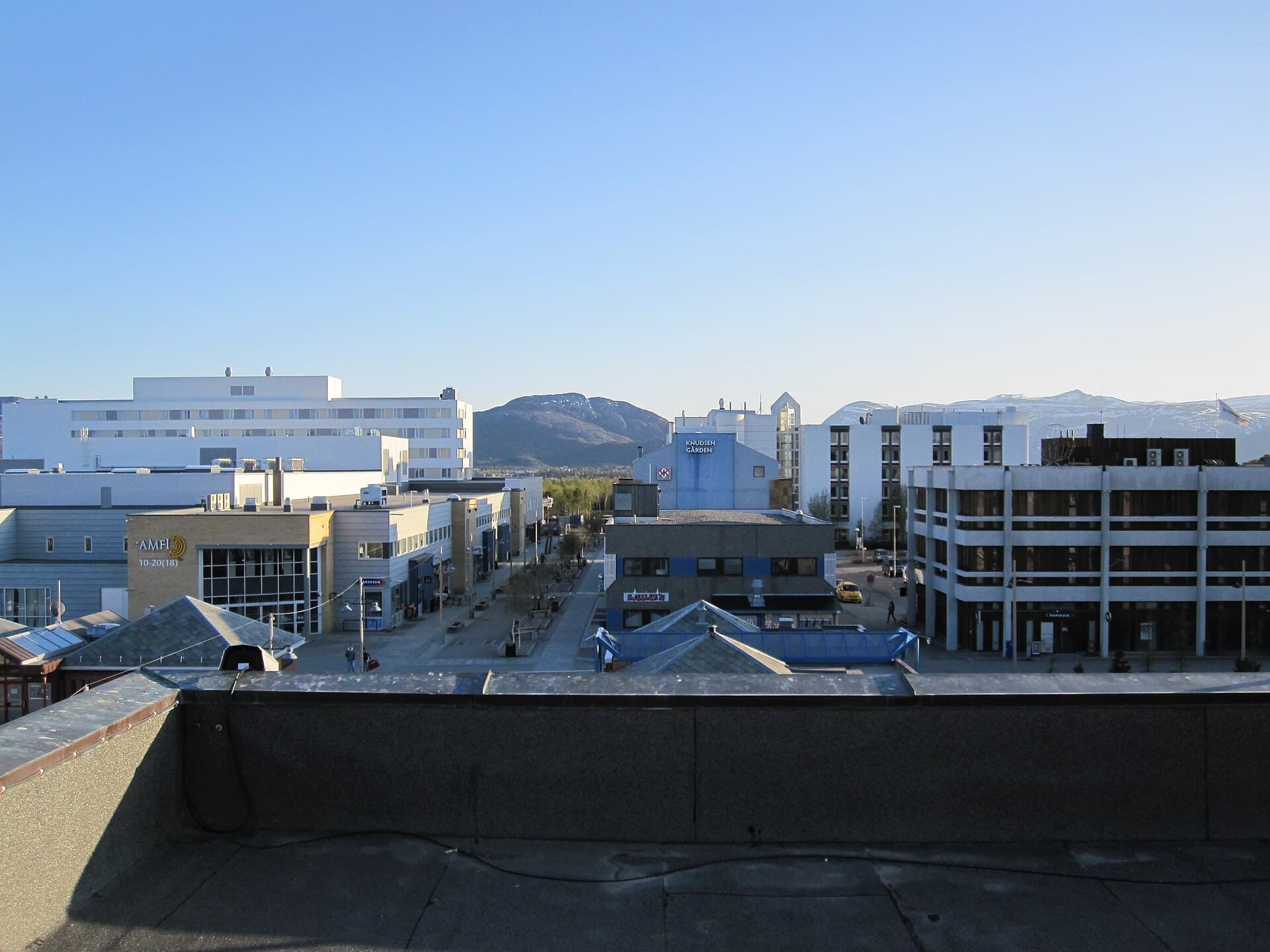 Caroline Maybach / CC0, via Wikimedia Commons
“Where ancient artistry meets the aurora's dance, Alta unfolds as a grand canvas of Arctic wonders.”
Not the postcards. The stories even locals don't know — whispered in your ear, right where they happened.
The Alta River is celebrated globally for its salmon, drawing anglers from every corner of the earth. Yet, securing a chance to cast a line here is an intricate pursuit.
High upon Haldde Mountain, a solitary structure stands as a testament to scientific ambition in the Arctic. It once served as a groundbreaking facility for observing the Northern Lights.
During the Second World War, the serene Altafjord held a formidable secret, playing a pivotal role in German naval strategy.
Discover every secret of Alta
Every address, every reveal in full — in your ear, right where it happened.
You pick your stops. You walk. The voice reveals what the others miss.
No tours available yet. Check back soon — we're preparing them.
Alta, often referred to as the “City of the Northern Lights,” is an Arctic urban center in Norway's far north, positioned at 69°N. Despite its northern latitude, it experiences surprisingly mild weather, a gift from the Gulf Stream. The city presents a singular blend of natural phenomena, including the midnight sun from mid-May to late July and the polar night from late November to mid-January.
Life in Alta is marked by an active, unhurried rhythm, with fishing, reindeer husbandry, and Sami traditions woven into the fabric of daily existence. The city is considered the heart of Sápmi, the Sami homeland, where the Sami language appears on signs and cultural encounters, such as visits to reindeer farms, are readily available. Alta acts as a gateway to the expansive Finnmarksvidda, Norway's largest mountain plateau, offering a varied landscape of tundra, forest, and fjord.
The story of Alta stretches back thousands of years, with evidence of human habitation dating to the Stone Age. The region is home to the Komsa culture, whose people lived here approximately 10,000 years ago, shortly after the glaciers receded.
Alta has long been a convergence point for diverse cultures, frequently described as a gathering of “three tribes”: the Sami, the Kvens, and the Norwegians. Before the 18th century, the area was primarily settled by the Sea Sami, who sustained themselves through hunting, fishing, and animal husbandry. The Kvens, Finnish settlers, began arriving in the 1700s due to conflict and scarcity, introducing grain cultivation and refining river fishing techniques.
The most compelling evidence of Alta's ancient past is its UNESCO World Heritage-listed rock carvings, or petroglyphs, created between 4200 and 500 BC. These thousands of carvings depict scenes of hunting, gathering, fishing, rituals, and social occasions, suggesting Alta was a significant spiritual and communal hub in the Stone Age. Some of these ancient artworks were painted red in the 1970s to enhance their visibility.
In 1826, the discovery of a copper mine in Kåfjord spurred industrial growth and drew a new influx of workers and specialists, transforming the small settlements into an industrial center. The Bossekop area also flourished as a crucial trading post in the North Calotte for centuries.
Alta played a strategic role during World War II, serving as a key location for German forces. The battleship Tirpitz was stationed in the Altafjord for two years, posing a significant threat to Allied convoys. In 1944, during their retreat, the Nazis implemented a scorched-earth policy, burning nearly all of Alta; the Alta Church was one of the few structures to survive.
In the late 1970s and early 1980s, Alta became the focal point of a major environmental and indigenous rights protest known as the Alta Controversy. This series of protests challenged the construction of a hydroelectric power plant on the Alta River, bringing the rights of the Sami people to the forefront of Norway's political agenda. Although the Supreme Court ultimately ruled in favor of the government, the controversy significantly advanced the recognition of Sami indigenous rights.
Begin your exploration at the Alta Museum, a UNESCO World Heritage site that safeguards over 6,000 Stone Age rock carvings. The indoor museum offers exhibits on the carvings, Sami culture, World War II, and the Northern Lights. During summer, you can wander along wooden paths to observe the carvings up close.
The Northern Lights Cathedral, with its distinctive spiraling pyramid structure clad in titanium, stands as a modern architectural marvel completed in 2013. Its design draws inspiration from the aurora borealis.
To immerse yourself in Sami culture, visit Sami Siida in Øvre Alta. Here, you can encounter a Sami reindeer herder, learn about their traditions, language, and the profound connection they share with the land. Experiences often include authentic Sami meals, storytelling, and joik, their traditional form of singing.
For those who appreciate the outdoors, the Sautso-Alta Canyon, one of Europe's largest canyons, offers impressive vistas and opportunities for hiking. A popular trek begins at Gargia Mountain Lodge, leading to a spectacular viewpoint over 300 meters above the Alta River. The Alta River itself is renowned for its large Atlantic salmon, drawing anglers, though fishing is carefully regulated.
Alta presents distinct experiences depending on the season. For the best opportunity to observe the Northern Lights, plan your visit between October and March, with December to February being prime months for darkness and frequent appearances. September also offers excellent viewing quality with up to 14 hours of darkness. Winter activities such as dog sledding, snowmobiling, and ice fishing are best enjoyed from November to March.
To experience the midnight sun and warmer weather, schedule your journey between mid-May and late July. This period is ideal for hiking, kayaking, cycling, and exploring the rock carvings, which are only visible once the snow has receded.
Alta Airport (ALF) is located about 4 kilometers east of the city center and is the busiest airport in Finnmark. It offers direct flights to Oslo and Tromsø, as well as regional connections within Finnmark. An airport bus service operates between the airport and the city center, taking approximately 10 minutes. Taxis and car rental services are also available.
While Norwegian Krone (NOK) is the local currency, credit cards are widely accepted in most establishments. Norwegian is the official language, but English is commonly spoken, especially in areas catering to visitors. The city center is compact, making it easy to navigate on foot or by bike. For longer distances or trips to the airport, the local Snelandia bus service is available.