Torre di Sulis
This prominent tower holds a secret of local heroism and subsequent betrayal.
Full story unlocks in the tour
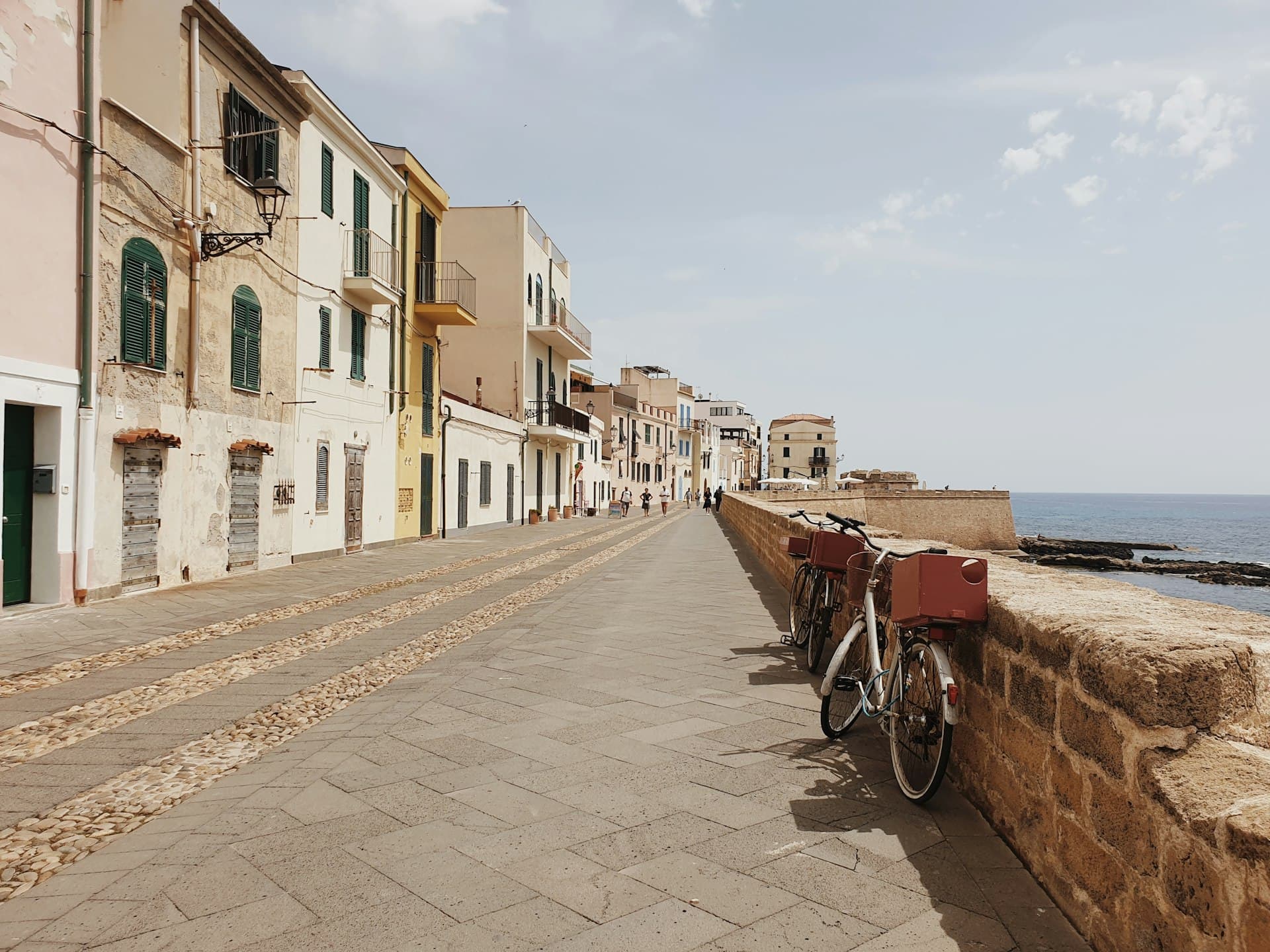 Photo: Rhamely / Unsplash
“Where Catalan echoes on Sardinian shores.”
Not the postcards. The stories even locals don't know — whispered in your ear, right where they happened.
This prominent tower holds a secret of local heroism and subsequent betrayal.
Look closely at the street signs in the old town, and you'll notice something unusual for Italy.
Beyond the city, an ancient burial ground reveals a surprising detail about its earliest inhabitants.
Discover every secret of Alghero
Every address, every reveal in full — in your ear, right where it happened.
You pick your stops. You walk. The voice reveals what the others miss.
No tours available yet. Check back soon — we're preparing them.
Alghero, a captivating coastal city on Sardinia's northwestern shores, presents a unique blend of Italian character and a distinct Catalan heritage. Its historic center is a labyrinth of narrow, paved lanes, ancient walls, and sea-facing bastions that narrate a story spanning centuries. The city's identity is deeply rooted in its past as a Catalan colony, a legacy still evident in its architecture, cuisine, and the Algherese dialect, a variant of Catalan spoken by many locals.
Beyond its well-preserved medieval core, Alghero is celebrated for its compelling natural surroundings. It is part of the "Coral Riviera," a region known for its precious red coral, which has been harvested and crafted into adornments for generations. The coastline offers an array of beautiful beaches with clear waters, from the easily accessible Lido di Alghero to the white sands of Maria Pia. Dramatic limestone cliffs, sea caves, and national parks provide opportunities for exploration and outdoor activities, making Alghero a versatile destination for both repose and adventure.
Whether drawn to its profound history, the allure of its unique cultural blend, or the Mediterranean landscapes, Alghero offers an immersive experience. From savoring traditional Catalan-Sardinian dishes to exploring ancient archaeological sites, the city invites visitors to discover its multifaceted character.
The area around modern-day Alghero has been inhabited since prehistoric times, with evidence of the Ozieri culture in the 4th millennium BC at sites like the Necropolis of Anghelu Ruju, and the Nuragic civilization settling around 1500 BC. Phoenicians arrived by the 8th century BC, establishing metalworking towns like Sant'Imbenia, which traded with the Etruscans. However, the city of Alghero itself was founded as a fortified port town in 1102 by the Genoese Doria family.
For nearly a century, Alghero remained under Doria control, apart from a brief period of Pisan rule between 1283 and 1284. A pivotal shift occurred in 1354 when Peter IV of Aragon conquered Alghero. Following this conquest, many native Sardinians were expelled and replaced by Catalan settlers, profoundly shaping the city's cultural and linguistic identity. This period cemented Alghero's enduring nickname, "Little Barcelona," due to its Catalan language, architecture, and traditions.
Alghero flourished as a Catalan colony, gaining recognition as a bishopric and a "King's City" in the early 16th century. Emperor Charles V even resided there in 1541. The city's defensive walls, many of which are still visible today, were largely constructed or reinforced by the Aragonese in the 16th century. In 1720, Alghero, along with the rest of Sardinia, came under the rule of the House of Savoy, marking the beginning of Italianization policies. Despite this, the Catalan language, known as Algherese, continued to be spoken and is officially recognized as a minority language today.
Challenges arrived in the 19th century, including a famine in 1812 and a cholera epidemic in 1855. During World War II, Alghero suffered significant damage from bombing. The mid-20th century saw a period of recovery and development, with the reclamation of surrounding marshes and the establishment of new suburbs. Today, Alghero proudly blends its diverse historical influences, offering a unique cultural experience on the Sardinian coast.
The heart of Alghero is its historic Old Town, or Centro Storico, best explored on foot. Wander through its paved lanes, discovering Catalan architecture and lively piazzas. The 16th-century Santa Maria Cathedral (Cattedrale di Santa Maria) is a prominent landmark, and climbing its bell tower offers expansive views. The 14th-century Church of San Francesco, with its beautiful cloister, provides a peaceful retreat.
Stroll along the 16th-century bastions, the ancient city walls that encircle the old town, especially at sunset for memorable Mediterranean vistas. These walls, with their watchtowers like Torre di San Giacomo, offer a glimpse into Alghero's fortified past. For a deeper dive into local history, visit the Coral Museum (Museo del Corallo), which showcases the artistry and science behind the region's famous red coral.
Beyond the city walls, nature calls. Take a boat trip or descend the 654 steps of the Escala del Cabirol to explore Neptune's Grotto (Grotta di Nettuno), a remarkable sea cave with impressive stalactites and an underground saltwater lake. For ancient history, visit the Nuraghe Palmavera, an archaeological site featuring Bronze Age towers and huts, or the Necropolis of Anghelu Ruju, a prehistoric burial ground.
Alghero enjoys a Mediterranean climate with warm, dry summers and mild, rainy winters. The most opportune time to visit for a mix of pleasant weather and fewer crowds is in early June or late September. During these shoulder seasons, temperatures are comfortable, ranging from 15°C to 23°C in spring and 15°C to 22°C in autumn, with less rainfall. Summer, from June to August, is peak season, with temperatures between 25°C and 30°C and minimal rain, ideal for beaches and water activities. However, it can be very warm for active pursuits, and the city will be more crowded. Spring and autumn are also excellent for hiking and cultural exploration.
The currency in Alghero, like the rest of Italy, is the Euro (€). ATMs are widely available in the city center, and major credit and debit cards are accepted in most hotels, restaurants, and larger shops. However, it's advisable to carry some cash for smaller purchases or at local markets. While gratuity is not mandatory in Italy, rounding up the bill for good service is appreciated, and a service charge (coperto) may sometimes be automatically added.
Alghero–Fertilia Airport (AHO) is conveniently located about 8 kilometers (5 miles) northwest of the city, with shuttle buses and taxis providing transport to the city center in about 15-30 minutes. The historic center is pedestrian-only, making comfortable walking shoes essential for exploring its paved lanes. For reaching nearby beaches or outlying attractions, renting a car is highly recommended, though local buses are available during summer months. The official language is Italian, but Algherese Catalan is also widely spoken, and English is generally understood in tourist areas.