Old Town Albuquerque
The city’s historic heart holds a secret about its very name.
Full story unlocks in the tour
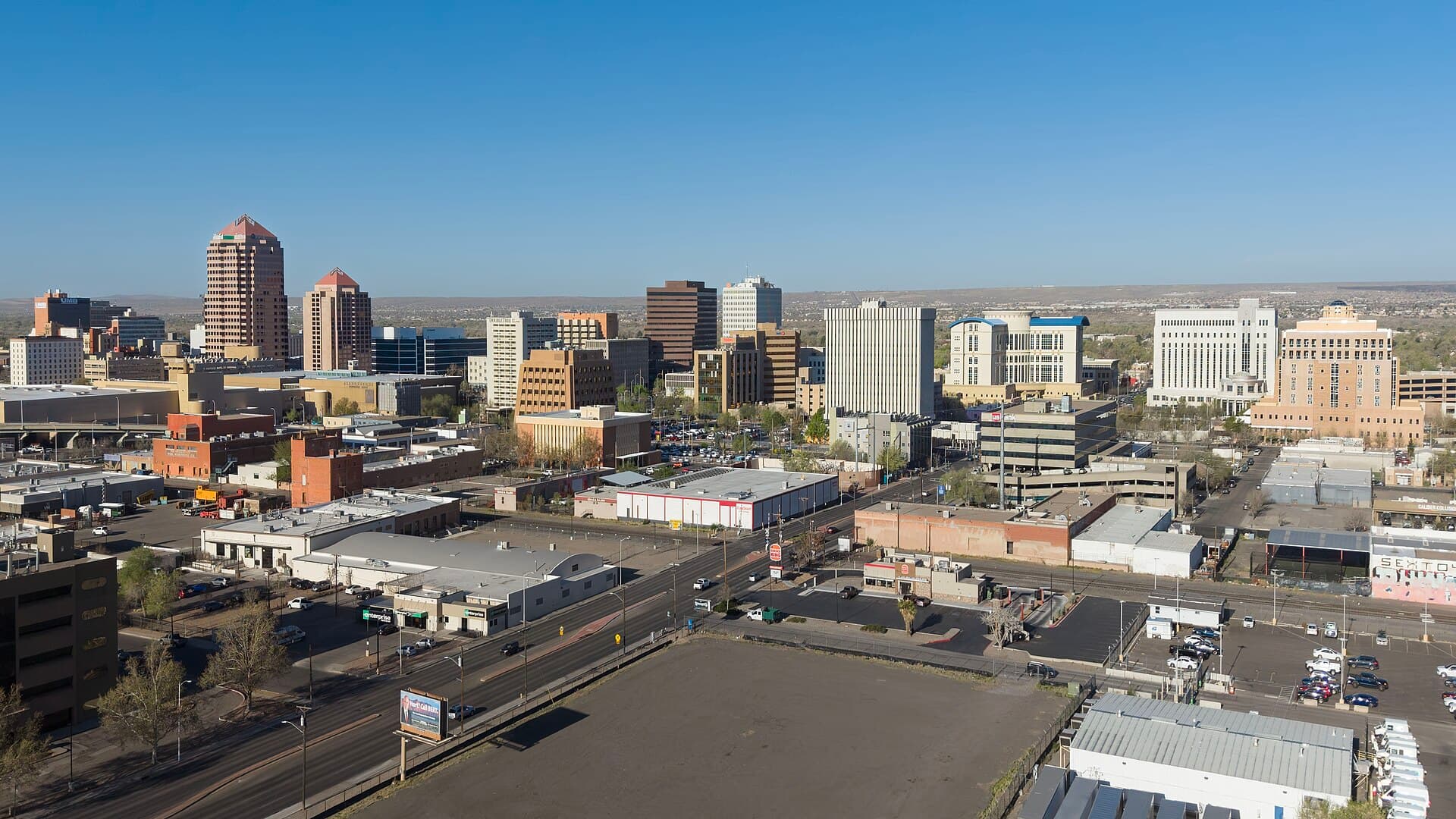 Quintin Soloviev / CC BY 4.0, via Wikimedia Commons
“Where the high desert meets ancient history and endless blue skies.”
Not the postcards. The stories even locals don't know — whispered in your ear, right where they happened.
The city’s historic heart holds a secret about its very name.
This internationally recognized event has a surprising connection to an iconic breakfast food.
The five dormant volcanoes on the city's western horizon possess a fiery past that still influences the present.
Discover every secret of Albuquerque
Every address, every reveal in full — in your ear, right where it happened.
You pick your stops. You walk. The voice reveals what the others miss.
No tours available yet. Check back soon — we're preparing them.
Albuquerque, New Mexico, is a city where ancient cultures, Spanish colonial heritage, and modern innovation converge under a vast, often cerulean sky. Situated in the high desert at an elevation of over 5,300 feet, it offers a distinct Southwestern experience. The city is bisected by the Rio Grande and flanked by the dramatic Sandia Mountains to the east, which glow a watermelon-pink at sunset, earning them their Spanish name. With over 300 days of sunshine annually, Albuquerque invites exploration of its diverse landscapes and profound cultural fabric.
The history of Albuquerque stretches back as far as 12,000 years, with evidence of Paleo-Indian hunter-gatherers in the region. Around 750 CE, Ancestral Puebloan people began constructing multi-story adobe dwellings, known today as pueblos. By the 1500s, approximately 20 Tiwa pueblos dotted a 60-mile stretch of the middle Rio Grande valley.
Spanish conquistadores, led by Francisco Vázquez de Coronado, first visited the region in 1540–41. Permanent Spanish settlement began after Juan de Oñate's expedition in 1598, with 17 Spanish estancias reported in the Albuquerque area by 1680. These settlers were temporarily driven out during the Pueblo Revolt of 1680 but returned to re-settle abandoned lands in 1692.
In 1706, Governor Francisco Cuervo y Valdés officially established the community as a royally chartered town, naming it 'Alburquerque' after the Duke of Alburquerque, the viceroy of New Spain. This settlement, initially small and dispersed, eventually coalesced into a series of plazas, with what is now Old Town being the largest. The city became an important trading center on the Camino Real, connecting Mexico City and Santa Fe.
Control of Albuquerque, along with the rest of New Mexico, passed to Mexico in 1821 and then to the United States in 1846. These shifts brought increased commerce, and Albuquerque prospered as a trading hub and U.S. Army post. The arrival of the Atchison, Topeka, and Santa Fe Railway in 1880 led to the creation of a 'New Town' near the depot, which quickly overshadowed the older community. This 'New Town,' dominated by Anglo-Americans and European immigrants, was incorporated as a city in 1891. Post-World War II, Albuquerque experienced significant growth with the establishment of the Sandia Complex and Kirtland Air Force Base, further solidifying its role as a center for science and technology.
Begin your exploration in Old Town Albuquerque, the city's historic core, where you can wander through adobe buildings, browse local shops, and visit San Felipe de Neri Church, continuously in use since 1793. For expansive views, take the Sandia Peak Tramway, a 2.7-mile aerial tramway that ascends to the 10,378-foot Sandia Peak. The Indian Pueblo Cultural Center offers a deep dive into the history and living cultures of New Mexico's 19 Pueblos, featuring traditional dances and art. Drive a portion of Historic Route 66 (Central Avenue), admiring the vintage neon signs and classic diners. The National Museum of Nuclear Science & History explores the history of nuclear science in the United States. For a distinctive animal encounter, visit the American International Rattlesnake Museum in Old Town, home to a large collection of live rattlesnakes. Do not overlook the ancient rock carvings at Petroglyph National Monument on the city's west side, one of North America's largest petroglyph sites. The ABQ BioPark includes a zoo, botanic garden, and aquarium.
Albuquerque enjoys a high-desert climate with four distinct seasons and over 300 days of sunshine annually. The best times to visit are during the spring (April to June) and fall (September to November) when temperatures are mild and pleasant, ideal for outdoor activities. Fall also hosts the renowned Albuquerque International Balloon Fiesta in October. Summers (June to September) are hot and dry, with average daily highs above 84°F (29°C), though low humidity can make the heat more comfortable. Winters (November to March) are cool and sunny, with average lows in January around 28°F (-2°C) and occasional light snowfall.
Albuquerque International Sunport (ABQ) is the primary airport, located southeast of the city, offering car rentals and free Wi-Fi. The city's public transportation, ABQ RIDE, operates numerous bus routes, including two Albuquerque Rapid Transit (ART) bus rapid transit lines, with many routes connecting at the Alvarado Transportation Center downtown. As of early 2022, ABQ RIDE transit services operate with zero fares. Tipping customs generally follow the US standard of 15-20% for good service. While generally safe for tourists in popular areas like Old Town and Nob Hill, it's advisable to stay alert, particularly at night, and secure valuables in vehicles. The city's high altitude (over 5,000 feet) means stronger UV rays and drier air; stay hydrated and use sunscreen. During hot weather, the city provides 'cool down centers' at libraries, pools, and community centers.