Torre de Doña Blanca
This imposing tower, a segment of Albarracín's formidable defenses, holds a surprisingly somber secret within its thick masonry walls.
Full story unlocks in the tour
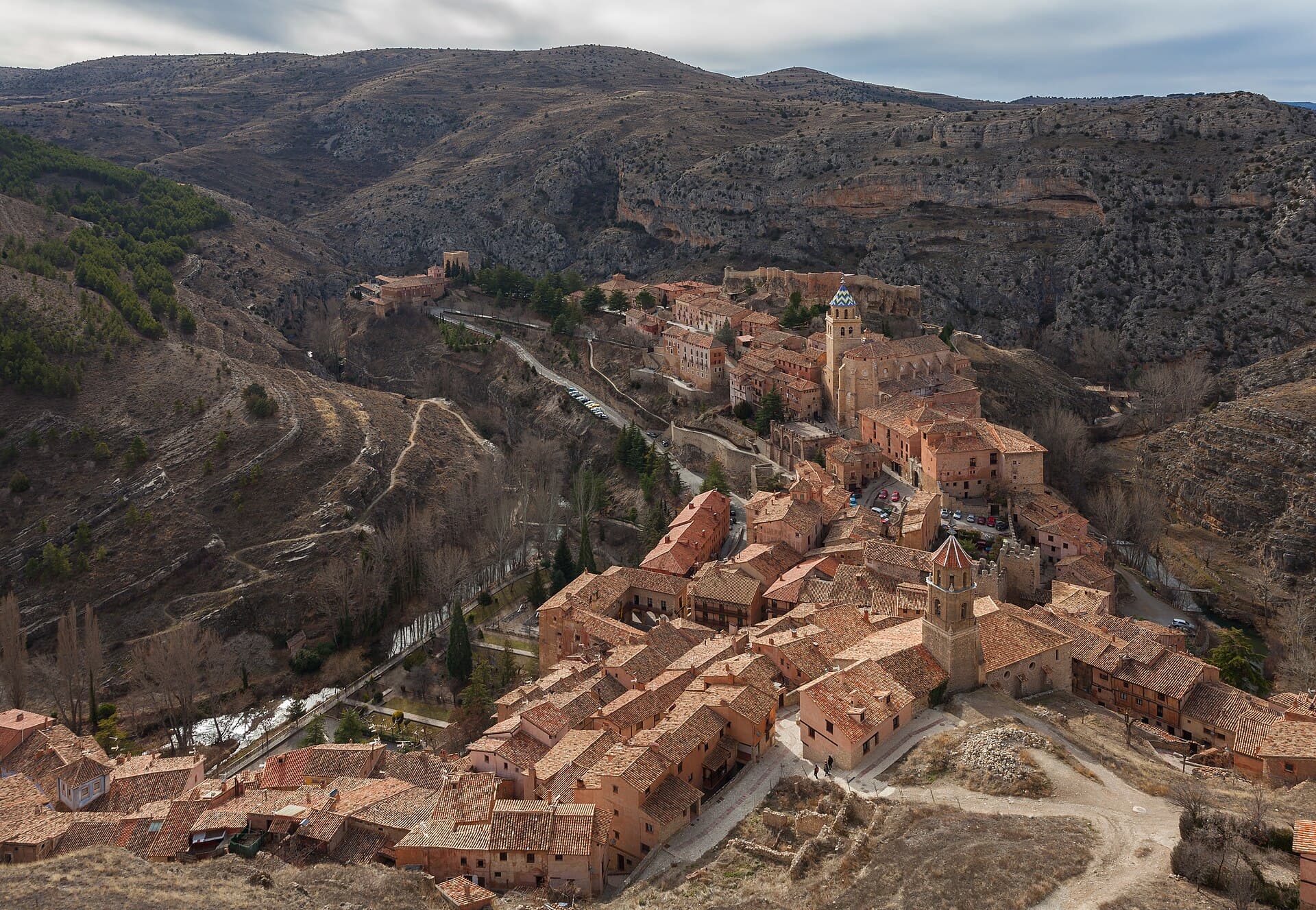 Diego Delso / CC BY-SA 3.0, via Wikimedia Commons
“Where ancient stones recount stories in shades of rose and ochre.”
Not the postcards. The stories even locals don't know — whispered in your ear, right where they happened.
This imposing tower, a segment of Albarracín's formidable defenses, holds a surprisingly somber secret within its thick masonry walls.
The distinctive terracotta hue of Albarracín's buildings is not merely a charming aesthetic choice, but a practical one rooted in the local landscape.
While a prominent landmark, the Cathedral of El Salvador conceals a detail that speaks to a deeper, older foundation beneath its Renaissance grandeur.
Discover every secret of Albarracín
Every address, every reveal in full — in your ear, right where it happened.
You pick your stops. You walk. The voice reveals what the others miss.
No tours available yet. Check back soon — we're preparing them.
Albarracín, a village in the province of Teruel, Aragón, Spain, is a place where time seems to have slowed, preserving a medieval atmosphere. Its unique character, with winding, narrow lanes and buildings painted in shades of red and ochre, has earned it recognition as one of Spain's most beautiful villages. The town is dramatically situated on a bend of the Guadalaviar River, with ancient walls climbing the steep hillsides, creating a striking silhouette against the sky. Declared a National Monument in 1961, Albarracín is also nominated by UNESCO for World Heritage status, a testament to its beauty and historical significance.
Exploring Albarracín is akin to stepping into a living historical tableau. The town's architecture, with its half-timbered homes and intricate wrought-iron balconies, reflects centuries of history. Beyond the town itself, the surrounding Sierra de Albarracín offers a natural landscape of pine forests and rocky outcrops, providing opportunities for outdoor activities and showcasing prehistoric rock art. This blend of cultural heritage and natural beauty makes Albarracín a captivating destination for those seeking a journey into Spain's past.
The history of Albarracín stretches back to ancient times, with evidence of Roman habitation, including a significant Roman aqueduct that ran for over eighteen kilometers from Albarracín to Gea de Albarracín. The area was also a Visigothic settlement, known as Santa María de Oriente. However, the town as it stands today truly began to take shape as a Berber settlement in the 11th century, eventually becoming the capital of an independent Taifa kingdom under the Banu Razin dynasty. This period left a lasting imprint on the town's fortifications and its labyrinthine street plan.
After a century of Moorish rule, Albarracín transitioned to Christian control around 1170. It then became an independent lordship, known as the Sinyoría d'Albarrazín, under the Azagra family, maintaining its autonomy from both the Kingdom of Castile and the Kingdom of Aragon for over a century. This era saw further development of its defensive systems, with the construction of new sections of walls and towers. The town's strategic location made it a significant center for wool production, iron, weapons, and as a toll station.
In 1284, Albarracín was conquered by Peter III of Aragon and officially incorporated into the Kingdom of Aragon by 1300. During the Middle Ages, Albarracín was a diverse community, with significant Jewish and Mudejar populations contributing to the local economy. The 16th century brought significant architectural changes, including the rebuilding of the Cathedral of El Salvador. However, the town faced decline after the War of Independence in the early 19th century, when French forces bombed its textile facilities. More recently, Albarracín suffered extensive damage during the Spanish Civil War, leaving it in ruins. In the post-war period, a concerted effort was made to rebuild and restore the crumbling homes and damaged monuments, meticulously adhering to centuries-old traditions, which has contributed to its current, well-preserved medieval appearance and its status as a major destination.
Begin your exploration in the Plaza Mayor, the town's central square, where the 16th-century Town Hall offers views over the Guadalaviar River. From here, the Cathedral of El Salvador is a short walk away, a Renaissance structure built upon earlier foundations, featuring a striking bell tower with aquamarine and turquoise tiles. Adjacent to the cathedral is the Episcopal Palace, which houses the Diocesan Museum with its collection of Flemish tapestries and religious art.
A defining feature of Albarracín is its extensive medieval walls and castle. Walk along these fortifications to the Torre del Andador, a 10th-century Muslim defensive outpost, for expansive views of the town and surrounding landscape. Don't miss the Torre de Doña Blanca, another significant tower within the walled enclosure. Wander through the historic center's steep, narrow, and often leaning streets, admiring the distinctive red-hued buildings with their wooden beams and wrought-iron balconies. For a glimpse into local life, visit the Casa de la Julianeta, an excellent example of traditional architecture. The Toy Museum offers a nostalgic collection of playful artifacts. Beyond the town, explore the Protected Landscape of the Rodeno Pine Forests, known for its rock art, a UNESCO World Heritage site.
Albarracín offers distinct charms throughout the year. Spring (March to May) and autumn (September to November) provide mild temperatures, ideal for walking and outdoor activities, with autumn bringing golden foliage and mushroom season. Summer (June to August) is warm, with cooler nights due to the altitude, and is the season for festivals. Winter (December to February) can be cold with a chance of snow, creating a magical atmosphere. For warm-weather activities, late June to late August is recommended. May and October generally offer comfortable temperatures and pleasant conditions.
Albarracín is best explored on foot, so comfortable walking shoes are essential due to the steep, narrow lanes and numerous stairs. Parking is available in riverside car parks at the lower end of town, and it's advisable to arrive early, especially on weekends, to avoid crowds. While public transport is limited, traveling by car offers flexibility to explore the surrounding area. The town is about a 30-minute drive from Teruel, two hours from Valencia, and two hours from Zaragoza. Guided tours of the historic center are available through organizations like the Santa María Foundation of Albarracín and El Andador, offering insights into the town's history and architecture. Local tourist offices are also a valuable resource for information. Many shops may close on Sundays, so plan accordingly for groceries.