Plage Quemado
The name of Al Hoceïma's most popular beach, Plage Quemado, translates to 'Burned Beach.'
Full story unlocks in the tour
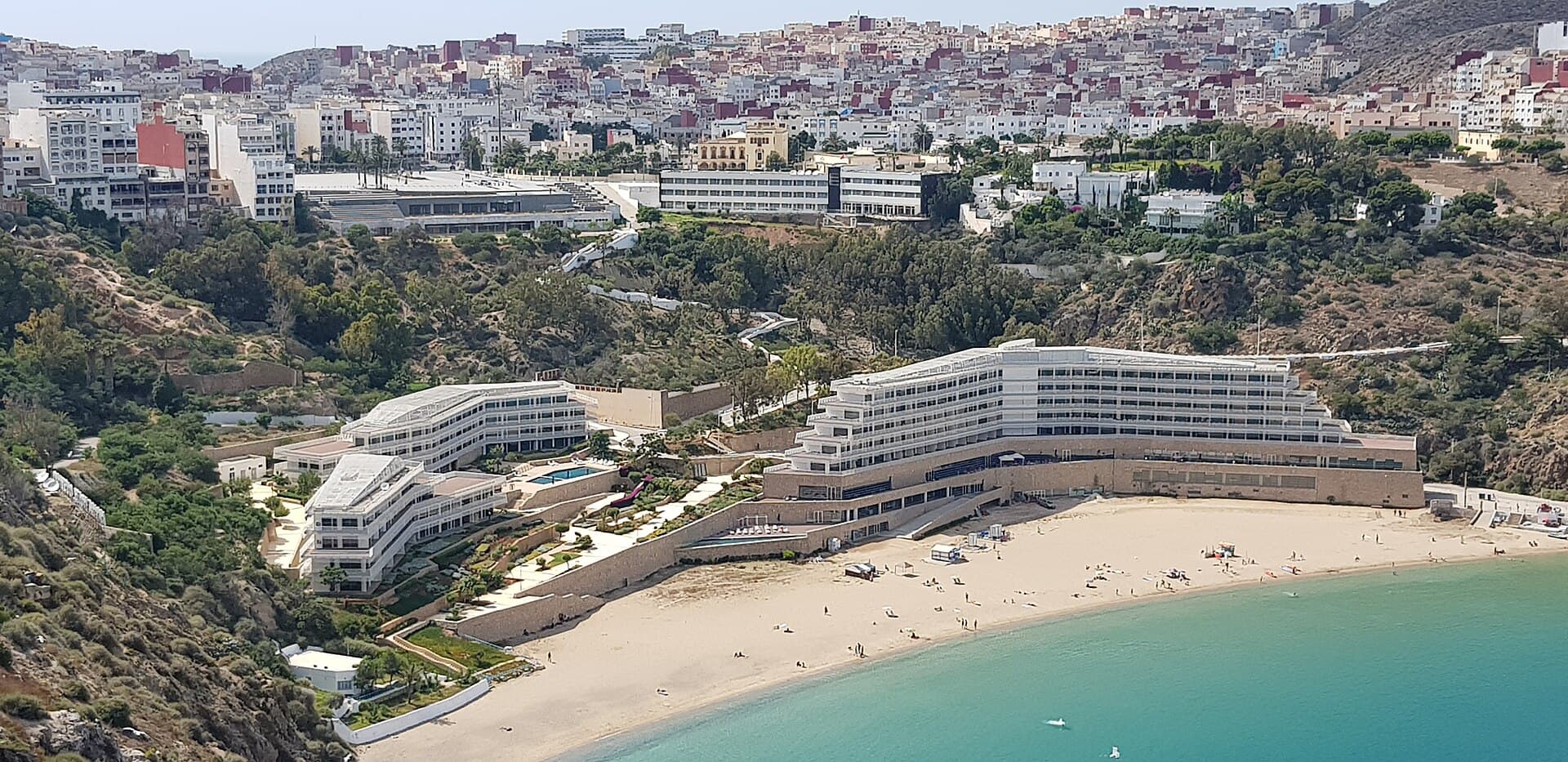 Abdel Jalil Bouhaj / CC BY-SA 4.0, via Wikimedia Commons
“Where the Rif Mountains meet the Mediterranean's clear expanse.”
Not the postcards. The stories even locals don't know — whispered in your ear, right where they happened.
The name of Al Hoceïma's most popular beach, Plage Quemado, translates to 'Burned Beach.'
Many houses in Al Hoceïma are painted in specific colors.
The city's name has a fragrant origin.
Discover every secret of Al Hoceïma
Every address, every reveal in full — in your ear, right where it happened.
You pick your stops. You walk. The voice reveals what the others miss.
No tours available yet. Check back soon — we're preparing them.
Al Hoceïma, often called the "Pearl of the Mediterranean," is a coastal city in northern Morocco, where the rugged Rif Mountains descend to meet the clear, blue waters of the Mediterranean Sea. Unlike Morocco's more bustling imperial cities, Al Hoceïma offers a calmer, more spacious experience, deeply connected to its natural surroundings. The city is known for its immaculate beaches, rocky coves, and expansive views, making it a favored destination for those seeking a tranquil seaside escape.
With a population of around 90,000, Al Hoceïma's economy relies heavily on tourism and fishing. Its particular blend of Rif Berber culture and historical Spanish influence is evident in its language and architecture. Visitors can expect a slower rhythm of life, focusing on nature, fresh air, and simple exploration, all while experiencing the genuine hospitality of the local Rif Berber community.
## Spanish Foundations and Early Development Al Hoceïma's modern history is relatively recent, beginning in 1925 when Spanish troops established a military settlement called Villa Sanjurjo during the Rif War. The Spanish developed the area by constructing houses, schools, and hospitals above the beach, with Andalusian architecture influencing many of the early buildings. The town remained under Spanish rule as part of its Protectorate until Morocco gained independence in 1955.
## Post-Independence and Economic Shifts After Morocco's independence in 1955, the city's name was changed to Al Hoceïma, a re-Arabization of its Spanish name. The late 1950s saw civil unrest and economic hardship, leading to a significant migration of residents to countries like the Netherlands, France, and Belgium from the 1960s to the 1980s. However, the economy eventually recovered, largely driven by the fishing industry and the development of a deep-water port, which transformed Al Hoceïma into a major supplier of seafood in northern Morocco. The port, initially focused on cargo and fishing, opened to passenger traffic in 2003, further boosting tourism.
## Seismic Activity and Reconstruction Al Hoceïma is situated in a seismically active region. The area has experienced several significant earthquakes, notably a magnitude 6.3 earthquake in 2004, which killed 631 people and destroyed over 2,500 homes, primarily in rural villages within the Rif Mountains. This event prompted a large-scale reconstruction program, leading to the modernization of housing and urban infrastructure. The city has since focused on developing its tourism sector with new public and private facilities.
## Cultural Identity and Modern Growth Today, Al Hoceïma maintains a distinct cultural identity rooted in its Rif Berber heritage, with many locals speaking Tarifit alongside Arabic and Spanish. The city's blue and white painted houses, a tradition revived in 2007, reflect its connection to the sea and sky. Al Hoceïma continues to grow as a popular tourist destination, valued for its natural beauty, relaxed atmosphere, and particular cultural blend.
Al Hoceïma offers a relaxed atmosphere centered around its beautiful Mediterranean coastline. Plage Quemado is the city's most popular and accessible beach, known for its fine golden sand, clear turquoise waters, and views of the bay. It is ideal for swimming, sunbathing, and enjoying sunsets.
Beyond the city's main beach, explore the Al Hoceïma National Park, established in 2004. This protected area spans 480 km², including 196 km² of sea, and offers dramatic coastal cliffs, hiking paths, and opportunities to observe diverse flora and fauna. Within the park, you can visit an 800-year-old mosque and a Berber village in Adouz.
The city's port is a lively hub for fishing, passenger ferries, and recreational boats. Here, you can witness the daily catch, find fresh seafood, and even arrange boat trips to spot dolphins in the clear bay waters. For a glimpse into the region's past, visit the archaeological site of Al Mazamma, a medieval port city near Souani Beach, featuring remains of houses and fortifications.
Take a stroll along the Corniche Morro Viejo, a scenic coastal promenade offering wide views of the Mediterranean. In the city center, Place Mohammed VI features illuminated fountains at night, and the area is dotted with cafes and restaurants.
Al Hoceïma enjoys a Mediterranean climate, with warm summers and mild winters. The best time to visit for warm and sunny weather, ideal for beach activities, is from May to September. During these months, daytime temperatures range from 20°C to 26°C (68°F to 79°F), and the sea is warm enough for swimming. The shoulder seasons of spring (March to May) and autumn (September to November) offer pleasant temperatures and fewer crowds, making them excellent for hiking and exploring. While winter (December to February) is cooler, the city remains inviting for a quiet retreat.
Al Hoceïma is generally considered one of Morocco's cleanest and safest cities. Many residents speak Tarifit (Rif Berber), Arabic, French, and Spanish. The local currency is the Moroccan Dirham (MAD). The city is moderately priced compared to Morocco's larger tourist destinations, with daily budgets for comfortable travel estimated around 200-300 dirhams. Meals can range from 25-60 dirhams, and accommodation from 80-250 dirhams per night.
Cherif Al Idrissi International Airport (AHU) is located about 17 km from the city, with flights mainly from European destinations and other Moroccan cities. Ferries also connect Al Hoceïma to Motril, Spain, and Sète, France. Once in the city, local taxis are a reasonable way to get around. Renting a car is recommended for exploring nearby coves and Al Hoceïma National Park.