Ajman Museum
The Ajman Museum, housed within an 18th-century fort, safeguards a secret within its ancient walls that speaks to a much older history.
Full story unlocks in the tour
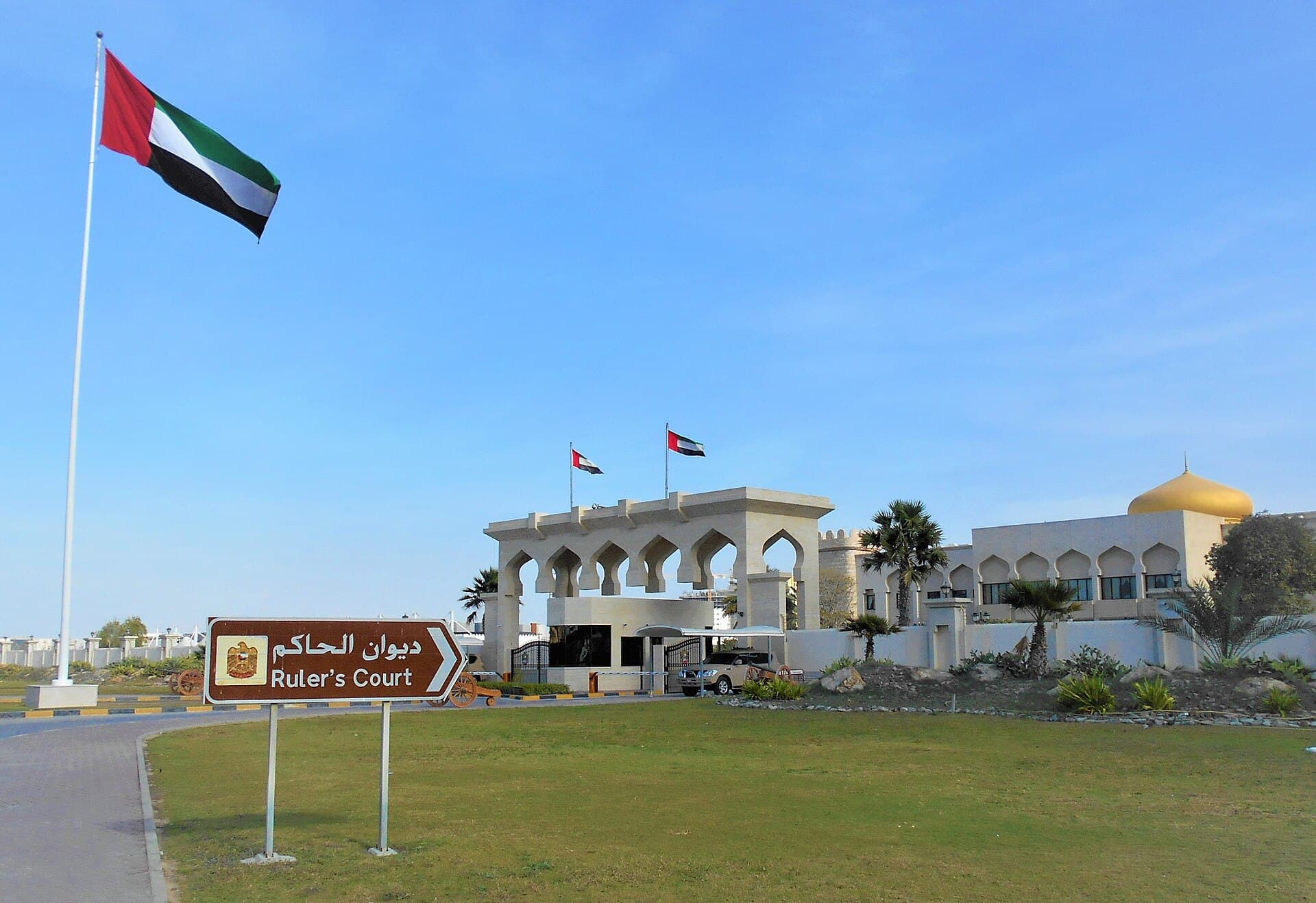 Ulises Icardi / CC BY-SA 4.0, via Wikimedia Commons
“Ajman: Where the ancient past resonates on shores of progress.”
Not the postcards. The stories even locals don't know — whispered in your ear, right where they happened.
The Ajman Museum, housed within an 18th-century fort, safeguards a secret within its ancient walls that speaks to a much older history.
This serene mangrove sanctuary offers refuge to diverse birdlife, and a recent initiative reveals a profound commitment to its ecological future.
The distinctive Etisalat Tower punctuates the Ajman skyline with its unique, mosque-inspired architecture and a large, spherical top.
Discover every secret of Ajman
Every address, every reveal in full — in your ear, right where it happened.
You pick your stops. You walk. The voice reveals what the others miss.
No tours available yet. Check back soon — we're preparing them.
Ajman, the smallest of the seven United Arab Emirates, offers a captivating blend of tradition and burgeoning modernity. Situated along the Persian Gulf coast, it presents a more traditional and budget-friendly alternative to its larger neighbors like Dubai and Abu Dhabi. While its pristine white sandy beaches are a primary draw, Ajman invites exploration beyond the shoreline, with opportunities to delve into historic souks, cultural museums, and serene natural reserves.
The emirate also encompasses two inland exclaves, Al Manama and Masfout, which add to its geographical diversity and historical narrative. Ajman's commitment to developing its tourism sector is evident in recent investments and the enhancement of its attractions, aiming to position itself as a dynamic cultural and tourism hub as part of Ajman Vision 2030.
Visitors can experience a relaxed pace, where the echoes of a deep past in fishing, pearl diving, and dhow building seamlessly intertwine with contemporary developments. From leisurely strolls along the Corniche to kayaking through mangrove forests, Ajman provides a distinctive perspective on Emirati life.
Ajman's human history stretches back to approximately 3000 BC, with archaeological excavations revealing ancient settlements. Discoveries from an ancient burial site at Muwaihat, found in 1986, include distinctive clay pottery and funeral jewelry, now housed in the Ajman Museum. These findings indicate a civilization dependent on trade and place Ajman on the international archaeological map of the third millennium BCE.
The foundation of the modern emirate can be traced to 1810 when the Al Nuaim tribe established a permanent coastal settlement, focusing on fishing and pearling, which became central to the region's economy for centuries. Ajman was once a significant center for dhow building, with skilled craftsmen constructing thousands of these traditional wooden boats.
In the mid-18th century, the rise of British naval power in the Arabian Gulf led to conflicts and subsequent treaties. Ajman, along with other sheikhdoms, signed the General Maritime Treaty with the United Kingdom in 1820, marking its recognition as an independent state. Further treaties, including the 1853 'Perpetual Treaty of Peace,' solidified the region's ties with Britain, leading to the designation of the 'Trucial States.' A copy of this 1853 treaty is on display at the Ajman Museum.
By the early 20th century, Ajman was a small town with around 750 inhabitants. The pearl trade, a foundational economy, eventually collapsed due to the emergence of Japanese cultured pearls. In 1968, Britain announced its withdrawal from the Persian Gulf. This led to negotiations among the ruling sheikhs, culminating in the formation of the United Arab Emirates in 1971. Ajman, under Sheikh Rashid bin Humayd Al Nuaimi, joined as an original constituent, becoming the smallest of the seven emirates.
The Ajman Fort, an 18th-century structure built from coral stone, mud, and palm wood, served as the residence of the ruling family until 1970 and later as a police station for eight years. In 1981, it was converted into the Ajman Museum, preserving the emirate's heritage. The fort's wind tower, a traditional architectural feature for natural air-conditioning, was rebuilt between 1820 and 1830 after British naval bombardment.
Today, Ajman continues to diversify its economy beyond its historical reliance on fishing and pearling, with significant growth in real estate, industry, and tourism, driven by initiatives like Ajman Vision 2030.
Begin your exploration at the Ajman Museum, housed within an 18th-century fort that once served as the ruler's residence and a defensive stronghold. The museum offers a journey through Ajman's past, showcasing archaeological artifacts dating back to 3000 BC, traditional weapons, manuscripts, and dioramas depicting Emirati life before modern development.
For a breath of fresh air, stroll along the Ajman Corniche, a popular waterfront promenade lined with cafes and offering views of the Arabian Gulf. Adjacent to the Corniche is Ajman Beach, a stretch of white sand perfect for relaxation, picnics, and various water activities like parasailing and kayaking.
Nature enthusiasts will appreciate the Al Zorah Nature Reserve, an active ecosystem of mangroves, lagoons, and sandy beaches. This protected area offers refuge to nearly 60 species of birds, including flamingos and egrets, and provides opportunities for kayaking and paddle boating through its clear waters.
Experience traditional commerce at Souq Saleh, a historic market from the 1950s where you can browse local products and interact with shopkeepers, offering a contrast to modern retail. For contemporary shopping and entertainment, City Centre Ajman is the emirate's largest mall, featuring international brands, dining options, and a cinema.
Other notable landmarks include the distinctive Etisalat Tower, with its mosque-style architecture and spherical top, a symbol of the emirate's modernization, and the impressive Sheikh Zayed Ajman Mosque, known for its Islamic architecture, magnificent domes, and intricate carvings. You might also spot dolphins off the coast of Ajman, a popular recreation for both locals and tourists.
The best time to visit Ajman is during the cooler months, from October to April. During this period, daytime temperatures are mild and pleasant, ranging from approximately 15°C to 28°C (59°F to 82°F), making it ideal for outdoor activities and sightseeing. Rainfall is rare and typically occurs between November and April. Evenings can be cooler, around 15-17°C (59-63°F), so a light sweater or shawl might be useful.
The summer months, from May to September, experience very high temperatures, often exceeding 35-40°C (95-104°F), with high humidity, which can make outdoor activities uncomfortable. However, Ajman remains a year-round destination, with summer being suitable for indoor activities, spas, and luxury hotel experiences.
The official currency of Ajman, and the UAE, is the Arab Emirates Dirham (AED), which is pegged to the US dollar at an exchange rate of US$1 = 3.67 AED. Dirham notes come in denominations from 5 to 1,000, and coins include 1 AED, 50 fils, and 25 fils. Currency exchange services are readily available, including at Al Ansari Exchange branches. When using ATMs or making card payments, it's generally advisable to choose to be charged in AED for a more favorable exchange rate.
Arabic is the official language, but English is widely spoken, and most signs are in both languages.
For visa requirements, citizens of Bahrain, Kuwait, Qatar, Oman, and Saudi Arabia do not need a visa. Citizens of many other countries, including the US, UK, Australia, Singapore, Malaysia, and numerous EU countries, are granted a free tourist visa upon arrival, typically valid for 30 or 90 days. If you are not from these countries, you will need to arrange a sponsored visa in advance, which can often be facilitated by hotels or tour companies. A passport valid for at least six months from your entry date is generally required, along with recent passport-size photos.
Getting around Ajman is possible via taxis and buses. Taxis are a popular and comfortable option, with companies like Arabia Taxi and Al Raha Taxi operating under the Ajman Transport Authority. Fares for regular trips start at AED 12.5. The Ajman Public Transport Corporation provides a bus service within the emirate, with fares starting at AED 3, and inter-emirate services connecting to Sharjah and Dubai. Car rental is also an option, with comprehensive insurance and an international driving license typically required.