Taj Mahal
The radiant white marble of the Taj Mahal safeguards a structural secret ensuring its lasting perfection.
Full story unlocks in the tour
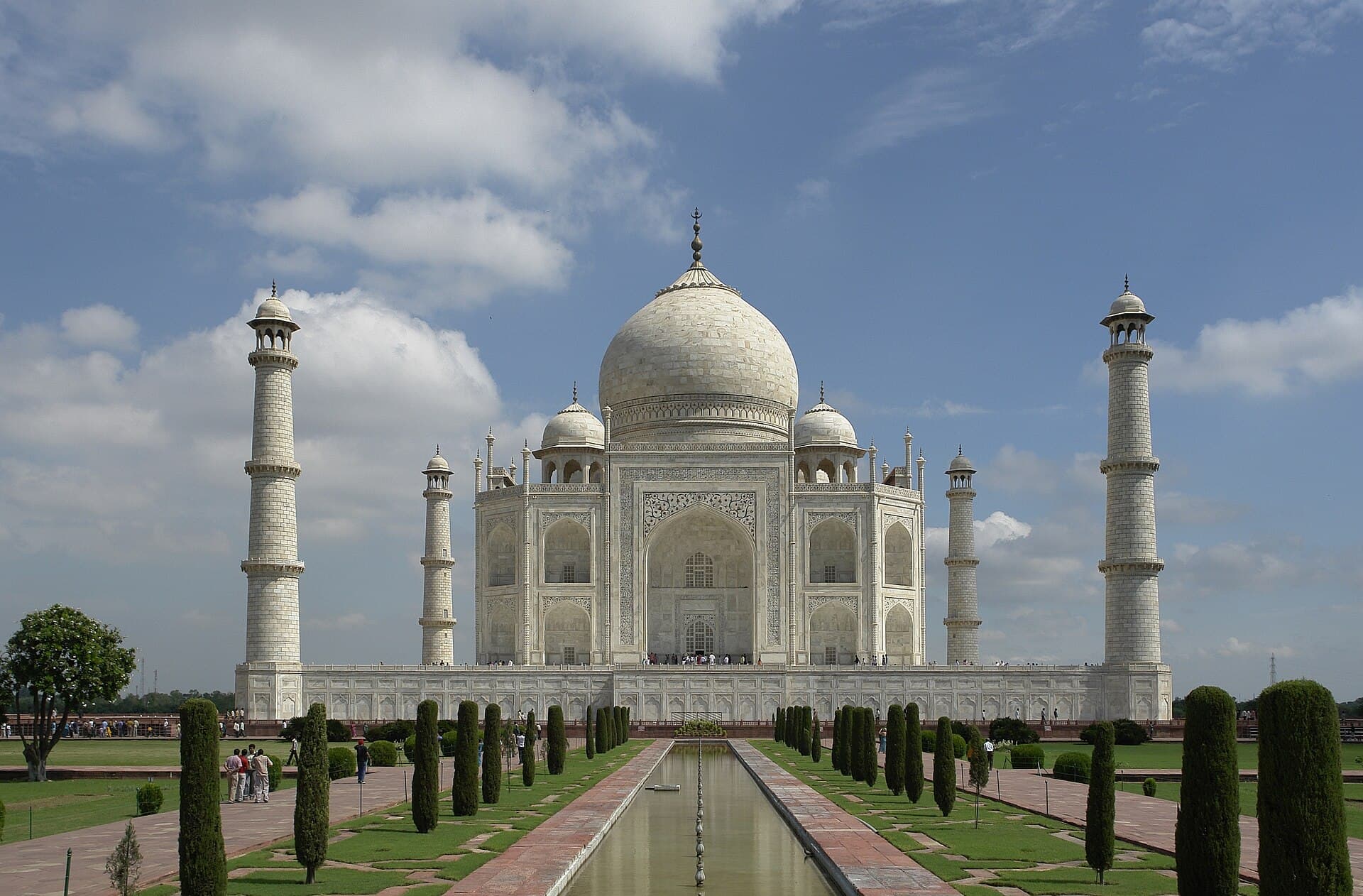 Yann (talk) / CC BY-SA 4.0, via Wikimedia Commons
“Where enduring devotion is etched in marble and centuries speak from sandstone walls.”
Not the postcards. The stories even locals don't know — whispered in your ear, right where they happened.
The radiant white marble of the Taj Mahal safeguards a structural secret ensuring its lasting perfection.
Within the formidable red sandstone walls of Agra Fort, a particular chamber offers a poignant, distant vista of the Taj Mahal.
Often called the 'Baby Taj,' this delicate marble mausoleum predates its celebrated successor and conceals a significant architectural innovation.
Discover every secret of Agra
Every address, every reveal in full — in your ear, right where it happened.
You pick your stops. You walk. The voice reveals what the others miss.
No tours available yet. Check back soon — we're preparing them.
Agra, a city along the Yamuna River in the northern Indian state of Uttar Pradesh, is synonymous with one of the world's most recognizable monuments: the Taj Mahal. This ivory-white marble mausoleum, a UNESCO World Heritage Site, draws millions of visitors annually, captivated by its ethereal grace and the lasting love story it embodies.
Beyond the Taj, Agra served as the capital of the Mughal Empire for over a century, a period that left an indelible mark on its landscape. The city's profound past is evident in its formidable forts, intricate tombs, and lively markets, offering a deeper exploration into India's architectural and cultural legacy. Agra forms a crucial part of India's 'Golden Triangle' tourist circuit, connecting it with Delhi and Jaipur, and is also included in the Uttar Pradesh Heritage Arc alongside Lucknow and Varanasi.
While the Taj Mahal is undoubtedly the primary draw, Agra presents a blend of historical majesty and local daily life, from the bustling bazaars to the delectable Mughlai cuisine. Navigating its animated streets and exploring its architectural wonders provides a tangible link to a bygone era of imperial power and artistic brilliance.
Agra's history extends back over 2,500 years, with mentions in the ancient epic Mahabharata, where it was referred to as 'Agraban'. However, its notable historical period began in 1504 when Sultan Sikandar Lodi, a Muslim ruler of the Delhi Sultanate, established the modern city and relocated his capital there. His son, Sultan Ibrahim Lodi, governed from Agra until his defeat by Mughal Emperor Babur in the First Battle of Panipat in 1526.
The true flourishing age of Agra commenced with the arrival of the Mughals. Under emperors like Babur, Humayun, Akbar, Jahangir, and Shah Jahan, Agra (then known as Akbarabad) became the foremost city of the Indian subcontinent and the capital of the Mughal Empire until 1658. During this period, it thrived as a center for learning, arts, commerce, and religion.
Emperor Akbar, recognizing the city's central importance, arrived in Agra in 1558 and commissioned the rebuilding of a brick fort known as 'Badalgarh' into the formidable Agra Fort, utilizing red sandstone. This monumental undertaking, involving some 4,000 builders daily, was completed in eight years by 1573. Akbar's grandson, Shah Jahan, later transformed many of the fort's structures, replacing red sandstone with white marble palaces.
The most iconic structure, the Taj Mahal, was commissioned by Shah Jahan in 1631 in memory of his beloved wife, Mumtaz Mahal, who died giving birth to their 14th child. Construction of the mausoleum concluded in 1648, with the surrounding complex finished by 1653. Though Shah Jahan later moved the capital to Delhi, his son Aurangzeb imprisoned him in Agra Fort, where he could view the Taj Mahal from his confinement.
After the decline of the Mughal Empire, Agra changed hands multiple times, including control by the Marathas, before being annexed by the British in 1803. It served as the capital of the Northwest Provinces from 1835-1862 and was a significant site during the Indian Rebellion of 1857. Today, Agra continues to prosper as an industrial and tourism center, with the Taj Mahal and Agra Fort recognized as UNESCO World Heritage Sites.
Agra's historical landscape is defined by its Mughal-era masterpieces. The Taj Mahal is an essential visit, ideally at sunrise for softer light and fewer people. The monument's changing colors throughout the day offer a different experience with each visit. For a peaceful view of the Taj Mahal, consider visiting Mehtab Bagh, a garden complex directly across the Yamuna River.
Just 2.5 km northwest of the Taj Mahal stands Agra Fort, a UNESCO World Heritage site often described as a walled city. This red sandstone fortress, constructed by Emperor Akbar, features gardens, courtyards, palaces, and mosques, offering insights into Mughal imperial life. From its balconies, you can even catch a distant glimpse of the Taj Mahal.
Another significant site is the Tomb of Itmad-ud-Daulah, affectionately known as the 'Baby Taj'. This delicate marble mausoleum, built between 1622 and 1628, is a precursor to the Taj Mahal in its use of white marble and pietra dura inlay work.
Further afield, about 35 km from Agra, is the abandoned city of Fatehpur Sikri, another UNESCO World Heritage site that served as the Mughal capital for a brief period. Its well-preserved red sandstone structures include grand mosques and palaces. Closer to Agra, Akbar's Tomb at Sikandra, located about 10 kilometers away, is a beautiful example of Mughal architecture and the mausoleum of Emperor Akbar.
The most pleasant time to visit Agra is during the winter months, from November to March. During this period, the weather is mild and clear, with temperatures ranging from approximately 11°C to 29°C, making it ideal for exploring. Early mornings can be foggy, particularly in December and January, but this often clears to reveal bright skies. This is also peak tourist season, so expect larger crowds and higher accommodation prices. The Taj Mahotsav, a 10-day carnival celebrating Mughal-era arts and crafts, takes place in February.
Avoid the summer months (April to June) when temperatures can climb above 40°C, often reaching 47°C, making daytime exploration uncomfortable. The monsoon season (July to September) brings humidity and scattered rainfall, which can offer a refreshing break from the heat and verdant landscapes, but also muddy roads.
Agra is generally considered safe for travelers, particularly in well-frequented areas around major monuments and hotels. However, petty theft and scams can occur, so it's wise to be aware of your surroundings, especially in busy markets. Dress modestly, covering shoulders and knees, which is both culturally respectful and can help reduce unwanted attention, particularly for solo female travelers.
For getting around, pre-booked taxis or app-based services like Uber/Ola are recommended for convenience and safety, especially after dark. E-rickshaws are also available. When hiring a taxi or rickshaw, agree on the fare upfront or insist on a meter. Staying in well-reviewed hotels in areas like Tajganj or the Civil Lines offers easier access to attractions and a safer environment.
Always drink bottled or boiled water to avoid stomach issues. Be cautious with street food, opting for freshly prepared, hot items from busy stalls. Tickets for major attractions like the Taj Mahal and Agra Fort can be purchased online in advance through the official Archaeological Survey of India (ASI) website to save time. Only hire ASI-approved guides within the monuments. Carry a power bank, as power cuts can occur.