Adare Manor
Adare Manor, a grand estate, conceals a calendrical secret within its very structure.
Full story unlocks in the tour
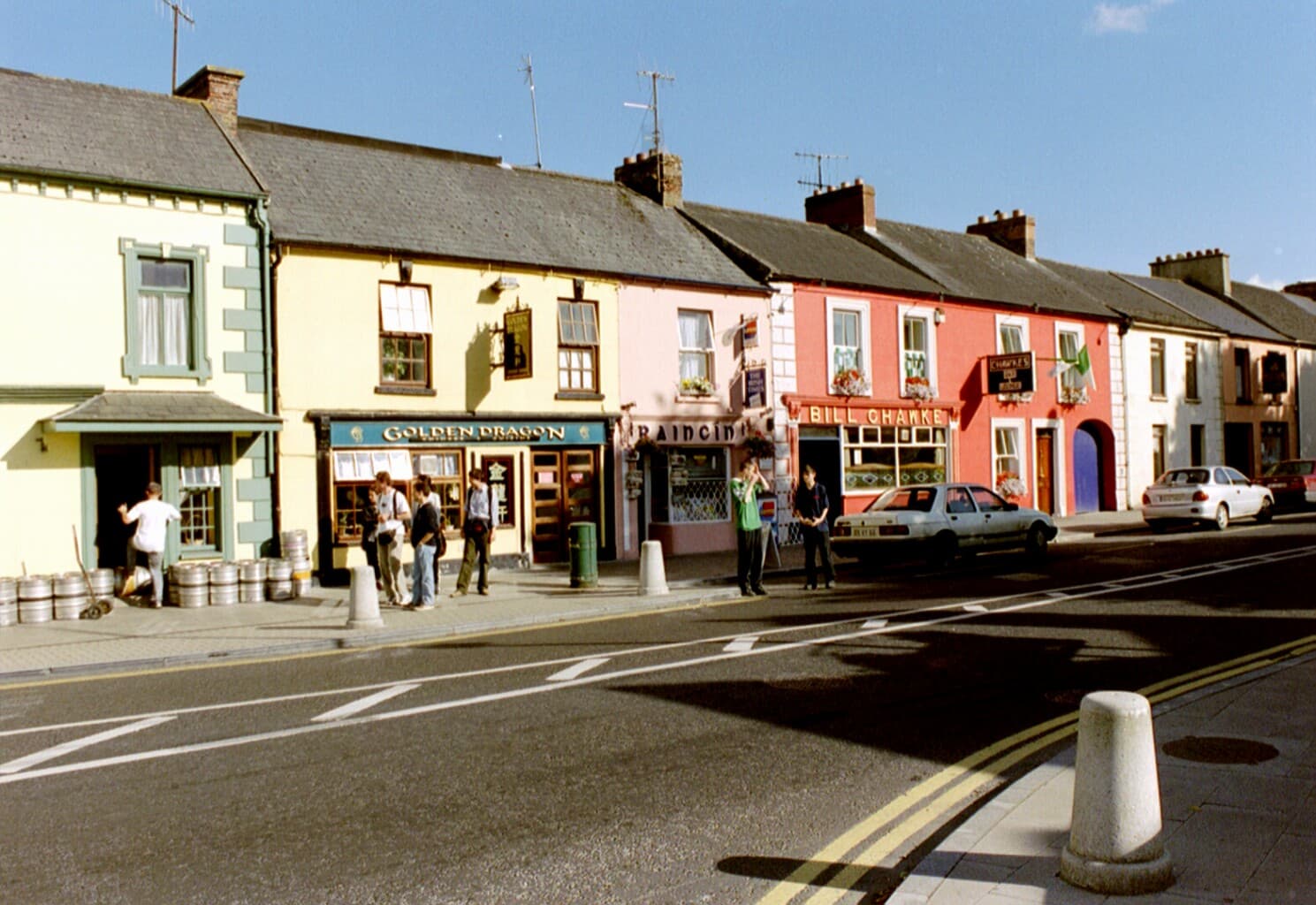 The original uploader was Corti at English Wikipedia. / CC BY-SA 3.0, via Wikimedia Commons
“Where medieval stonework meets the charm of straw roofs.”
Not the postcards. The stories even locals don't know — whispered in your ear, right where they happened.
Adare Manor, a grand estate, conceals a calendrical secret within its very structure.
This Catholic parish church in Adare holds a singular distinction among all of Ireland's religious edifices.
The distinctive thatched cottages that line Adare's main thoroughfare were not solely conceived for their visual appeal.
Discover every secret of Adare
Every address, every reveal in full — in your ear, right where it happened.
You pick your stops. You walk. The voice reveals what the others miss.
No tours available yet. Check back soon — we're preparing them.
Adare, a designated Heritage Town in County Limerick, is often regarded as one of Ireland's most visually appealing villages. Situated southwest of Limerick city, the village gazes upon the River Maigue, from which its Irish name, Áth Dara, meaning "The Ford of the Oak," is derived. With its characteristic thatched cottages, medieval remnants, and historic stone buildings, Adare offers a window into 19th-century Ireland, while providing contemporary comforts and a warm welcome.
The village’s allure stems from its fusion of natural splendor and architectural legacy. Visitors can wander through its compact center on foot, uncovering craft shops, boutiques, and restaurants housed within its singular buildings. Adare serves as an excellent starting point for exploring County Limerick and the broader region, with its accessible location near Shannon Airport and major routes.
## From Ancient Crossing to Heritage Town Adare's beginnings trace back to the 13th century, forming around a vital fording point on the River Maigue. The earliest recorded mention of Adare appears in 1226, when an Anglo-Norman lord, Geoffrey de Marisco, received a grant from King Henry III to conduct an annual fair at his manor. Control of the area later transferred to the Earls of Kildare, a formidable Welsh-Norman FitzGerald family, who significantly influenced Adare's medieval evolution.
Throughout its existence, Adare's strategic position rendered it a site of numerous conflicts. The original town, positioned on the northern bank of the Maigue near Desmond Castle, was razed during 16th-century wars. The current village largely took its form in the 19th century, with the Earl of Dunraven leading its design and construction from approximately 1820. He oversaw the building of the iconic thatched cottages to house his estate workers and planned the streets and townhouses that define Adare today.
## Medieval Monastic Foundations Adare is notable for its well-preserved medieval monastic sites. The Augustinian Friary, also known as 'Black Abbey,' was established in 1316 by John FitzThomas FitzGerald, 1st Earl of Kildare. Although dissolved in 1539 during the Tudor suppression of monasteries, it was later reinstated and now functions as St. Nicholas' Church of Ireland parish church. Its 15th-century cloister and tower are particularly well-maintained.
The Trinitarian Abbey, or Holy Trinity Abbey, is unique as Ireland's only Trinitarian monastery. Established around 1230, the Trinitarian monks were recognized for their efforts in ransoming Christian captives during the Crusades. After its dissolution in 1539, the abbey fell into disrepair but was restored in the 19th century by the 2nd Earl of Dunraven and now serves as Adare's Roman Catholic parish church.
The Franciscan Friary, established in 1464 by Thomas, Earl of Kildare, is another significant ruin situated by the River Maigue. It was attacked and burned in 1646, but its remnants are largely intact and add to Adare's medieval character.
Begin your exploration at the Adare Heritage Centre, which provides visitor information and serves as the starting point for tours of Desmond Castle. From there, stroll through the village to admire the thatched cottages that line the main street, many of which now house shops and eateries. The Holy Trinity Abbey, Ireland's only Trinitarian monastery, functions as the local Catholic parish church and welcomes visitors. Its medieval tower, nave, and choir, alongside 19th-century restorations, warrant close observation.
Directly across from Desmond Castle, the Augustinian Friary, also known as 'Black Abbey,' is now St. Nicholas' Church of Ireland. You can visit this active church and its well-preserved 15th-century cloister. The remnants of Desmond Castle, a 13th-century Norman fortress that once commanded traffic on the River Maigue, are accessible by guided shuttle bus tours from the Heritage Centre during summer months. While at the castle, seek out the substantial square keep and the great hall with its early 13th-century windows.
For a moment of repose, the Adare Village Park offers a peaceful green expanse with a gazebo and flowers, situated opposite the Heritage Centre. You might also consider a walk along the River Bank Walk, which affords views of Desmond Castle and the abbeys. The grand Adare Manor, a luxurious hotel and golf resort, can be appreciated from a distance, with its neo-Gothic architecture and expansive grounds.
Adare welcomes visitors throughout the year, but the most pleasant period for outdoor pursuits extends from late June to early September, when temperatures are agreeable and skies are often clear. July typically brings the clearest and warmest conditions, with average highs around 67°F (19°C). The transitional seasons of spring (March to May) and autumn (September to November) offer milder weather and fewer crowds. While winters are cooler, wetter, and windier, they can provide a more tranquil experience, and temperatures generally remain above freezing. Regardless of the season, it is wise to pack layers and waterproof clothing, as Ireland experiences rain throughout the year.
Adare is easily navigated on foot, with most points of interest within walking distance of one another. If arriving by car, complimentary parking is available at the Adare Heritage Centre, which also serves as a visitor information hub. The village is approximately a 20-minute drive from Limerick City and about 30 minutes from Shannon Airport.
Accommodation options in Adare encompass hotels, B&Bs, and self-catering properties, though reserving in advance is advisable, particularly during peak season. For dining, Adare presents a variety of restaurants, coffee shops, and bars, including establishments recognized by the Michelin Guide. When preparing for your visit, prioritize waterproof shoes and a rain jacket, as Irish weather can be unpredictable. Layers are also essential for adapting to temperature shifts.