Templar Tunnel
Beneath Acre's contemporary thoroughfares lies a concealed passage, crafted by the Knights Templar.
Full story unlocks in the tour
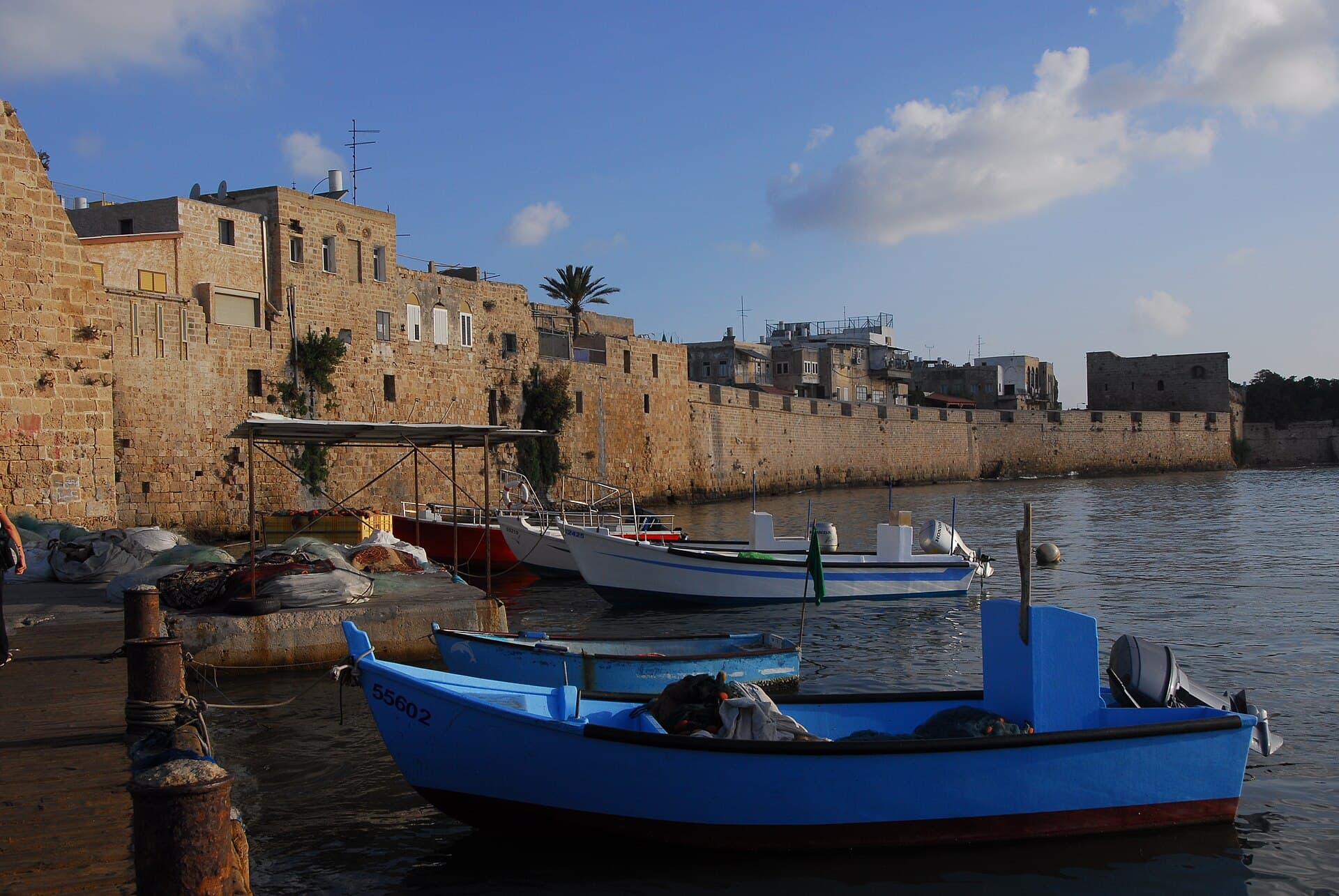 israeltourism from Israel / CC BY 2.0, via Wikimedia Commons
“Acre: Where Crusader spirits linger beneath Ottoman arches.”
Not the postcards. The stories even locals don't know — whispered in your ear, right where they happened.
Beneath Acre's contemporary thoroughfares lies a concealed passage, crafted by the Knights Templar.
Acre's most prominent mosque, distinguished by its emerald dome, safeguards a remarkable artifact.
Napoleon Bonaparte, a brilliant military strategist, encountered an unexpected repulse at Acre.
Discover every secret of Acre
Every address, every reveal in full — in your ear, right where it happened.
You pick your stops. You walk. The voice reveals what the others miss.
No tours available yet. Check back soon — we're preparing them.
Acre, known locally as Akko, is an ancient port city on Israel's Mediterranean coast, recognized as a UNESCO World Heritage site since 2001. It stands as one of Earth's oldest continuously inhabited settlements, with its origins reaching back to the Early Bronze Age, around 3000 BCE. The city's strategic position rendered it a pivotal hub for maritime commerce and a coveted prize for countless conquerors across epochs.
Today, Acre presents a compelling fusion of its layered past, where the vestiges of Crusader and Ottoman civilizations are visibly interwoven. Wandering through its intricate lanes reveals a city that has preserved its historical character while embracing contemporary existence. The Old City, with its fortified perimeter and ancient constructions, offers a tangible voyage through millennia of human endeavor.
## From Bronze Age Settlement to Crusader Capital Acre's narrative commences in the Early Bronze Age, around 3000 BCE, establishing it as one of the world's most enduringly inhabited cities. Its strategic location on the Mediterranean coast made it a desirable port, referenced in Egyptian texts from the 19th century BCE. Over millennia, it witnessed governance by Phoenicians, Assyrians, and Greeks, including Alexander the Great, who took the city in 332 BCE. The Egyptian king Ptolemy II Philadelphus renamed it Ptolemais in the 2nd century BCE, a designation it retained until the Muslim conquest in the 7th century CE, when its ancient name was reinstated.
## The Crusader Era: St. Jean d'Acre The Crusader period marked a transformative epoch for Acre, which evolved into a principal port and stronghold for the Crusaders within the Kingdom of Jerusalem. Following its capture in 1104, it became known as St. Jean d'Acre. By the 1170s, it functioned as the primary port of the eastern Mediterranean, a nexus for trade that brought considerable prosperity to the Crusader kingdom. Acre served as the capital of the Kingdom of Jerusalem from 1191 to 1291. The city's defenses were substantially augmented during this period, with impressive structures like the Citadel and various churches. However, this era also saw atrocities committed against the Jewish population in the Crusaders' pursuit to rid the Holy Land of 'infidels.'
## Ottoman Resurgence and Napoleon's Defeat In 1291, the Mamluks captured Acre, signaling the conclusion of Crusader dominion and demolishing much of the city, which then existed as a modest fishing village for centuries. Acre experienced a significant resurgence in the 18th century under the Ottoman governor Daher al-Umar, who reconstructed its fortifications utilizing materials from medieval ruins. His successor, Ahmad Pasha al-Jazzar, continued this development, erecting many caravanserais, mosques, and public baths, including the prominent Al-Jazzar Mosque. Al-Jazzar, known as 'The Butcher' for his severity, successfully defended Acre against Napoleon Bonaparte's siege in 1799, a considerable setback for Napoleon's eastern ambitions. The city remained under Ottoman rule until 1918, when it was taken by British forces and became part of Mandatory Palestine. In 1948, it was incorporated into the newly formed State of Israel.
The Old City of Acre is a UNESCO World Heritage site, and its attractions reflect its layered history. Explore the Underground Crusader City, a remarkably preserved complex of halls and passages beneath the modern street level, including the impressive Knights' Halls of the Hospitaller Fortress. Descend into the Templar Tunnel, a 350-meter subterranean passageway that once connected the Templar fortress to the port.
Above ground, the Al-Jazzar Mosque, with its emerald dome and slender minaret, dominates the skyline. It stands as the largest mosque in Israel outside of Jerusalem and was constructed in 1781 by Ahmad Pasha al-Jazzar. Wander through the lively souqs (markets), such as Suq Al-Abiad (White Market), for a taste of local life, where you can discover spices, sweets, and fresh fish. Other notable sites include the Turkish Bath Museum (Hammam al-Basha), offering a window into Ottoman-era leisure, and the Citadel of Acre, which functioned as a British prison during the Mandate era.
Acre experiences a Mediterranean climate, characterized by warm, arid summers and mild, wetter winters. The most agreeable times to visit are spring (March-May) and autumn (September-November), when temperatures are comfortable for exploring the Old City and its outdoor locations. Summer (June-August) can be hot and humid, with daily highs often exceeding 30°C, making early mornings and evenings ideal for outdoor pursuits, and afternoons suitable for underground attractions. Winters (December-February) are mild but bring the majority of the annual precipitation.
Acre is situated in northern Israel, approximately 23 kilometers (14 miles) north of Haifa. It is readily accessible and often visited as a day trip from nearby cities like Haifa. The Old City is best traversed on foot, so comfortable footwear is essential for navigating its stone alleys and uneven paths. When entering religious sites such as the Al-Jazzar Mosque, dress with respect, ensuring shoulders and knees are covered; women may also require a headscarf. Consider acquiring a combined entrance ticket, which frequently grants access to multiple historical sites like the Knights' Halls, Templar Tunnel, and the Turkish Bath, offering efficient entry and potential savings. While generally secure, it is always prudent to be mindful of your belongings in crowded market areas.