Con Market (Chợ Cồn)
Most visitors journey to Han Market, but for a glimpse into Da Nang's everyday life and culinary heart, another bustling hub awaits.
Full story unlocks in the tour
 Somerset999 / CC BY-SA 4.0, via Wikimedia Commons
“Where ancient roots meet modern rhythms, and the Han River breathes fire.”
Not the postcards. The stories even locals don't know — whispered in your ear, right where they happened.
Most visitors journey to Han Market, but for a glimpse into Da Nang's everyday life and culinary heart, another bustling hub awaits.
While My Khe Beach draws crowds, a quieter stretch of sand offers a more secluded retreat.
Beyond the celebrated *Mì Quảng*, a particular local dish commands a dedicated following, often found in unassuming establishments.
Discover every secret of Đà Nẵng
Every address, every reveal in full — in your ear, right where it happened.
You pick your stops. You walk. The voice reveals what the others miss.
No tours available yet. Check back soon — we're preparing them.
Da Nang, a coastal city in Central Vietnam, presents a dynamic fusion of contemporary development and natural splendor. Situated along the Han River, it functions as a vital economic center and a favored destination for travelers seeking both relaxation and adventure. The city is known for its expansive beaches, impressive bridges, and its proximity to UNESCO World Heritage Sites.
Often considered a more relaxed and spacious alternative to the bustling metropolises of Hanoi and Ho Chi Minh City, Da Nang provides an accessible gateway to Vietnam's central region. Its forward-thinking atmosphere, clean streets, and welcoming locals contribute to its standing as one of Vietnam's most livable cities. Whether drawn to the warmth of its tropical waters, the architectural marvels spanning the Han River, or the flavors of its distinct cuisine, Da Nang offers a multifaceted experience.
The city's strategic location also makes it an excellent base for exploring nearby attractions such as the ancient town of Hoi An, the mystical Marble Mountains, and the scenic Hai Van Pass. With a growing array of cafes, restaurants, and resorts, Da Nang continues to evolve while retaining its unique character, inviting visitors to uncover its many layers.
Da Nang's story reaches back over 2,000 years, with roots in the ancient Kingdom of Champa, a Malay-Indonesian civilization that arrived in Vietnam around 200 BC. The city's current name is thought to be a Vietnamese adaptation of the Cham word da nak, meaning "the opening of a great river" or "big river/main estuary." This area, initially known as Cửa Hàn (Han River Mouth), served as a crucial trading post for the Champa kingdom, with archaeological findings of residential sites and burial grounds affirming its ancient importance.
Conflict between the Dai Viet (the former name for the Vietnamese) and the Champa commenced in the latter half of the 10th century, eventually leading to the Chams ceding their provinces. In 1306, the territory of modern Da Nang officially transferred from the Kingdom of Champa to the Dai Viet state. By the 17th and 18th centuries, European traders and missionaries frequented the port. In 1835, Emperor Minh Mang issued a significant decree, limiting Western ships to anchor exclusively at Cua Han, effectively establishing Da Nang as the largest commercial port in Central Vietnam and surpassing Hoi An in prominence.
The city's strategic position became apparent with the French invasion of Vietnam, which began with an assault on Da Nang in 1858. Two years later, under French colonial administration, Da Nang was renamed Tourane and separated from Quang Nam province, placed under the direct authority of the Governor-General of Indochina. During this period, the French developed Tourane into a Western-style urban center, establishing a clear street layout and infrastructure, including the North-South Railway and a modernized port, transforming it into a significant logistics hub.
During the Vietnam War, Da Nang played a critical part, growing into the second-largest urban area in South Vietnam and a major supply center. It was here, on March 8, 1965, that the first U.S. combat troops disembarked in Vietnam, leading to the establishment of a large joint military base. By 1967, Da Nang was designated as the political, military, and cultural center for the Central region during the war, with substantial investment in infrastructure like the airport, seaport, and roads.
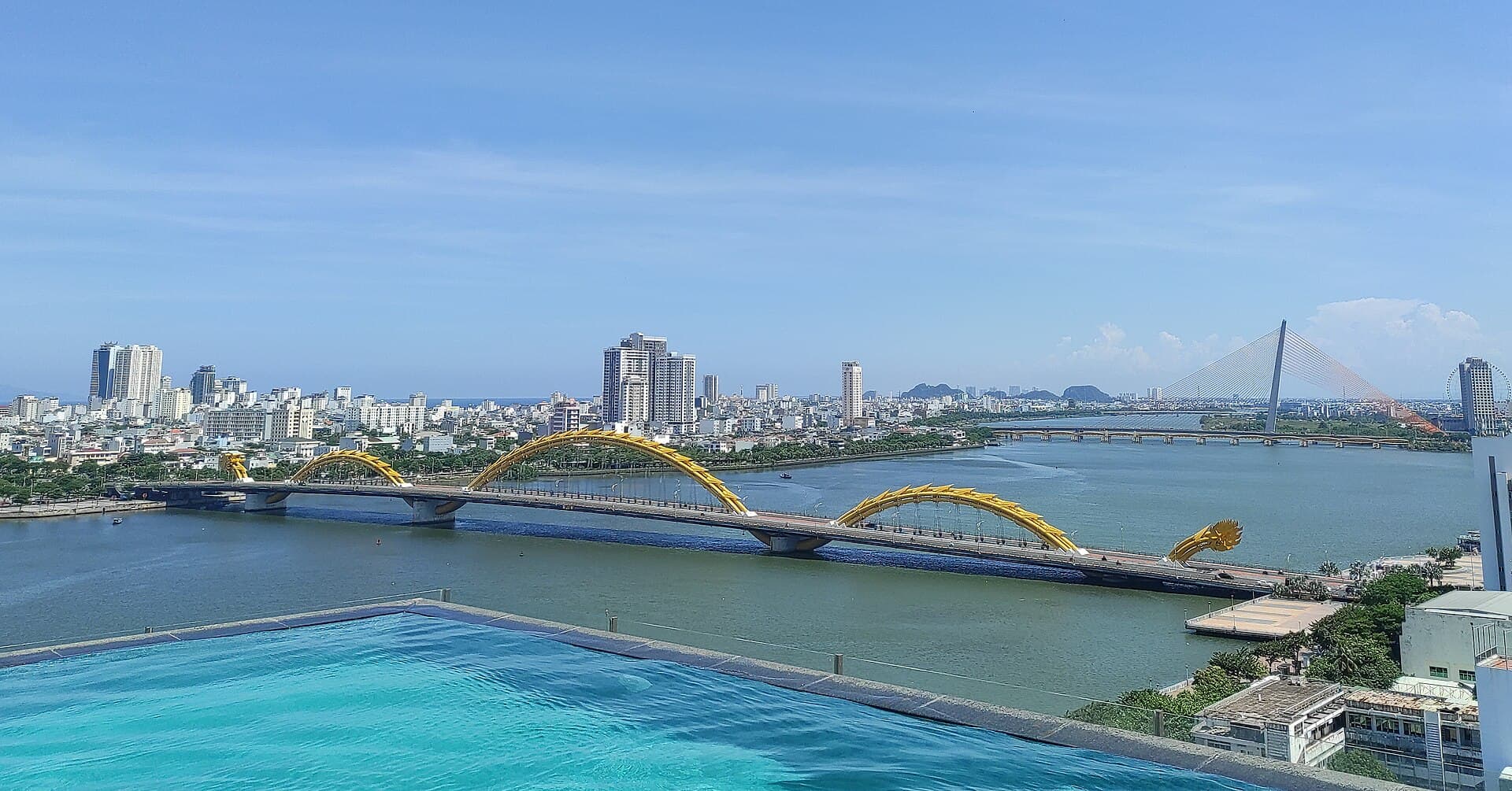
After the war, Da Nang, as part of Quang Nam–Da Nang Province, began to address its consequences. The separation of Da Nang from Quang Nam province into a centrally-governed city marked a turning point, granting it an independent budget and strategic planning capabilities. This led to a substantial modernization program, often referred to as the "Da Nang Miracle." The construction of prominent bridges, such as the Han River Bridge (Vietnam's first swing bridge) and the Dragon Bridge, connected the city center with the coastline, opening the eastern bank for resorts and hotels and symbolizing Da Nang's economic ascent.
Begin your journey at My Khe Beach, a long expanse of white sand perfect for swimming and various water activities, with surfing conditions particularly favorable from November to March. For sweeping views of the coastline and city, visit the Lady Buddha statue at Linh Ung Pagoda on the Son Tra Peninsula. This 67-meter-tall statue, part of an 18th-century temple complex, offers a tranquil atmosphere and is visible from much of My Khe Beach.
Travel to the Marble Mountains, a collection of five limestone and marble peaks sheltering atmospheric pagodas, caves, and ancient shrines. Thuy Son, or Water Mountain, is the largest and highest, providing a path of stone steps leading to impressive tunnels and caves like Huyen Khong. In the evenings, observe the spectacle of the Dragon Bridge, which illuminates and breathes fire and water on Friday, Saturday, and Sunday nights at 9 PM.
Consider a day trip to Ba Na Hills, a former French colonial hill station now a theme park-style resort accessible by one of the world's longest cable car rides. Here, you will find the celebrated Golden Bridge, a pedestrian walkway seemingly held aloft by two colossal hands. For a look into the region's ancient past, visit the Museum of Cham Sculpture, which houses the largest collection of Cham cultural artifacts in Vietnam.
Da Nang experiences a tropical monsoon climate with two distinct seasons: a dry season and a wet season. The dry season typically extends from March to August, offering sunny skies and warm temperatures, ideal for beach activities and exploration. Specifically, March, April, and May are considered the most favorable months, providing dry and mild weather before the intense heat of June, July, and August. The wet season occurs from September to February, bringing more rain and sometimes typhoons, particularly from September to November. While January to April is good for exploration due to mild, dry weather and fewer crowds, June to August can be very hot and humid, though excellent for those seeking beach experiences.
Da Nang International Airport (DAD) is conveniently located just 3-5 km from the city center, with taxis, Grab (ride-hailing app), and airport buses available for transfers. Within the city, Grab (cars and motorbikes) offers a popular and affordable way to travel, providing fixed-rate fares. While Da Nang does not have a metro system, local buses connect the city to nearby areas like Hoi An.
Cash is essential for smaller transactions at local markets, street food stalls, and smaller restaurants, as many do not accept credit cards. Larger establishments like hotels and shopping malls typically accept cards. It is advisable to carry Vietnamese Dong (VND) for daily expenses. Tipping is not anticipated, but rounding up the bill is common. For communication, purchasing a local 4G/5G SIM card from major carriers like Viettel, Mobifone, or Vinaphone is recommended, with cards readily available at the airport or convenience stores.